
The World Cup stands as the most-watched sporting event on the planet, pulling in billions of fans every four years to crown football’s ultimate champion. Whether you remember the electric USA vs. Iran showdown in Qatar or you’re already counting down to the next tournament, understanding how the World Cup works — and how it even shapes global shipping lanes — gives you a far richer view of the beautiful game. In this guide, we’ll walk through the World Cup’s history, format, must-know matches, how to watch every game live, and a surprising connection to the freight industry that most fans never consider.
What Is the World Cup? The World’s Biggest Football Tournament
The FIFA World Cup is an international football (soccer) tournament organized by FIFA — the Fédération Internationale de Football Association, the global governing body that sets the rules for the sport worldwide. Held every four years, the tournament brings together national teams from across the globe to compete for the title of world champion. According to Wikipedia’s detailed history of the FIFA World Cup, the event first launched in 1930 and has since become the single most-watched sporting spectacle in human history, outpacing even the Olympics in global television reach.
Unlike a video highlight reel, this guide covers everything you actually need to know in one place. In particular, we’ll explain the qualification process, the tournament format, and why the World Cup’s economic ripple effects reach far beyond the pitch — all the way into shipping containers, customs lanes, and freight rates.
History of the World Cup: From 1930 to Today
The first World Cup was held in Uruguay in 1930, with just 13 teams competing. Since then, the tournament has grown dramatically. For example, the 2022 World Cup in Qatar featured 32 national teams, while the upcoming 2026 tournament — co-hosted by the United States, Canada, and Mexico — will expand to 48 teams for the first time ever. As a result, qualification has become more competitive, and more countries than ever now have a realistic shot at reaching the finals.
Brazil holds the record with five World Cup titles, followed by Germany and Italy with four each. Argentina’s win in 2022, powered by Lionel Messi’s legendary performance, added yet another unforgettable chapter to the tournament’s storied history. Consequently, every World Cup cycle creates new legends while cementing old rivalries.
How World Cup Qualification and Format Work
Before any team reaches the global stage, it must survive a grueling qualification process within its own continental confederation. In North America, for instance, teams compete through CONCACAF qualifying, while European teams battle through UEFA qualifiers. Only the strongest teams emerge, which is exactly why every match at the tournament itself carries so much weight.
Group Stage Explained
Once the tournament begins, teams are divided into groups of four. Each team plays the other three in its group, earning three points for a win, one for a draw, and zero for a loss. The top two teams from each group then advance to the knockout rounds. In other words, every single group-stage match matters — a single draw can be the difference between advancing and heading home.
Knockout Rounds and the Road to the Final
After the group stage, the tournament shifts to single-elimination knockout rounds: Round of 16, quarterfinals, semifinals, and finally the championship match. There are no second chances here — lose, and the tournament is over. This win-or-go-home pressure is exactly what makes the knockout stage of the World Cup so dramatic for fans worldwide.
2022 World Cup Recap: USA vs. Iran and the Road to Qatar
One of the most tense moments of the 2022 World Cup came when the United States faced Iran in a true win-or-go-home group stage decider. The US needed a win to advance out of the group; a draw would have sent them home. Christian Pulisic’s first-half goal ultimately sent the USMNT (United States Men’s National Team) through to the knockout rounds, in a match that captivated millions of fans and sparked passionate debate over which teams deserved to go all the way.
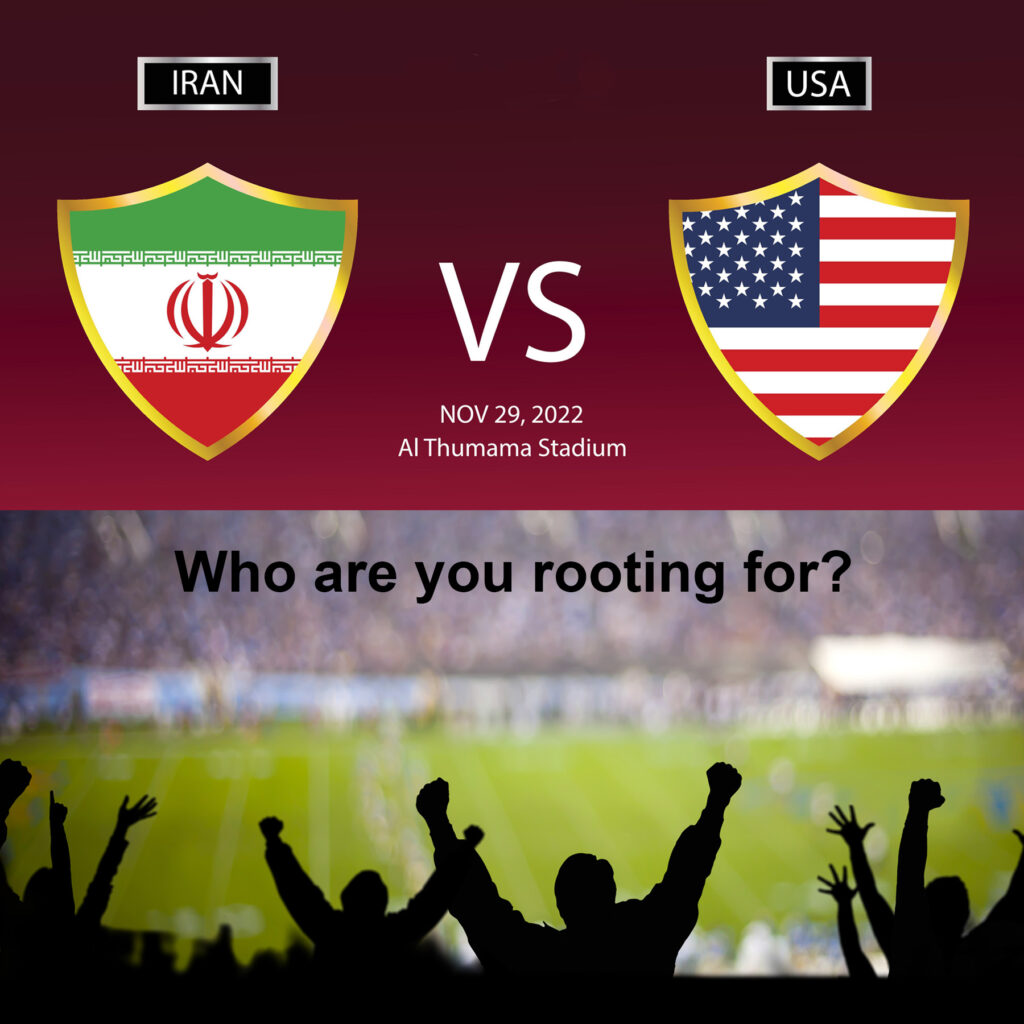
Fans rallying behind their teams during the 2022 World Cup — a reminder of just how much passion this tournament generates worldwide.
Moments like these are exactly why the World Cup generates more social conversation than almost any other sporting event. Similarly, every four years, new storylines emerge that keep fans glued to their screens from the opening match to the final whistle.
How to Watch World Cup Matches Live: A Step-by-Step Guide
If you want to catch every kickoff without missing a second, follow these steps below. This simple process works whether you’re watching from home, a sports bar, or on a mobile device while traveling.
- Confirm the match schedule in your local time zone. Kickoff times shift dramatically depending on the host country, so always double-check the official FIFA fixture list before making weekend plans around a match.
- Choose a broadcaster or streaming platform. Depending on your country, World Cup matches air on major networks or dedicated streaming apps, so compare options to find full coverage without blackouts.
- Set up your viewing environment in advance. Test your internet connection, television, or streaming device at least a day early to avoid missing kickoff due to last-minute technical issues.
- Join the global conversation while you watch. Follow official hashtags and team pages on social media so you can track live reactions, substitutions, and breaking news alongside millions of other fans.
Why the World Cup Matters for Global Logistics and Freight
Here’s something most World Cup coverage completely ignores: the tournament triggers a massive, temporary shift in global supply chains. In fact, the surge in demand for jerseys, scarves, flags, and branded merchandise forces retailers to move inventory at record speed in the months leading up to kickoff.
Shipping Surge: Jerseys, Merchandise, and Stadium Supplies
As soon as qualification brackets are set, factories ramp up production of official merchandise, and freight networks scramble to move those goods from manufacturing hubs to retail shelves worldwide. For example, our breakdown of how container rates from China surge during peak demand periods shows exactly how a single global event can tighten capacity across entire shipping lanes.
Customs, Freight Rates, and the World Cup Supply Chain
Host countries also see a spike in customs activity as broadcasting equipment, hospitality supplies, and even stadium construction materials cross borders. According to U.S. Customs and Border Protection, large-scale international events routinely require coordinated customs planning to keep goods — and fans — moving smoothly. Furthermore, our own Big Betsy transport team has seen firsthand how fan gear and promotional shipments spike every tournament cycle, proving that even a soccer match can shake up freight demand thousands of miles away from the stadium.
Comparing the World Cup to Other Global Sporting Events
It’s worth asking: how does the World Cup stack up against other massive sporting events? For comparison, check out our breakdown of Super Bowl viewership and logistics trends — while the Super Bowl is a single-day American event, the World Cup unfolds over roughly a month and draws a truly global audience, which is precisely why its cultural and economic footprint is so much larger.
Strategy also plays a huge role in both events. Much like a well-executed jujitsu match, World Cup teams rely on patience, positioning, and precise timing rather than brute force alone — a single tactical substitution can change the entire outcome of a knockout match.
Frequently Asked Questions About the World Cup
When is the next World Cup?
The next World Cup takes place in 2026, co-hosted by the United States, Canada, and Mexico, and it will be the first edition to feature 48 national teams.
How many teams qualify for the World Cup?
Historically, 32 teams qualified for the tournament. However, starting in 2026, that number expands to 48 teams, giving more nations a chance to compete on football’s biggest stage.
Why did USA play Iran in the 2022 World Cup?
Both nations were drawn into the same group during the 2022 World Cup. The match became a win-or-go-home decider, with the United States advancing thanks to a first-half goal from Christian Pulisic.
How does the World Cup affect shipping and freight rates?
The World Cup drives a temporary surge in demand for merchandise, broadcasting equipment, and stadium supplies, which in turn tightens shipping capacity and can push container and freight rates higher in the months surrounding the tournament.
Where can I watch World Cup matches live?
Match availability depends on your country’s broadcast rights, but official coverage is typically available through major television networks and licensed streaming platforms. Always confirm fixtures using the official FIFA website before kickoff.
Conclusion: Why the World Cup Remains Unmatched
Ultimately, the World Cup is far more than a month of football matches — it’s a global phenomenon that unites fans, reshapes travel patterns, and even sends ripples through international freight and shipping networks. From its humble beginnings in 1930 to the expanded 48-team format arriving in 2026, the tournament continues to grow in scale and cultural impact. So whether you’re tracking the knockout bracket, planning how to watch every match live, or simply curious about what teams you’re rooting for this cycle, one thing is certain: there’s no sporting event quite like the World Cup, and its influence reaches far beyond the final whistle.
#freighttec best freight agent program #freightagent #freightbrokerage #freightbroker #worldcup🏆