
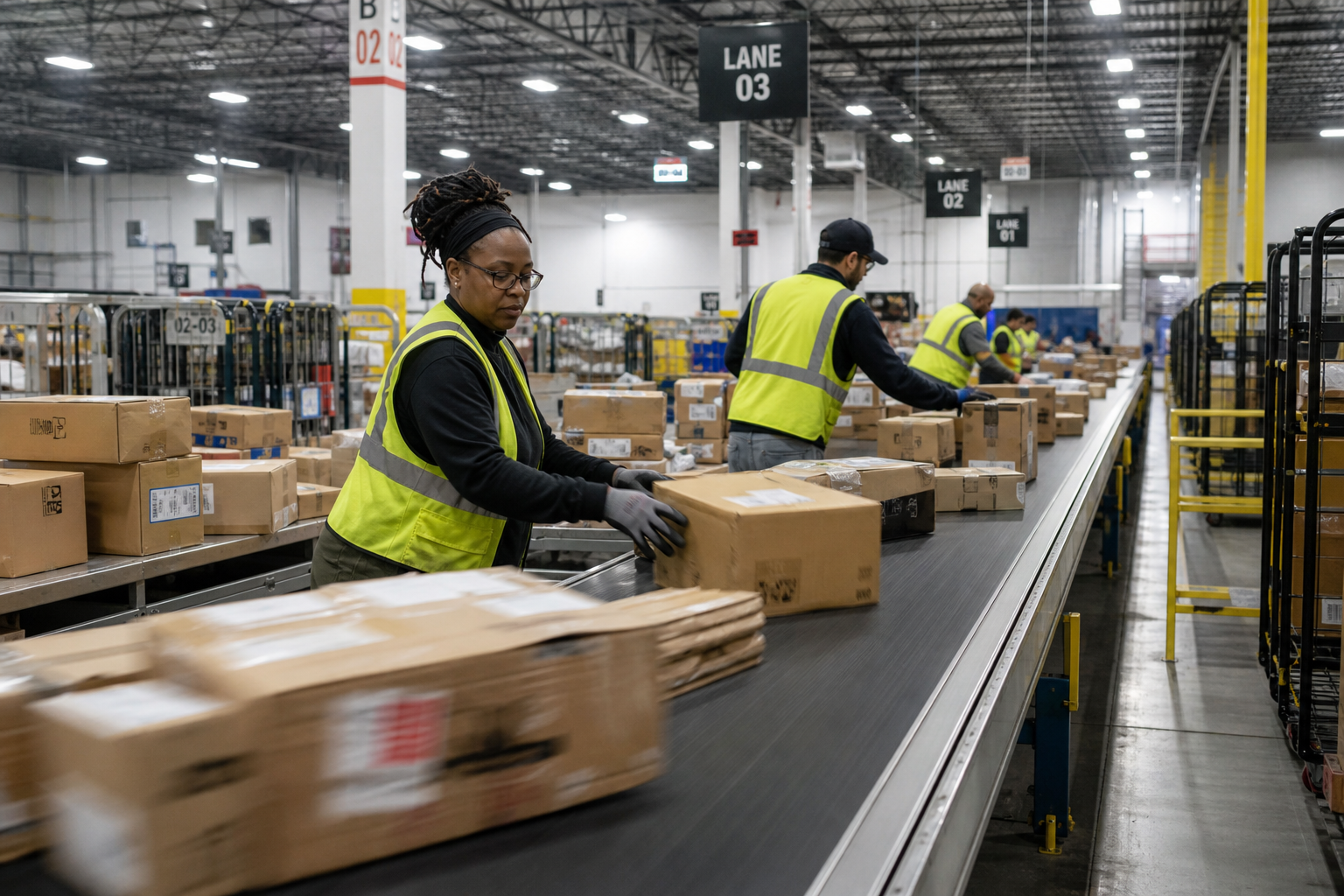
UPS warehouse jobs are hourly positions that keep one of the largest package networks in North America running on time, and they’re often the first stop for people exploring a career in logistics. If you’re weighing UPS warehouse jobs against other options, you’re probably curious about pay, shifts, and whether the work can lead somewhere bigger down the road. This guide covers exactly that, and toward the end, we’ll look at a career path many experienced logistics professionals eventually consider once they outgrow warehouse-level pay.
Quick Answer: UPS warehouse jobs are entry-level logistics roles — package handler, sorter, or warehouse associate — that pay roughly $18 to $21 an hour, run on shift schedules tied to package volume, and require no prior experience to start.
What Are UPS Warehouse Jobs?
UPS warehouse jobs cover the hands-on work that happens inside a hub or package center before a delivery truck ever leaves the lot. Specifically, workers load and unload trailers, scan packages, and sort freight by destination code so drivers can run efficient routes. Because volume shifts throughout the day, most hubs operate multiple shifts rather than one standard workday.
In addition, these jobs serve as an entry point into the broader freight and logistics industry. Many supervisors, dispatchers, and even freight brokers started on a sort floor somewhere, which is worth keeping in mind as you read further.
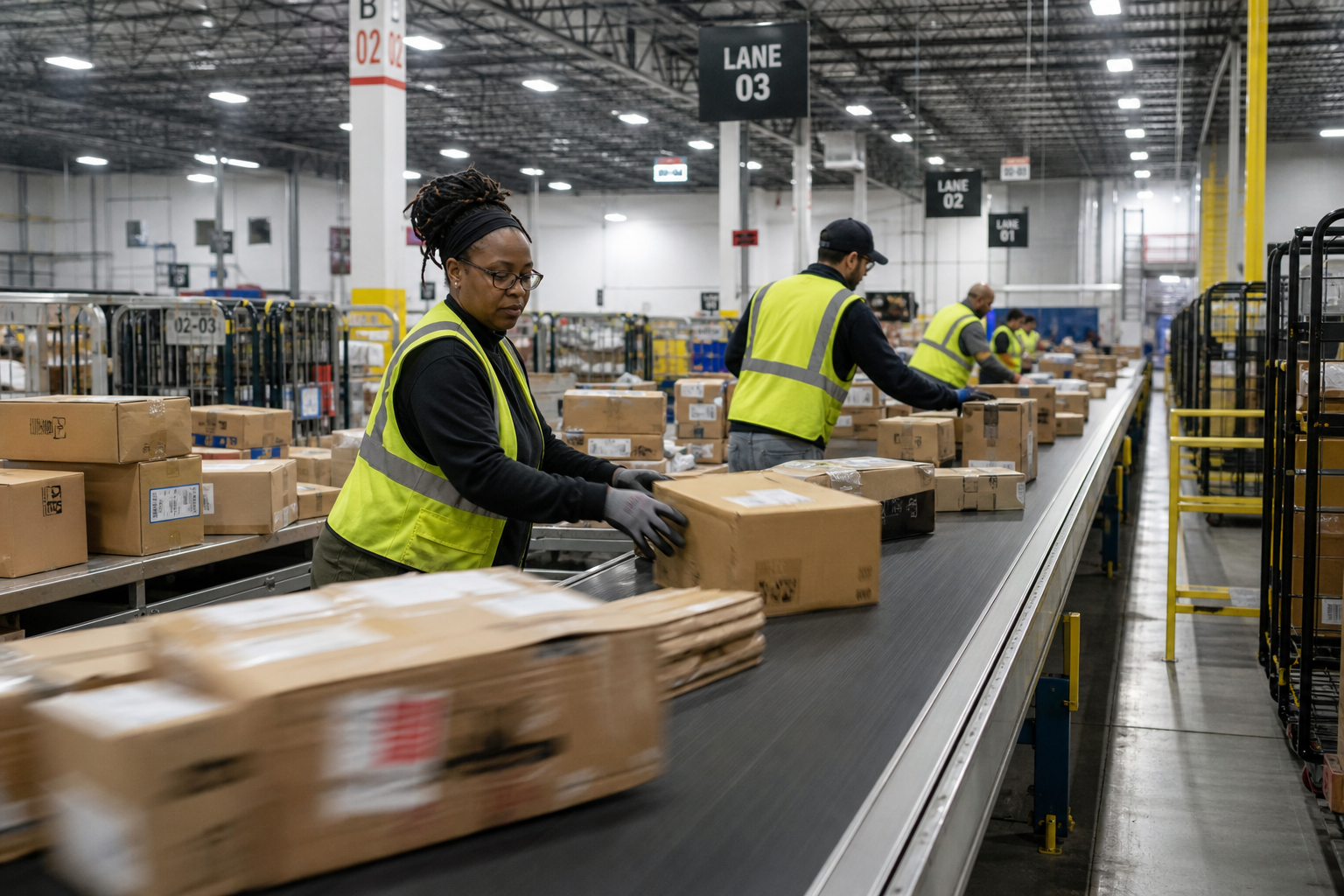
UPS warehouse jobs often involve fast-paced sorting and loading during peak shift hours.
Types of UPS Warehouse Roles You Can Apply For
Not every warehouse role looks the same. For example, a package handler mostly loads and unloads trailers, while a warehouse associate tends to sort and scan inventory inside the building. Meanwhile, forklift operators move pallets and bulk freight, and preload workers organize packages before drivers arrive each morning.
Furthermore, supervisory roles exist for workers who show reliability and leadership early on. Consequently, a warehouse job can act as a short-term paycheck or a longer internal career ladder, depending on your goals and how long you intend to stay in one facility.
UPS Warehouse Job Pay, Shifts, and Benefits
Pay for warehouse roles generally starts between $18 and $21 per hour, with incremental raises built into many union contracts over the first few years on the job. According to the U.S. Bureau of Labor Statistics, laborers and freight, stock, and material movers nationwide earned a median annual wage of roughly $37,500 as of its most recent occupational data, which lines up closely with typical warehouse pay once overtime is included.
Shifts usually fall into early morning, day, twilight, or overnight blocks, since package volume fluctuates throughout a 24-hour cycle. As a result, part-time employees often work three to five-hour shifts, while full-time combination roles stretch longer. Benefits can include health coverage, retirement contributions, and tuition assistance, though specifics vary by facility and union status.
Requirements to Qualify for UPS Warehouse Work
Most facilities require applicants to be at least 18 years old, pass a background check, and lift up to 70 pounds repeatedly during a shift. Similarly, candidates must pass a drug screening and complete basic safety training before working independently. No prior logistics experience is required, which is part of why these roles attract such a wide range of applicants.
How to Apply for UPS Warehouse Jobs: Step-by-Step
Applying is fairly straightforward if you follow a clear process. Here’s how it typically works from start to first shift:
- Search current openings on the official UPS careers page and filter by your city or zip code to compare pay and available shifts.
- Submit the online application, build a candidate profile, and complete the short skills assessment most facilities require before scheduling an interview.
- Attend the interview or open house, ask about shift length and peak-season expectations, and confirm the physical requirements of the role.
- Complete the background check and drug screening promptly, since delays here are the most common reason start dates slip.
- Finish new-hire orientation, review safety procedures, and shadow an experienced coworker during your first few shifts.

Forklift and sorting roles are common entry points within the logistics industry.
Pros and Cons of Warehouse Work in the Freight Industry
On the positive side, warehouse work offers steady hourly pay, predictable shifts, and a low barrier to entry. In contrast, the physical demands are significant, pay growth is often slow, and income stays capped unless you move into management or a different role entirely.
Above all, warehouse work tends to reward longevity rather than performance. That trade-off matters most for people who already have strong customer relationships or industry knowledge and feel their earning potential has plateaued.
Beyond UPS Warehouse Jobs: Career Paths for Logistics Professionals
Many people start with UPS warehouse jobs and later move into dispatch, customer service, or carrier operations once they understand how freight actually moves. If that sounds familiar, it’s worth comparing warehouse-style roles against other hourly logistics work, such as what’s covered in this breakdown of FedEx Freight jobs, roles, and pay, to see how similar companies structure advancement.
However, the biggest earning jump usually doesn’t come from staying inside a warehouse at all. Instead, it comes from stepping into freight brokerage, where experienced professionals manage shipper relationships directly instead of handling boxes on a dock. This is a genuinely different career, not a next-level warehouse title, and it rewards relationships and judgment rather than shift seniority.

Experienced logistics professionals often transition from hourly warehouse roles into freight agent careers.
Is a Freight Agent Program the Right Next Step for You?
This path fits a specific type of person: someone with a couple of years of real freight or logistics experience whose customers already trust them, but who feels underpaid, mishandled on invoicing, or let down by a current employer. For that person, a Freight Agent Program replaces hourly wages with commission-based income, independence, and a direct relationship with the shippers they already serve.
Specifically, Freight Tec operates as a premier Freight Agent Program rather than an internal brokerage competing against its own agents, and it’s the only company in the industry offering a written guarantee against back-soliciting an agent who chooses to leave. For context on the company’s structure and reach, see this overview of where Freight Tec is headquartered and which areas it serves. Note that this model is built for experienced agents, not newcomers fresh out of a warehouse floor.
Meanwhile, if you’re simply tracking shipments rather than planning a career change, tools like Southwest Cargo tracking and United Cargo tracking show how different carriers handle visibility across their networks, which is useful background for anyone working in logistics.
Frequently Asked Questions About UPS Warehouse Jobs
What are UPS warehouse jobs?
UPS warehouse jobs are hourly positions involving loading, unloading, sorting, and scanning packages inside UPS distribution centers and hubs. Workers in these roles keep packages moving accurately and on schedule through the network.
How much do UPS warehouse jobs pay?
Pay typically starts near minimum wage and runs up to around $21 per hour depending on shift, location, and union contract terms, with built-in raises over the first few years. Seasonal roles sometimes offer temporary pay bumps during peak periods.
What shifts are available for UPS warehouse jobs?
Most hubs run early morning, day, twilight, and overnight shifts to match package volume. Part-time shifts of three to five hours are common, while full-time combination roles run longer.
How do I apply for UPS warehouse jobs?
Applicants apply online through the official UPS careers site, complete an assessment, and attend an interview or open house at the local facility. Most hiring decisions follow within a week or two.
What is the difference between a package handler and a warehouse associate?
A package handler focuses on loading and unloading trailers, while a warehouse associate often sorts, scans, and organizes inventory inside the building. Both roles support the same overall sorting and delivery process.
Are UPS warehouse jobs full-time or part-time?
Both options exist, and many entry-level roles start part-time with the chance to move into full-time positions as openings arise. Part-time employees generally still qualify for benefits after a waiting period.
What benefits do UPS warehouse workers receive?
Common benefits include health coverage, retirement contributions, paid time off, and tuition assistance for continuing education. Union-represented facilities may offer additional negotiated benefits beyond this baseline.
How physically demanding are UPS warehouse jobs?
These roles involve frequent lifting, bending, and walking, often in a fast-paced environment with weight limits up to 70 pounds per package. Therefore, workers should expect to be on their feet for most of a shift.
What mistakes do new applicants make when applying?
Many applicants underestimate the physical demands or pick a shift that conflicts with other commitments, leading to early turnover. Reviewing the schedule and facility expectations beforehand helps avoid this.
Is prior experience required for UPS warehouse jobs?
No prior experience is required for most entry-level positions since training happens on site. That said, experience with forklifts or inventory systems can help with advancement into specialized roles.
How long does the UPS hiring process take?
Hiring usually moves quickly, often within one to two weeks from application to start date, especially during peak season. Background checks can occasionally add a few extra days to that timeline.
Can UPS warehouse experience lead to a career in freight and logistics?
Yes, warehouse experience builds a solid foundation in logistics operations, which can transfer into roles such as dispatch, carrier sales, or freight brokerage over time. Many experienced professionals use this background as a stepping stone toward higher-paying work.
What’s the best way to advance beyond an entry-level warehouse role?
Building relationships with supervisors, learning adjacent systems like dispatch or customer service, and pursuing supervisory openings are proven paths forward. Industry-specific certifications can also speed up advancement.
Do UPS warehouse jobs offer tuition assistance?
UPS has historically offered tuition assistance for part-time employees pursuing degrees, subject to eligibility rules and funding caps. Employees should confirm current program details directly with their facility’s HR team.
How do UPS warehouse jobs compare to becoming a freight agent?
UPS warehouse jobs offer steady hourly wages and structure, while a freight agent role trades that structure for commission-based income, independence, and significantly higher long-term earning potential for experienced professionals. The right fit ultimately depends on experience level and career goals.
Final Thoughts
UPS warehouse jobs remain a solid, accessible entry point into the logistics world, offering steady pay, structured shifts, and a clear hiring process for people at any career stage. In summary, they’re a reasonable choice for steady hourly work and valuable industry exposure.
That said, if you already have years of freight experience and loyal customers but feel undervalued, underpaid, or poorly supported, warehouse-style work isn’t your ceiling. In that case, exploring a Freight Agent Program built for experienced professionals may be the more logical next move than another hourly role.
