

Oak Harbor Freight tracking is one of the most searched phrases in Pacific Northwest logistics, yet it rarely leads anywhere useful anymore. That’s because Oak Harbor Freight Lines, the regional less-than-truckload (LTL) carrier that served Washington, Oregon, Idaho, and neighboring states for more than a century, ceased operations in 2023. If you’ve been plugging an old pro number into a tracking box and getting nothing back, you’re not doing anything wrong — the carrier simply isn’t there anymore. This guide explains what happened, how to track freight that used to move with Oak Harbor, and what shippers should do next.
Quick Answer: Oak Harbor Freight tracking no longer returns results because Oak Harbor Freight Lines shut down in 2023. Any current shipment is now handled by a different carrier, so you need that carrier’s own tracking tool, not the old Oak Harbor system.

Shippers searching for oak harbor freight tracking now need to confirm which carrier currently holds their freight.
What Is Oak Harbor Freight Tracking?
Oak Harbor Freight tracking refers to the process shippers and receivers once used to monitor the status of LTL shipments moving through Oak Harbor Freight Lines, a carrier that operated in the Pacific Northwest for more than 100 years before closing in 2023. Today, there is no active tracking portal, because the carrier is no longer in business. Understanding this history helps explain why old tracking numbers return errors and what alternatives now exist for shippers who still need visibility into their freight.
What Happened to Oak Harbor Freight Lines?
Founded in 1916, Oak Harbor Freight Lines grew into one of the Pacific Northwest’s most recognized LTL carriers, moving freight across Washington, Oregon, Idaho, Montana, Nevada, Utah, and Northern California. For generations, shippers relied on the company’s regional network and asset-based trucking model. However, rising operating costs, driver shortages, and softening freight demand squeezed margins across the trucking industry in the early 2020s. According to industry trade coverage at the time, Oak Harbor announced in 2023 that it would wind down operations, laying off employees and ceasing new freight pickups. As a result, thousands of shippers who depended on the carrier had to quickly find new transportation partners mid-shipment. This is precisely why so many people still search for oak harbor freight tracking today; they remember the brand, but the company behind it no longer exists. For background on how LTL networks function more broadly, the Wikipedia overview of less-than-truckload shipping is a useful reference point.
Why Your Tracking Number Isn’t Working
If you still have an old pro number, bill of lading, or shipment ID from Oak Harbor, there is a simple explanation for the dead end. Tracking systems only function while the originating carrier maintains active servers, dispatch software, and customer-facing portals. Once a trucking company closes, as Oak Harbor did, those systems go offline, usually within weeks of the shutdown. Consequently, any tracking number tied to that carrier becomes permanently inactive. In addition, freight that was in transit when the closure happened was typically transferred to partner carriers or returned to shippers, meaning the original tracking record no longer reflects where the freight actually ended up. If you suspect your freight ended up with a new carrier, the FMCSA SAFER company snapshot tool can help confirm whether a carrier is currently authorized to operate.
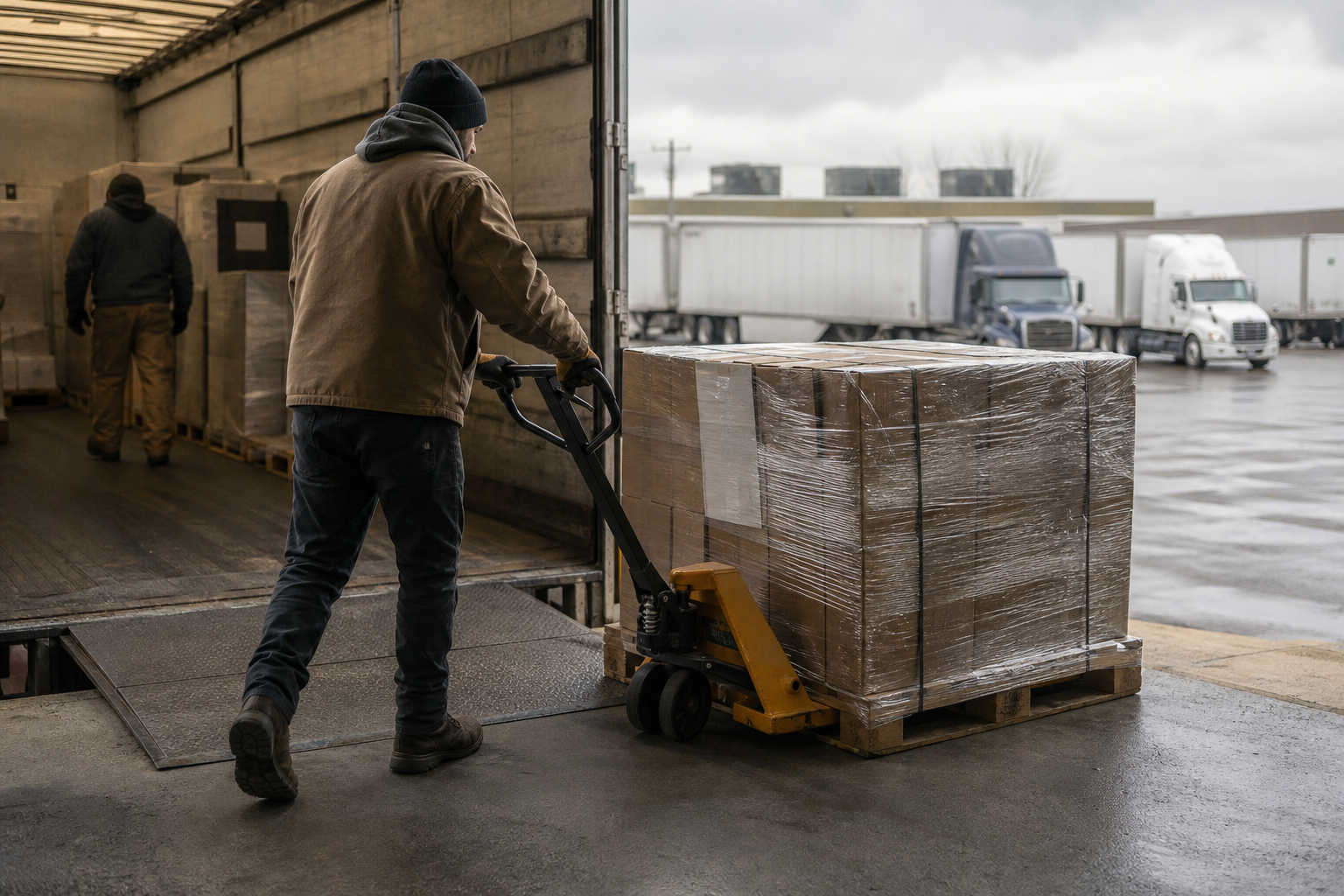
When one carrier exits the market, freight typically transfers to another provider’s dock network.
How to Track LTL Freight Shipments Today
The fastest way to track an LTL shipment now is to work with your current carrier’s tracking portal or your freight broker’s visibility tools, rather than searching for a defunct carrier. Follow these steps for any active shipment.
- Confirm your current carrier. Check your bill of lading or rate confirmation to verify which carrier is actually moving your freight today, since many former Oak Harbor customers were reassigned to new regional or national LTL providers after the 2023 shutdown.
- Use the correct tracking portal. Enter the PRO number or BOL number from your current carrier directly into that carrier’s own tracking portal, because tracking numbers are never interchangeable between different trucking companies.
- Request broker visibility. Ask your freight broker or 3PL for a direct status update or automated alert, since brokers maintain carrier relationships and can often retrieve tracking information faster than searching multiple portals yourself.
- Set up proactive milestone alerts. Enroll in email or text notifications for pickup, in-transit, and delivery milestones so you are not stuck manually refreshing a tracking page every few hours while your shipment is on the road.
Similarly, if you regularly ship with multiple modes, it helps to understand how tracking differs across freight types. For comparison, see how United Cargo tracking works for air cargo shipments, or how Delta Cargo tracking handles air freight visibility, since the underlying logic of PRO numbers versus air waybills is different enough to trip up shippers moving between modes.
Alternatives to Oak Harbor Freight for Pacific Northwest Shipping
Shippers who once relied on Oak Harbor now have a few paths forward. In particular, the table below outlines the general categories worth evaluating when rebuilding a shipping plan.
| Option | Coverage | Best For |
|---|---|---|
| Regional LTL carriers | Pacific Northwest and West Coast | Short-haul, frequent-lane shippers |
| National LTL carriers | Coast to coast, including Canada and Mexico | Multi-region shippers needing broader reach |
| Freight brokers / 3PLs | Nationwide, with vetted carrier networks | Shippers wanting one point of contact and backup carriers |
Above all, a broker-managed approach tends to hold up better through disruptions, since a single carrier closure does not leave you starting from scratch.
How a Freight Broker Keeps Your Shipments Visible
A freight broker’s real value shows up exactly in moments like the Oak Harbor closure. Instead of relying on a single carrier’s portal, a broker pulls status updates from a whole network of vetted carriers, so a shipment never truly goes dark just because one provider exits the market. Freight Tec, for example, operates as an outsourced shipping department for shippers, connecting them to truckload, LTL, drayage, intermodal, and specialized carriers across the U.S., Canada, and Mexico. As a result, when a carrier disruption happens, shippers working through a broker simply get rerouted to another qualified partner rather than losing visibility entirely. You can learn more about how this works directly at freight-tec.com.

Freight brokers often confirm shipment status directly with carrier dispatch, filling the gap left by inactive tracking portals.
When Tracking Problems Signal a Bigger Broker Problem
If you’re an experienced freight agent and this story sounds familiar, it’s worth pausing here. Service failures, like the kind caused by a carrier suddenly closing, often expose deeper issues: invoicing errors, poor communication, and brokers who leave agents scrambling to explain problems they didn’t create. Freight Tec built its Freight Agent Program specifically for agents with 2 or more years of experience whose customers already trust them, but whose current company has let them down through underpayment, mistreatment, or broken promises. Unlike many brokers, Freight Tec has no internal brokerage department and no company-owned offices, so it never competes with its own agents. It is also the only broker in the U.S. known to provide a written guarantee against back-soliciting an agent who chooses to leave. Combined with TIA Top 100 recognition, NASTC “Best Broker” status, and approval to haul sensitive military freight, this track record speaks to the kind of stability agents look for. If your current setup feels unreliable, a conversation with Freight Tec costs nothing and clarifies your options.
Related Reading on Freight and Port Shipping
For shippers navigating other confusing freight terms, it also helps to understand how “harbor freight” references get mixed up in search results. See our guides on harbor freight sales and port shipping and the broader harbour freight explained port shipping guide, both of which clear up common naming confusion in the freight industry. Therefore, whether you’re tracking LTL freight or researching port logistics terminology, context matters more than the search term alone.
Common Mistakes Shippers Make When Tracking Freight
Many shippers waste time chasing outdated information. For instance, one common mistake is assuming a tracking number works universally across carriers, when in reality each carrier’s system is closed off from the others. Another frequent error is waiting too long to escalate a stalled shipment; industry data suggests that freight delays reported within the first 24 hours are resolved significantly faster than those reported after 48 hours or more. Furthermore, shippers sometimes fail to update their contact information with a new carrier after a transition, which causes milestone alerts to silently fail. In contrast, shippers who confirm carrier details upfront and request proactive alerts rarely experience extended visibility gaps.
Frequently Asked Questions
What is oak harbor freight tracking?
Oak Harbor Freight tracking refers to checking the status of LTL shipments that used to move with Oak Harbor Freight Lines, a Pacific Northwest carrier that closed in 2023. There is no active tracking portal today because the carrier no longer operates.
Is Oak Harbor Freight Lines still in business?
No. Oak Harbor Freight Lines, founded in 1916, ceased operations in 2023 after decades of serving the Pacific Northwest. Its tracking systems and customer portals went offline shortly after the shutdown.
Why does my Oak Harbor Freight tracking number show an error?
Tracking numbers only function while the originating carrier’s servers remain active. Since Oak Harbor closed, any PRO number or bill of lading tied to that carrier is permanently inactive.
How can I track an LTL shipment without Oak Harbor?
Confirm which carrier is currently moving your freight, then use that carrier’s own tracking portal with the new PRO or BOL number. A freight broker can also pull real-time status updates on your behalf.
What carriers now serve former Oak Harbor Freight routes?
Several regional and national LTL carriers expanded into the Pacific Northwest after the closure, absorbing freight volume that Oak Harbor once handled. A freight broker can match your shipment to the best available option for your lanes.
How much does LTL freight shipping typically cost?
LTL costs vary by weight, freight class, distance, and accessorial charges, but most shipments are priced per hundredweight with minimums often running a few hundred dollars. Working with a broker often secures better rates through volume-based carrier relationships.
How long does LTL freight tracking update take to refresh?
Most active LTL carriers update tracking data every few hours as freight moves through terminals. Delays beyond 24 hours without an update usually warrant a direct call to the carrier or broker.
What is the biggest mistake shippers make when tracking freight?
The most common mistake is assuming an old carrier’s tracking number still applies after a shipment has been rerouted. Shippers should always confirm the current carrier and PRO number before searching.
What’s the difference between carrier tracking and broker tracking?
Carrier tracking shows data from a single trucking company’s system, while broker tracking consolidates updates across multiple carriers into one view. This matters most when shipments move through several hands before delivery.
How can a freight broker improve shipment visibility?
A broker with strong carrier relationships can proactively monitor shipments, flag delays early, and communicate directly with dispatchers rather than waiting on an automated portal. This reduces the guesswork for shippers.
What should I do if my freight is stuck in transit with no tracking update?
Contact the carrier or broker directly with your BOL number and pickup date rather than refreshing the portal repeatedly. If the shipment originally moved with a now-closed carrier, ask who absorbed the freight after the shutdown.
Can a freight agent help me find a reliable LTL carrier?
Yes. Experienced freight agents maintain vetted carrier networks and can quickly place freight with a dependable LTL provider, which is especially useful after a disruption like the Oak Harbor closure.
What qualifications should I look for in a freight broker?
Look for bonding, errors and omissions insurance, carrier vetting standards, and industry recognition such as TIA certification. These factors indicate a broker is financially stable and operationally reliable.
Is Freight Tec a freight broker or a carrier?
Freight Tec is a freight brokerage, not a carrier. It connects shippers with qualified truckload, LTL, and specialized carriers while supporting an independent Freight Agent network across the U.S.
How do I switch freight brokers without disrupting tracking visibility?
Transition shipments at a natural break point, such as between pickups, and give the new broker your current carrier list in advance. A well-organized broker can set up tracking and alerts before the first load even moves.
Final Takeaway
Oak Harbor Freight tracking stopped working for a simple reason: the carrier behind it closed its doors in 2023, taking its tracking systems offline for good. However, that doesn’t mean shippers are stuck without visibility. By confirming your current carrier, using the correct tracking portal, and leaning on a freight broker’s network when things get complicated, you can keep tabs on freight just as reliably as before. And if you’re a seasoned freight agent who has watched carrier disruptions expose weak support from your own broker, it may be worth exploring a program built around stability, written guarantees, and agents who are treated as true partners rather than numbers on a spreadsheet.
