

Mediterranean Shipping Company, better known in the freight world as MSC, is one of the largest ocean carriers moving containerized cargo across the globe. If you are a shipper, freight agent, or anyone responsible for getting product from a factory overseas to a warehouse in the United States, understanding how this carrier operates matters more than most people realize. Mediterranean Shipping Company is a Swiss-headquartered container line that, as a result of rapid fleet expansion, now ranks among the top ocean carriers serving U.S. trade lanes.
Quick Answer: Mediterranean Shipping Company (MSC) is a global ocean carrier that transports containerized freight for shippers worldwide. It is one of the two largest container lines by vessel capacity, with service to major U.S., Canadian, and international ports.
For a shipper, that scale brings advantages and challenges in equal measure. Therefore, the goal of this guide is simple: explain what Mediterranean Shipping Company does, how it fits into a broader supply chain, and where a freight broker or agent can make the entire process less stressful.

Ocean carriers like Mediterranean Shipping Company move freight across global trade lanes every day.
What Is Mediterranean Shipping Company?
Mediterranean Shipping Company is a privately held container shipping line founded in Brussels in 1970 and now headquartered in Geneva, Switzerland. In short, it operates ocean vessels that carry standardized shipping containers between ports on nearly every continent. Over the past five decades, the company has grown from a single ship into a fleet that, according to Alphaliner industry tracking data, surpassed Maersk in 2022 to become the world’s largest container carrier by total capacity.
Specifically, MSC now operates several hundred vessels and calls at more than 500 ports across roughly 155 countries. For U.S. shippers, this means access to extensive route coverage, though it also means navigating a carrier network large enough that service can vary by lane and season.
How MSC Fits Into the Global Shipping Industry
MSC competes directly with other major carriers such as Maersk, CMA CGM, and COSCO Shipping for transpacific, transatlantic, and Asia-Europe trade lanes. In contrast to some rivals, MSC has grown largely through aggressive vessel acquisition rather than carrier alliances alone, which has allowed it to control more of its own capacity. As a result, shippers booking with MSC sometimes find more flexible scheduling during peak shipping seasons compared to carriers relying heavily on shared alliance vessels.
Services This Ocean Carrier Provides Shippers
Beyond standard dry container service, Mediterranean Shipping Company offers refrigerated containers for temperature-sensitive cargo, flat-rack and open-top equipment for oversized freight, and specialized handling for project cargo. In addition, MSC provides intermodal rail connections in many regions, allowing containers to move inland after they clear the port without requiring a separate carrier arrangement.
Shippers in automotive, retail, industrial, and agricultural sectors all rely on carriers like MSC for different reasons. For example, an automotive parts importer may need reliable transit windows to keep an assembly line stocked, while a retailer may prioritize cost efficiency over speed during off-peak seasons. Understanding which service tier fits a specific shipment is one of the first decisions a shipper has to make, and it is also where many shippers start to feel overwhelmed without guidance.
Comparing Mediterranean Shipping Company to Other Global Carriers
No single ocean carrier is the right fit for every shipment. Consequently, shippers often compare MSC against carriers like COSCO Shipping or regional lines before committing to a booking. If you want a deeper look at how another major carrier operates, our complete guide to COSCO Shipping walks through similar considerations for that line.
Price is rarely the only factor worth weighing. Port coverage, equipment availability, documentation support, and historical on-time performance all affect the real cost of a shipment. For instance, a slightly higher base rate from one carrier can still work out cheaper overall if it avoids demurrage charges caused by container delays.

Careful documentation review helps shippers avoid costly ocean freight delays.
Tracking a Shipment Moving Through MSC
Once cargo is booked, tracking becomes the next priority. Most shippers use the booking number or bill of lading to follow container status directly through the carrier’s online portal. However, for shippers managing multiple vendors or carriers at once, that process can quickly become a patchwork of logins and spreadsheets.
If your shipments regularly move through MSC specifically, our dedicated guide to MSC container tracking breaks down the exact steps for monitoring cargo status from departure to final delivery.
How to Book Ocean Freight Step by Step
Whether you book directly with a carrier or through a broker, the general process stays consistent. Here is how most shippers move freight through a major ocean line like MSC:
- Confirm cargo details and documentation. Gather commodity descriptions, weights, dimensions, and any hazardous material classifications before requesting a quote.
- Request and compare rate quotes. Look at transit time and equipment availability alongside price, not just the lowest number.
- Secure the booking and container allocation. Confirm the vessel schedule and cutoff dates so cargo arrives at port on time.
- Coordinate drayage and inland transportation. Arrange trucking from the port to the final destination around receiver appointment windows.
- Track the shipment and manage exceptions. Watch for delays or customs holds and respond quickly when issues come up.
Where Shippers Run Into Trouble
Even experienced shippers run into friction points. Missed cutoff dates, incomplete customs paperwork, and underestimated transit buffers are among the most common mistakes, and they tend to compound during peak shipping season. Above all, these problems rarely show up in isolation; a documentation error often triggers a chain reaction of delays, storage fees, and frustrated customers.
Why Shippers Work With a Freight Broker for Ocean Moves
This is exactly where working with an experienced freight broker makes a measurable difference. Instead of managing carrier relationships, documentation, and inland logistics alone, shippers can lean on a broker who already understands how carriers like Mediterranean Shipping Company operate day to day. Freight Tec, for example, functions as an outsourced shipping department for shippers, handling the coordination between ocean carriers, drayage providers, and warehousing so the shipper’s team does not have to become ocean freight experts themselves.
Freight Tec’s agents, each backed by decades of combined logistics experience, work directly with shippers across diverse industries to manage truckload, LTL, drayage, intermodal, and international freight movements. As a Top 100 Freight Broker recognized by TIA and Inc. Magazine, Freight Tec applies the same rigor to ocean-connected freight that it applies to domestic truckload and specialized shipments.
Choosing the Right Logistics Partner
Not every freight broker handles international and ocean-connected freight with the same level of care. Consequently, shippers should ask pointed questions about carrier relationships, claims handling, and insurance coverage before signing on with any provider. Our comparison of Freight Tec versus other freight brokers outlines what to look for when vetting a logistics partner.
For freight agents reading this who have built strong customer relationships but feel undervalued by their current broker, Freight Tec’s agent program offers high commission splits, 24/7/365 support, and a written guarantee against back-solicitation if an agent ever chooses to leave. You can learn more or start a conversation through the Freight Tec message board or by visiting freight-tec.com directly.
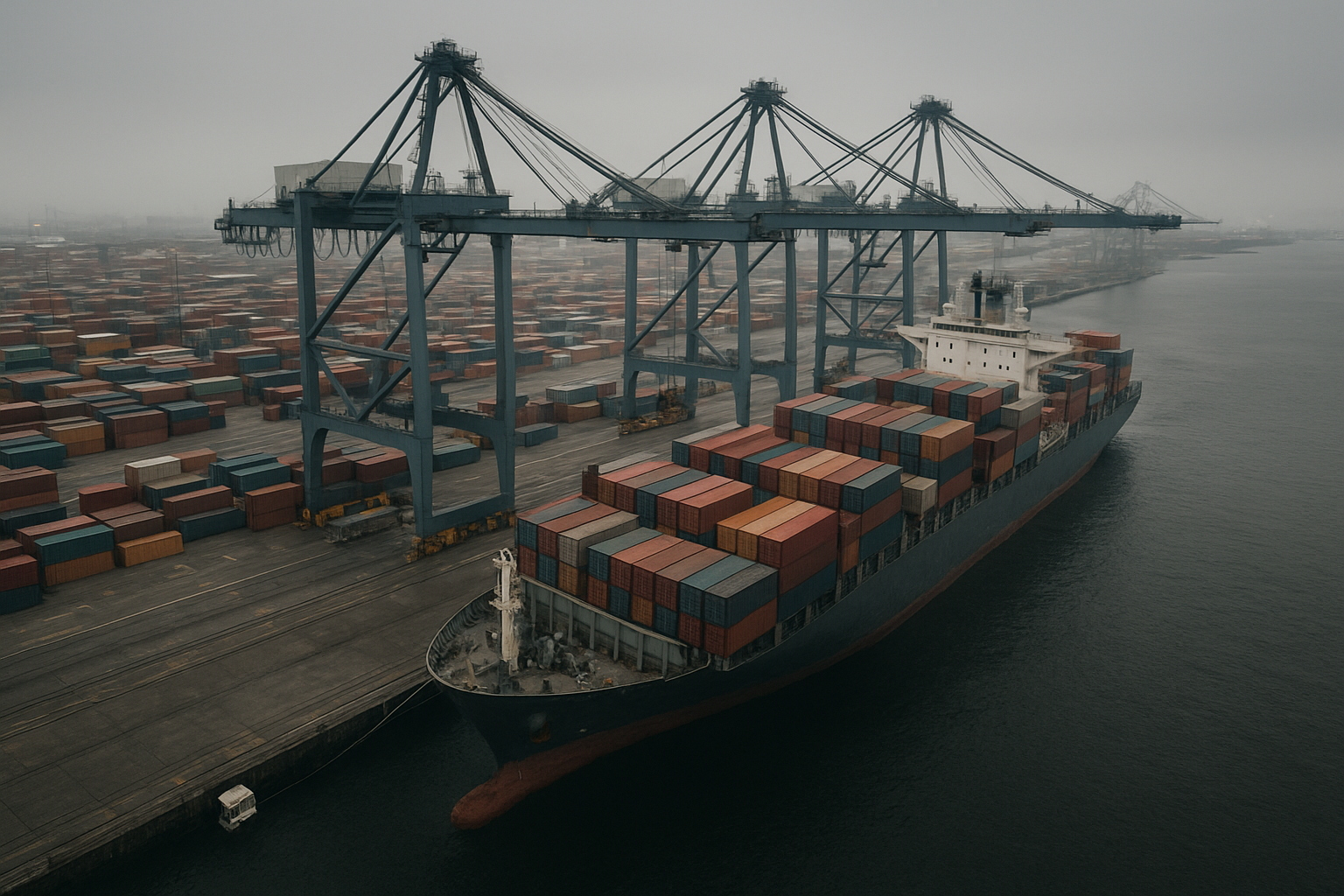
Port terminals coordinate closely with ocean carriers to keep cargo moving on schedule.
Frequently Asked Questions About Mediterranean Shipping Company
What is Mediterranean Shipping Company?
Mediterranean Shipping Company, or MSC, is a Switzerland-based ocean carrier that operates one of the largest container shipping fleets in the world. It transports cargo for shippers across global trade lanes, including routes serving the United States.
Is MSC the same as Mediterranean Shipping Company?
Yes, MSC is simply the shortened name for Mediterranean Shipping Company. Both terms refer to the same global container carrier founded in 1970.
How big is Mediterranean Shipping Company’s fleet?
MSC operates a fleet of several hundred vessels and surpassed Maersk in 2022 to become the largest container carrier by capacity, according to Alphaliner industry data. Its network covers more than 500 ports worldwide.
Does Mediterranean Shipping Company ship to the United States?
Yes, MSC serves major U.S. ports on the East, West, and Gulf coasts. Shippers commonly use MSC for imports and exports connecting to inland freight networks.
How do I track an MSC container shipment?
You can track an MSC container using the booking or bill of lading number through MSC’s online tracking tool. Many shippers also rely on a freight broker to monitor status updates and flag delays.
What is the difference between MSC and COSCO?
MSC is a privately held Swiss carrier while COSCO is a Chinese state-affiliated shipping line, and each maintains different trade lane strengths and alliance partnerships. Shippers often compare transit times, equipment availability, and pricing between the two before booking.
Why would a shipper use a freight broker instead of booking directly with MSC?
A freight broker negotiates rates across multiple carriers, manages documentation, and troubleshoots problems that arise mid-shipment. This saves shippers time and often reduces costly errors in customs paperwork or equipment scheduling.
How much does it cost to ship with Mediterranean Shipping Company?
Ocean freight rates with MSC vary by trade lane, container type, fuel surcharges, and seasonal demand, so there is no single fixed price. Working with a broker who regularly books with MSC can help shippers benchmark fair market rates.
How long does MSC ocean freight take?
Transit times depend heavily on the origin and destination ports, but transpacific routes commonly take 20 to 35 days including port handling. Delays at congested ports can extend these timelines significantly.
What types of cargo does Mediterranean Shipping Company handle?
MSC handles standard dry containers, refrigerated cargo, oversized freight, and specialized equipment for project cargo. This flexibility makes it a common choice for shippers across automotive, retail, and industrial sectors.
What are common mistakes shippers make when booking with large ocean carriers?
Common mistakes include underestimating transit buffers, missing documentation deadlines, and failing to confirm container availability during peak season. These errors often lead to costly delays or missed delivery windows.
Can a freight agent help manage shipments moving through Mediterranean Shipping Company?
Yes, an experienced freight agent can coordinate drayage, warehousing, and inland trucking once cargo clears an MSC vessel. This end-to-end oversight helps shippers avoid the handoff gaps that often cause delays.
What is the best way to compare ocean carriers before shipping?
Compare reliability data, port coverage, transit times, and total landed cost rather than base rate alone. A knowledgeable freight broker can provide this comparison across carriers without the shipper doing the legwork themselves.
Does Freight Tec work directly with Mediterranean Shipping Company?
Freight Tec agents arrange international and domestic freight movements that may involve major ocean carriers like MSC as part of a shipper’s full supply chain. Freight Tec focuses on managing the shipper relationship, documentation, and inland logistics around the ocean leg, drawing on authoritative references such as MSC’s company history and guidance from the Federal Maritime Commission to stay current on industry standards.
Final Takeaways on Mediterranean Shipping Company
Mediterranean Shipping Company stands out as one of the world’s dominant ocean carriers, with the fleet size and port coverage to move cargo almost anywhere a shipper needs it to go. However, scale alone does not guarantee a smooth shipment. Documentation accuracy, carrier comparisons, and reliable inland coordination all still matter just as much as choosing the right ocean line.
In the end, whether you book directly or through a partner, treating Mediterranean Shipping Company as one piece of a larger, well-managed supply chain is what keeps freight moving on time. For shippers who would rather hand that coordination to a trusted team, or freight agents who want a broker that actually has their back, Freight Tec’s freight brokerage and agent network is built around exactly that kind of reliability.