
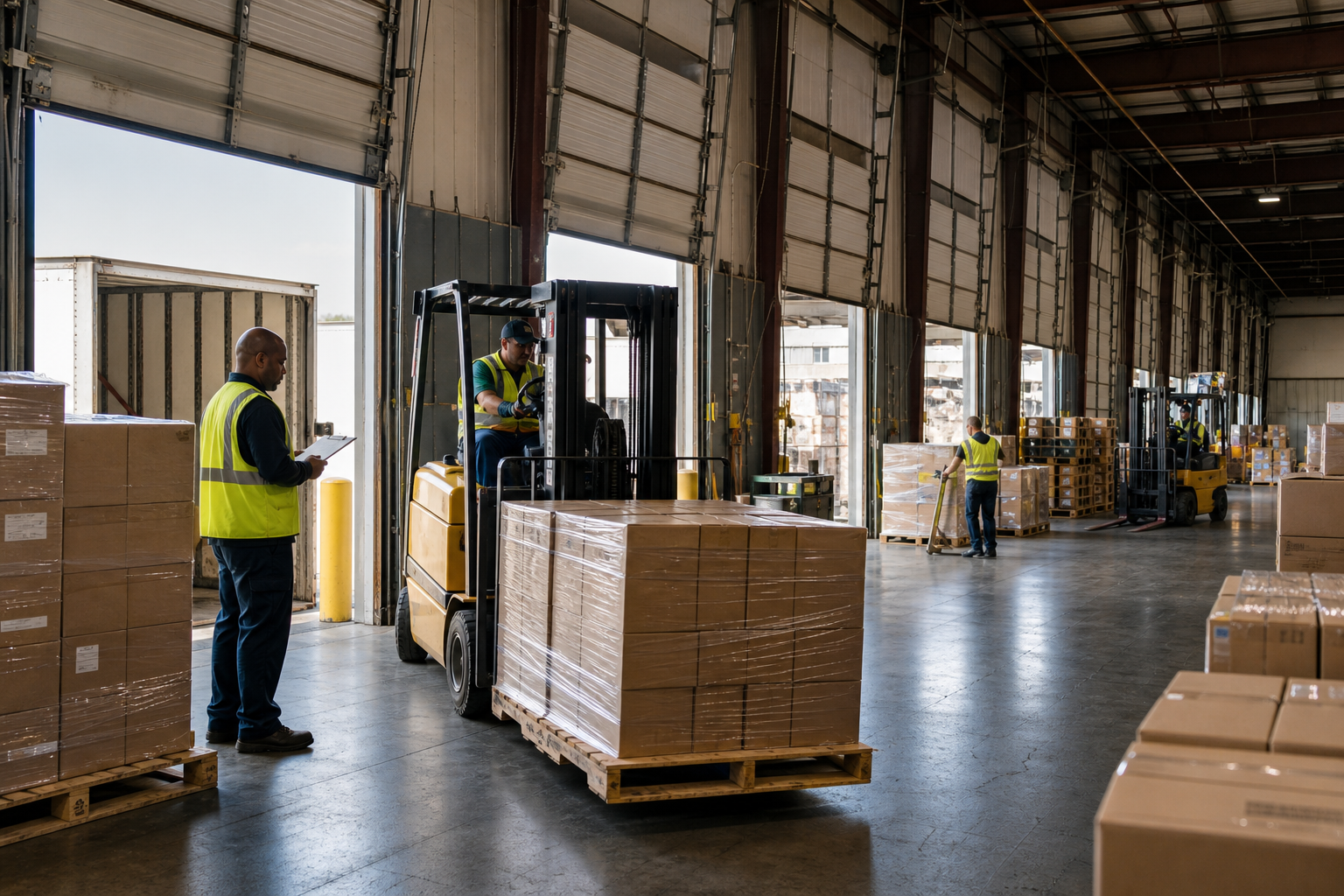
A freight house is a warehouse or terminal facility where carriers receive, sort, consolidate, and transfer shipments between trucks, trains, ships, or planes before freight continues on to its final destination. If you have ever shipped less-than-truckload (LTL) freight, your cargo almost certainly passed through one of these facilities, even if you never saw it happen. Understanding how a freight house works helps shippers and carriers alike make smarter decisions about who they trust to move their freight.
Direct answer: A freight house is a cross-dock facility where inbound shipments are sorted, consolidated with other freight headed the same direction, and loaded for the next leg of their journey. It is the backbone of efficient LTL, intermodal, and port-based freight movement across the United States, Canada, and Mexico.
What Is a Freight House?
A freight house is, at its core, a short-term sorting and transfer point. Freight arrives from one carrier, gets staged and reorganized, and then departs on a different truck, rail car, or vessel heading toward its next stop. Unlike a distribution warehouse, a freight house is not designed for long-term storage. Instead, it is built for speed, with most shipments moving through within a day or two.
This matters because the modern freight network depends on consolidation. Without freight houses, carriers would have to run partially empty trucks for every small shipment, which would drive up costs for everyone. Consequently, freight houses sit at the center of efficient, affordable freight movement across the country.
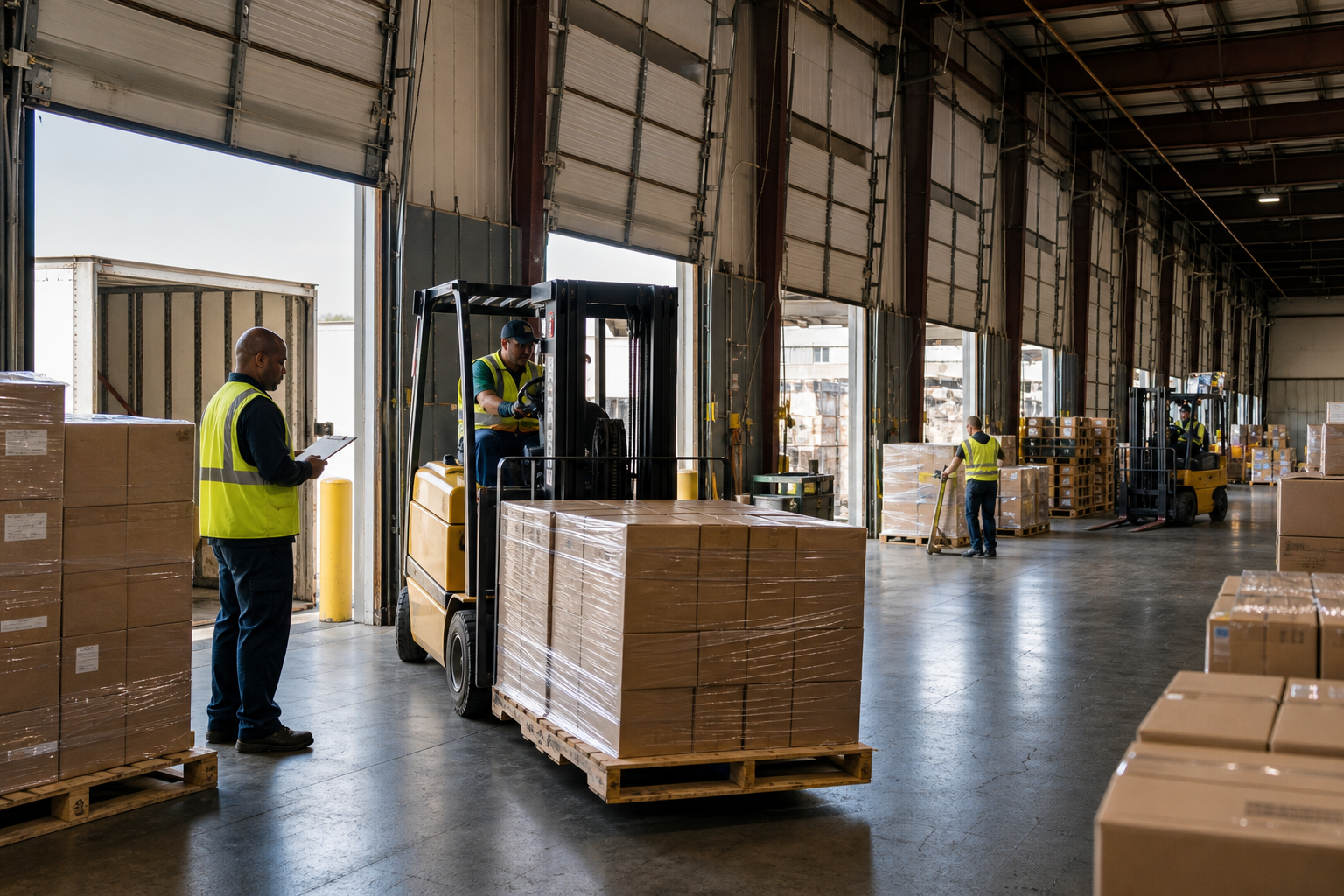
Inside a freight house, pallets are sorted and staged before moving to their next destination.
How a Freight Terminal Fits Into the Supply Chain
A freight terminal, as a freight house is often called, connects every mode of transportation into one continuous chain. Trucks drop off shipments, workers sort them by region, and outbound trailers carry them toward the next hub or final delivery address. In addition, many freight terminals near ports or rail yards also handle intermodal transfers, moving containers between rail cars and trucks.
For example, a pallet of auto parts shipped from Michigan might pass through two or three freight houses before reaching a dealership in Texas. At each stop, it gets combined with new freight headed in the same direction. As a result, the shipper pays a fraction of what a dedicated truck would cost, while the carrier keeps trailers full and routes efficient.
According to the general concept of freight transport, consolidation points like freight houses have existed since the early rail era and remain just as essential in today’s trucking-dominated network.
Freight House vs. Other Freight Facilities
Shippers often confuse a freight house with other types of facilities. Here is a quick comparison to clear up the differences:
| Facility Type | Primary Purpose | Typical Dwell Time |
|---|---|---|
| Freight House | Sort and consolidate LTL freight | 1 to 2 days |
| Distribution Warehouse | Long-term inventory storage | Weeks to months |
| Drayage Yard | Short-haul container transfer from ports | Hours to 1 day |
Specifically, a freight house earns its value through speed and consolidation, not storage. That distinction matters when you are choosing the right freight broker to coordinate movement through these facilities on your behalf.
How Freight Moves Through a Freight Depot
Every shipment follows a predictable path through a freight depot, regardless of the commodity. Below is the typical sequence a pallet follows from arrival to departure.
- Inbound receiving and inspection: The carrier delivers the shipment, and staff check it against the bill of lading, noting damage or shortages immediately.
- Sorting and staging by destination: Workers scan and sort freight into zones based on where it is headed next.
- Consolidation with other shipments: Partial loads headed the same direction are combined into one full trailer.
- Documentation and compliance review: Staff confirm weight, classification, and any customs paperwork before freight crosses state or international lines.
- Outbound loading and dispatch: Crews load the trailer in reverse delivery order and send it on toward the next stop.
Notably, cross-border shipments moving between the U.S., Canada, and Mexico often require extra documentation at this stage, which is why working with a provider that understands customs clearance and import-export documentation saves time and avoids costly holds.
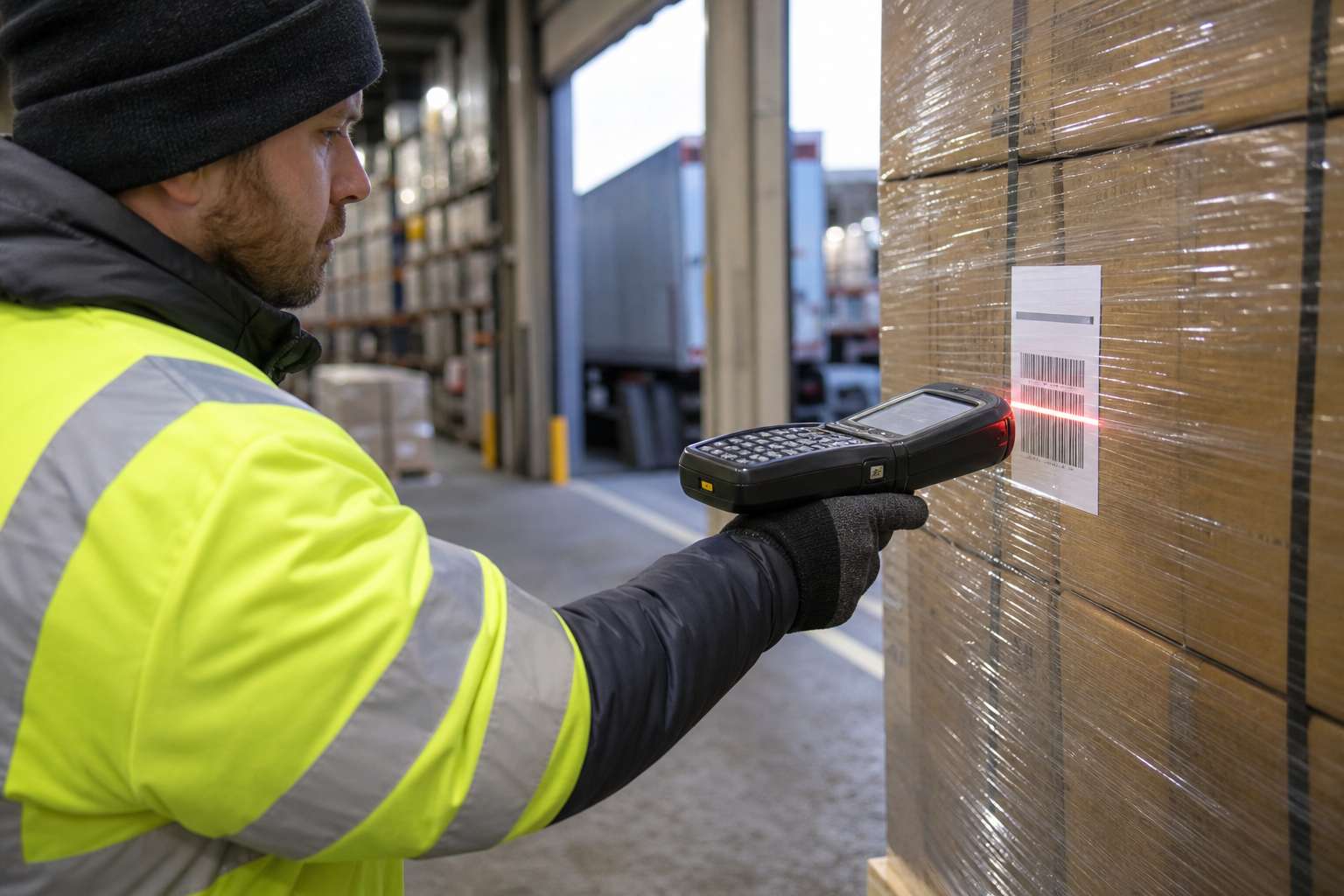
Barcode scanning keeps every pallet tracked as it moves through sorting and consolidation.
Key Services at a Cross-Dock Facility
A cross-dock facility, the technical term logistics professionals use for a freight house, typically supports several core services beyond basic sorting. These include temperature-controlled holding for refrigerated freight, hazmat compliance checks, and liftgate or inside delivery coordination for the final leg.
Many freight houses near ports also support intermodal transfers, swapping containers between rail cars and trucks. Meanwhile, facilities positioned near highway corridors often handle expedited freight that needs to move through quickly with minimal dwell time. Oversized or heavy haul cargo generally bypasses the standard freight house entirely; instead, it moves through dedicated yards that can manage heavy haul and oversized freight shipping permits and escort coordination.
Air freight shipments follow a similar but faster-paced version of this process, with cargo moving through airport freight terminals instead of highway-based facilities. If speed is the priority, it is worth asking whether your provider offers air freight services for fast shipping needs.
Benefits of Using a Freight House for Shippers and Carriers
Shippers benefit from a freight house primarily through cost savings. Because freight is consolidated with other loads, shippers pay only for the space their cargo actually uses rather than an entire trailer. Furthermore, freight houses provide a checkpoint where damaged or mislabeled freight can be caught early, before it travels hundreds of miles in the wrong direction.
Carriers benefit as well. A well-run freight house keeps trailers full, which improves fuel efficiency and reduces empty miles. In particular, this efficiency has become more important as fuel costs and driver shortages continue to pressure margins across the industry. The Federal Motor Carrier Safety Administration has noted that network efficiency, including consolidation points like freight houses, plays a direct role in reducing overall highway congestion from underutilized trailers.
Above all, both sides gain visibility. Modern freight houses use scanning technology that feeds status updates into tracking systems, so shippers and carriers know exactly where a shipment sits at any given moment.
The Role of Freight Brokers and Agents at the Freight House
A freight house runs smoothly on paper, but real-world freight movement always has friction points, missed pickups, incomplete paperwork, or unexpected delays. This is exactly where a dedicated freight broker or freight agent earns their keep. Instead of a shipper chasing down status updates themselves, an experienced agent tracks the shipment through each freight house checkpoint and resolves issues before they become expensive problems.
This is also where the relationship between a freight agent and their company matters. At Freight Tec, agents build long-term relationships with shippers precisely because they are not fighting an internal brokerage department for the same customers. Freight Tec has no company-owned offices and does not compete with its own agents, which means the agent who answers the phone is the same person who knows the account, the freight house network, and the shipper’s specific needs.
This structure is backed by real credibility. Freight Tec has been recognized as a top 100 freight broker by the Transportation Intermediaries Association (TIA) and Inc. Magazine, and it holds TIA Performance Certified status. The company is also approved to haul sensitive U.S. Military freight after Homeland Security vetting, backed by a $100,000 broker bond and a $100,000 Military Bond through SDDC. For agents considering a move, that track record, paired with a written no-back-solicitation guarantee, is a meaningful difference most brokers simply will not offer.
Common Mistakes to Avoid at a Freight Terminal
Even experienced shippers run into avoidable trouble at a freight terminal. The most frequent mistake is submitting an incomplete or inaccurate bill of lading, which can stall a shipment for hours while staff track down correct weights or classifications. Similarly, mislabeled freight often gets misrouted, adding days to a delivery window.
Another common issue is missing a scheduled pickup window. Freight houses operate on tight dock schedules, so a late pickup can push a shipment to the next outbound trailer, sometimes a full day later. Finally, shippers who skip proper packaging for fragile or palletized freight often see damage claims rise, which eats into any cost savings gained from consolidation in the first place.
Partnering with an agent who understands these pressure points, and who has the industry relationships to resolve problems quickly, remains the most reliable way to keep freight moving through the system on schedule.

A dedicated freight agent tracks shipments through every freight house checkpoint from arrival to delivery.
Frequently Asked Questions About freight house
What is a freight house?
A freight house is a warehouse or terminal where carriers receive, sort, consolidate, and transfer freight between trucks, trains, ships, or planes. It acts as a staging point so shipments can be combined with other loads headed in the same direction.
How does a freight house differ from a regular warehouse?
A regular warehouse stores goods for extended periods, while a freight house moves shipments through quickly, usually within 24 to 48 hours. The focus is on sorting and transferring freight rather than long-term storage.
Why do LTL shipments go through a freight house?
Less-than-truckload shipments go through a freight house so carriers can combine multiple partial loads into one full trailer. This consolidation lowers cost per shipment and improves efficiency for everyone involved.
Who typically owns or operates a freight house?
Freight houses are typically operated by LTL carriers, rail companies, port authorities, or third-party logistics providers. Some large shippers also run private freight houses for their own distribution networks.
How much does it cost to use a freight house?
There is usually no separate line-item fee for freight house handling because it is built into standard LTL or intermodal shipping rates. Accessorial charges, such as liftgate service or inside delivery, are billed separately when they apply.
How long does freight typically stay at a freight house?
Most freight moves through a freight house within one to two business days. Perishable or time-sensitive cargo, such as refrigerated freight, is prioritized to minimize dwell time.
What is the difference between a freight house and a freight terminal?
In practice, the terms are used interchangeably across the logistics industry. Both describe a facility where freight is received, sorted, and dispatched to its next leg of transport.
What common mistakes happen at freight houses?
Common mistakes include incomplete bills of lading, mislabeled freight, and missed pickup windows that cause delays. Working with an experienced freight broker or agent helps shippers avoid these costly errors.
Does a freight house handle customs documentation for international freight?
Freight houses near ports or border crossings often coordinate with customs brokers to handle clearance paperwork. This is especially common for cross-border freight moving between the United States, Canada, and Mexico.
Can a freight house handle oversized or heavy haul freight?
Standard freight houses are built for palletized or boxed LTL freight rather than oversized loads. Heavy haul and oversized shipments typically bypass the freight house and move through specialized terminals with permits and escort coordination.
How does a freight broker use freight house data to help shippers?
A freight broker tracks shipments as they move through each freight house checkpoint, giving shippers visibility and early warning of delays. This proactive tracking is a core part of the service a dedicated freight agent provides.
What technology do modern freight houses use?
Modern freight houses rely on barcode scanning, electronic bills of lading, and warehouse management systems to track every pallet. This technology feeds real-time status updates to brokers, shippers, and carriers.
Is a freight house the same as a drayage yard?
No, a drayage yard specifically handles short-distance container moves between ports, rail yards, and warehouses. A freight house has a broader role, handling general LTL and consolidated freight beyond container drayage.
How can shippers reduce delays at a freight house?
Shippers can reduce delays by submitting accurate paperwork, scheduling pickups within carrier windows, and labeling freight clearly before it arrives. Partnering with an experienced freight agent who monitors each step also helps catch problems early.
Final Takeaway on the Freight House
In the end, a freight house is one of the most practical, unglamorous, and essential pieces of the freight network. It is where consolidation happens, where costs come down, and where small mistakes either get caught or get expensive fast. Shippers who understand how a freight house works are better equipped to ask the right questions of their broker, while carriers and agents who master these checkpoints keep freight moving on time.
Whether you are a shipper trying to cut costs or an experienced freight agent evaluating your next partner, the freight house is worth understanding in detail, because it shapes nearly every shipment that moves through the modern supply chain. For agents with 2+ years of experience who want real support, written protection, and a company that does not compete against its own people, Freight Tec is worth a conversation.
