
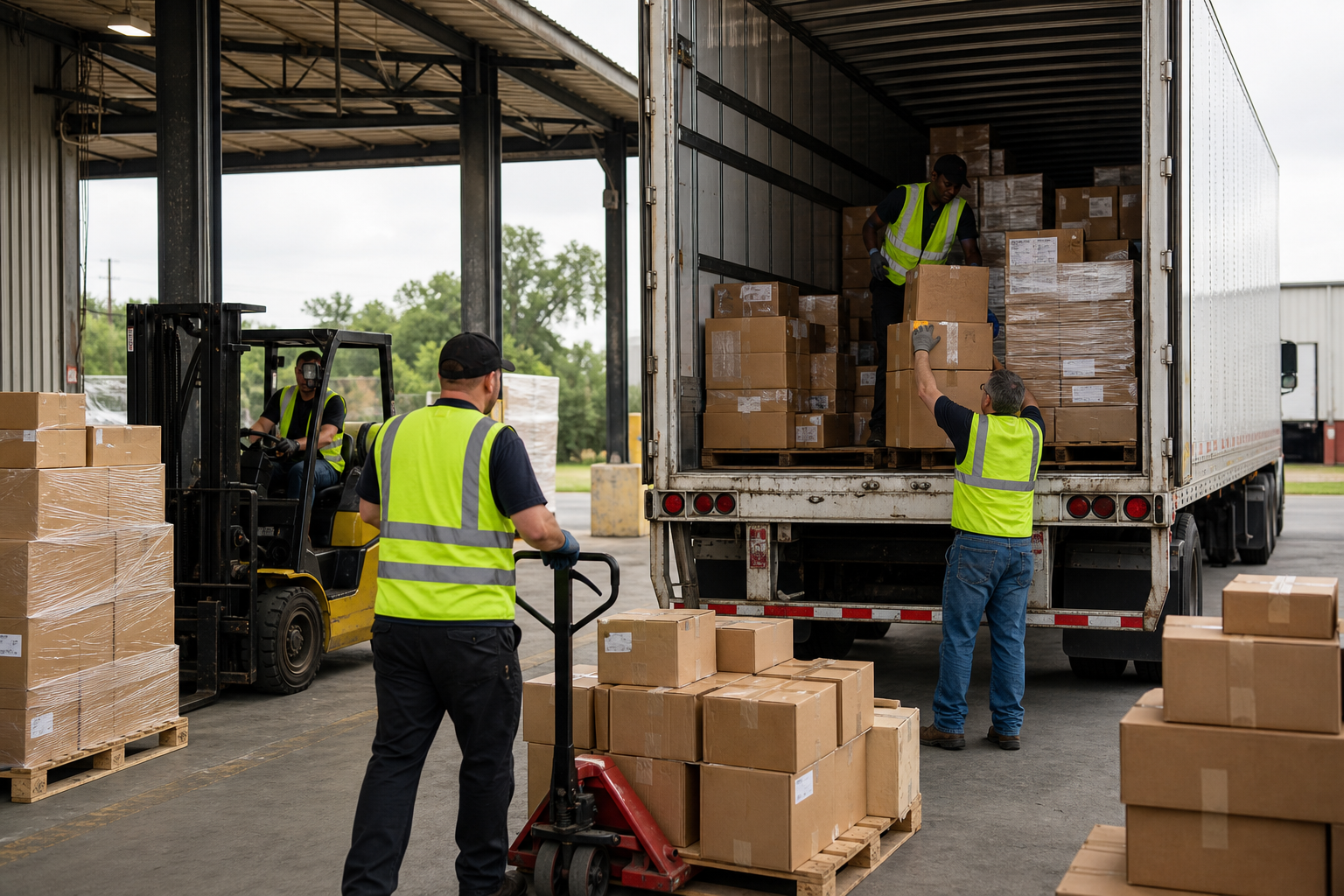
Freight consolidation is the process of combining multiple smaller shipments — often from different shippers or different purchase orders — into a single, larger load that moves together on one truck. Instead of paying full price to move a half-empty trailer, businesses pool their freight and split the cost of one efficient run. As a result, shippers save money, carriers run fuller trucks, and the overall supply chain moves faster. Heading into 2026, rising fuel costs and tight carrier capacity make this approach more valuable than ever. In this guide, we will break down how freight consolidation works, who benefits most, and how the right logistics partner makes it simple.
Quick Answer: Freight consolidation combines multiple smaller shipments into one larger load, reducing per-unit shipping costs, cutting empty trailer space, and shortening transit times. It is typically coordinated by a freight broker or experienced freight agent who matches compatible shipments and schedules.
What Is Freight Consolidation?
Freight consolidation is the practice of grouping two or more shipments — whether from one shipper or several — into a single truckload or container to maximize space and minimize cost. Rather than sending a half-full trailer down the highway, the load is combined with compatible freight heading in the same general direction. This approach is especially common with less-than-truckload, or LTL, shipments, where each shipper pays only for the portion of the trailer they actually use.
In addition, consolidation addresses a well-documented inefficiency in trucking. According to the Federal Highway Administration, a meaningful share of all truck miles driven nationally are run with partial or empty trailers. Consequently, every pound of freight added to an already-moving truck reduces waste for the whole network, not just one shipper’s invoice.
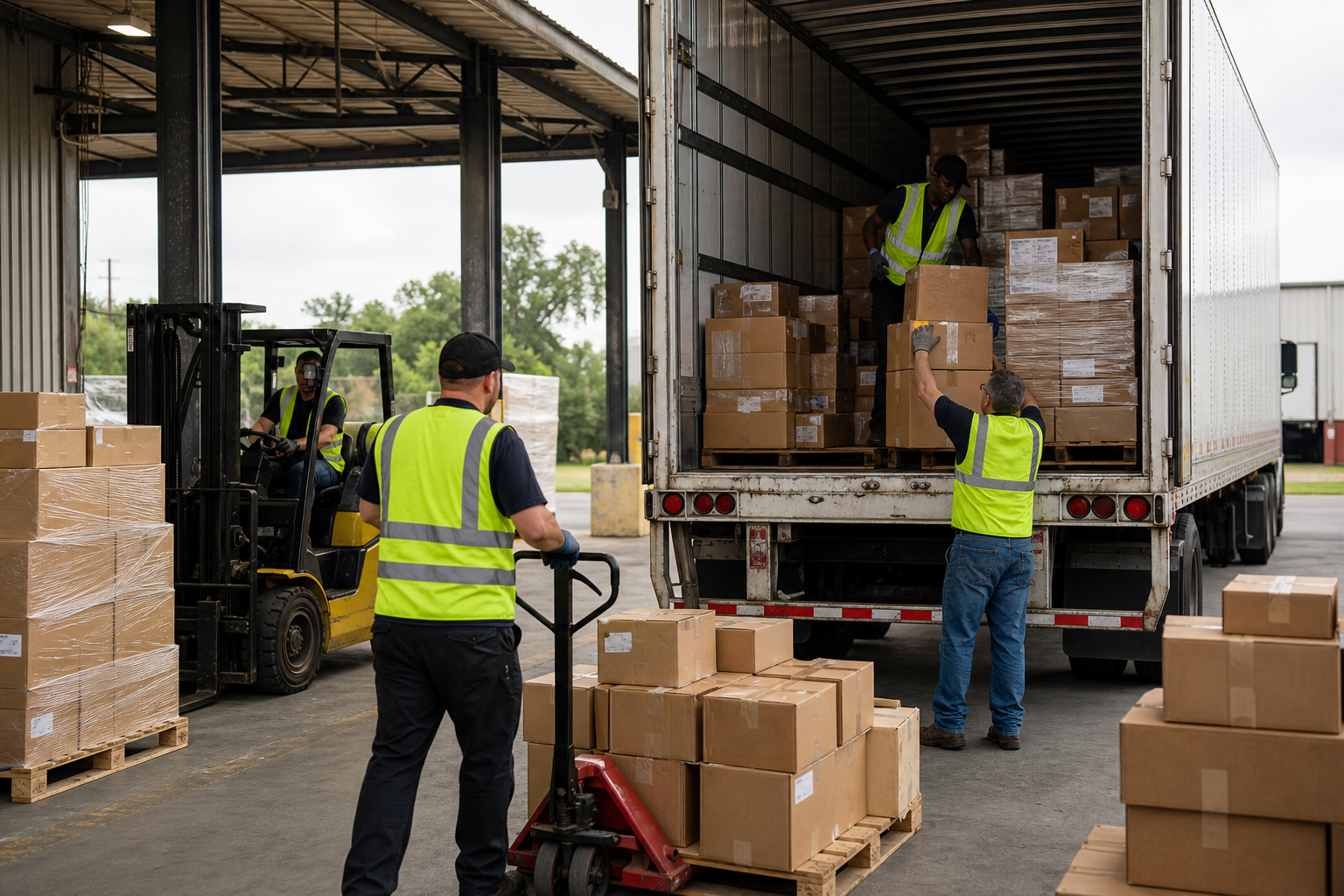
Freight consolidation starts at the dock, where compatible shipments are grouped onto one trailer.
How Does Freight Consolidation Work?
Freight consolidation works by screening shipment details, matching compatible freight, and booking it as one coordinated move instead of several separate ones. Specifically, a broker or agent compares destination, timing, and freight class across multiple shipments to find overlap. Therefore, the process depends heavily on timing accuracy and strong carrier relationships.
The Shipment Consolidation Process, Step by Step
Below is the typical sequence a freight broker or agent follows when building a consolidated load:
- Screen shipment details. The broker reviews each shipment’s weight, dimensions, freight class, destination, and required delivery window to identify strong consolidation candidates.
- Match compatible lanes. Shipments heading to overlapping destinations within a similar timeframe are grouped to build one efficient route.
- Build the consolidated load. Freight is physically combined at a cross-dock facility or booked for direct multi-stop pickup, depending on shipper locations.
- Assign a qualified carrier. A vetted carrier with the right equipment and service history is matched to the load for safe, on-time handling.
- Track transit and confirm delivery. The agent monitors the shipment, resolves exceptions quickly, and confirms proof of delivery for every shipper on the load.
Key Benefits of Consolidated Shipping for Shippers
Consolidated shipping offers measurable advantages beyond a lower freight bill. For example, fewer handling touchpoints mean less risk of damage, and fuller trailers mean a smaller carbon footprint per unit shipped. The table below summarizes the core benefits.
| Benefit | Impact on Shippers |
|---|---|
| Cost per unit | Lower rate, shared across multiple shipments |
| Transit time | Often faster than fragmented standard LTL |
| Damage risk | Reduced due to fewer terminal handoffs |
| Carbon footprint | Smaller, since trailers run fuller per trip |
LTL Consolidation vs. Full Truckload: Which Fits Your Freight?
LTL consolidation makes sense when your shipment is too small to justify a dedicated trailer but too large, or too frequent, for one-off small-parcel rates. In contrast, full truckload shipping fits better when a single order already fills most of a 53-foot trailer. Above all, the right choice depends on your typical volume, lane density, and how flexible your pickup window can be.
Who Manages Load Consolidation Today?
Load consolidation is usually managed by a freight broker, a 3PL, or an experienced freight agent with direct carrier relationships. These professionals track lane volume, carrier capacity, and shipment timing across many customers at once, which is nearly impossible for a single shipper to do alone. Similarly, they rely on routing technology to spot consolidation opportunities before freight ever leaves the dock. You can read more about how technology supports these decisions in this breakdown of freight technology and visibility tools.
Furthermore, consolidation often overlaps with other modes. A shipment might combine over-the-road freight with rail for part of the journey, which is explained in more detail in this guide to intermodal transportation management.
How Freight Tec Supports Freight Consolidation for Shippers and Agents
Freight Tec has operated as a freight brokerage for more than 30 years, earning recognition as a Top 100 Freight Broker by TIA and Inc. Magazine. For shippers, Freight Tec effectively functions as an outsourced shipping department, handling truckload, LTL, drayage, refrigerated, intermodal, and international freight, often at lower cost and with less risk than managing it in-house. Freight consolidation fits naturally into this model, since Freight Tec’s nationwide agent network is constantly matching freight across lanes and customers.
For freight agents, the opportunity runs deeper. Freight Tec has no internal brokerage department and does not compete with its own agents for business, which means agents keep full ownership of their customer relationships. In particular, Freight Tec is the only broker in the U.S. offering a written guarantee against back-soliciting an agent who chooses to leave. Agents with 2 or more years of experience and loyal customers get high commission splits, 24/7/365 support, and reliable invoicing. You can explore more about how this type of partnership works and review project coordination in this look at project management for logistics outcomes, or visit freight-tec.com directly to start a conversation.

Experienced freight agents coordinate freight consolidation across multiple shippers and lanes.
Common Mistakes That Undermine Freight Consolidation
Even a well-planned consolidation strategy can break down over small details. However, most of these mistakes are avoidable with the right process and an experienced partner.
- Ignoring pickup windows, which causes missed consolidation opportunities on a given lane.
- Mismatching freight classes, which can trigger reclassification fees after the fact.
- Skipping carrier vetting, which raises the risk of delays or cargo loss.
- Overlooking weight and dimension limits, which can leave a trailer underfilled anyway.
- Lacking real-time visibility, which makes it hard to resolve exceptions quickly.
Specialized freight, such as oversized equipment, requires its own handling logic rather than standard consolidation. For a deeper look at how that process differs, see this explanation of heavy haul and oversized freight shipping. Likewise, freight crossing international borders adds documentation steps covered in this guide to customs clearance and import-export documentation.
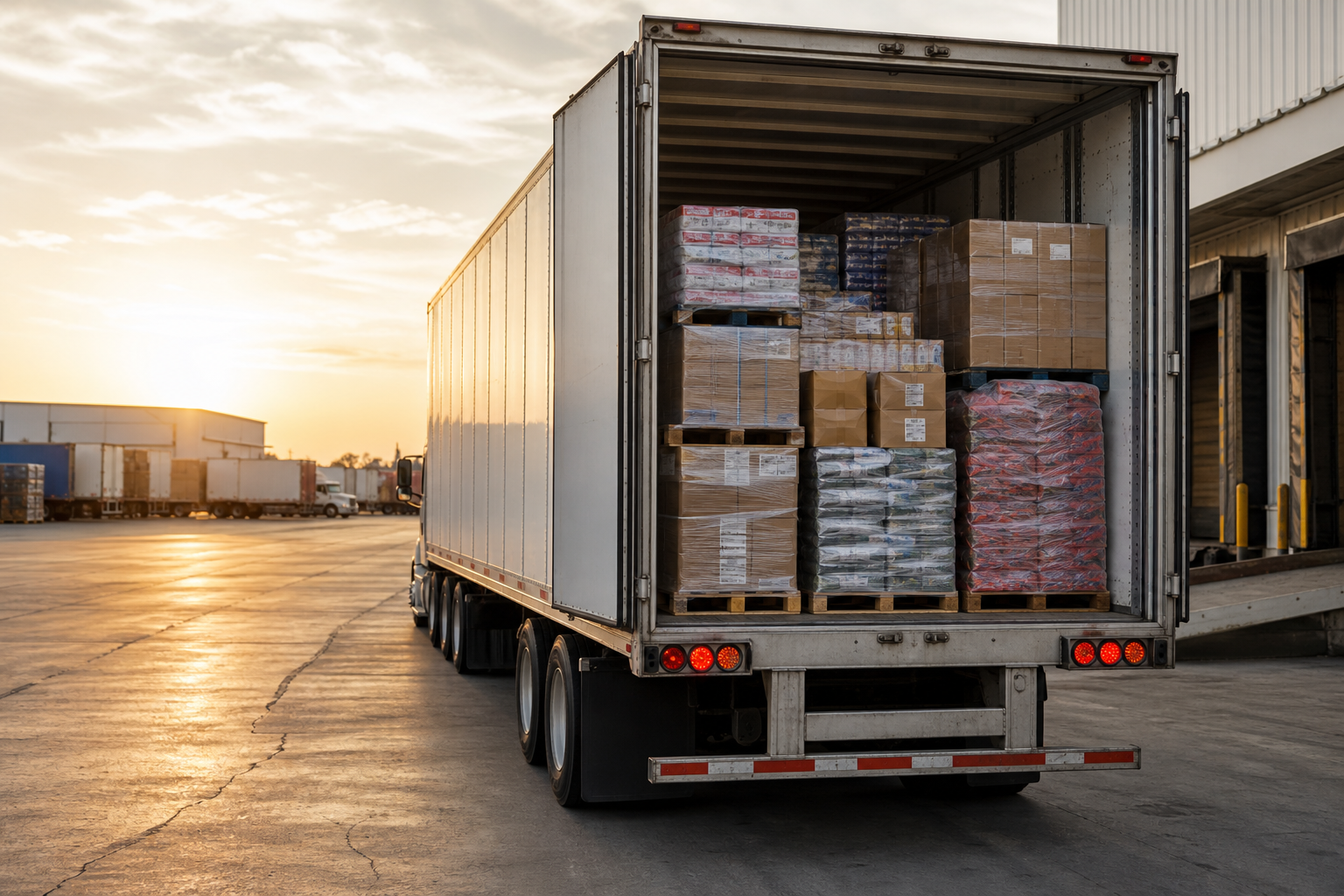
A fully loaded trailer represents the end goal of efficient freight consolidation.
Frequently Asked Questions About Freight Consolidation
What is freight consolidation?
Freight consolidation is the process of combining two or more smaller shipments into a single, larger load to reduce per-unit shipping costs and maximize trailer space. A freight broker or agent typically coordinates the matching and scheduling.
How does freight consolidation save shippers money?
Shippers share the cost of a single truck run instead of paying full price for a partially empty trailer. As a result, the per-pound or per-pallet rate drops significantly compared to standard LTL pricing.
What’s the difference between freight consolidation and standard LTL shipping?
Standard LTL shipping moves one shipper’s freight alongside unrelated loads on a carrier’s regular route. Freight consolidation, in contrast, intentionally groups compatible shipments together, often on the same lane, for further cost and time savings.
How long does consolidated freight take to deliver?
Transit time varies by lane, but consolidated loads often move faster than fragmented LTL shipments because they skip some terminal handling. Most domestic consolidated loads deliver within one to five business days.
Is freight consolidation right for small and mid-sized shippers?
Yes, smaller shippers often benefit the most because they rarely generate enough volume to fill a full truckload alone. Consolidation lets them access near-truckload pricing without owning a full trailer’s worth of freight.
What types of freight can be consolidated?
Most palletized, boxed, or crated general freight can be consolidated, including automotive parts, retail goods, and industrial components. Specialized freight like refrigerated or hazardous loads requires careful compatibility screening first.
How much does freight consolidation typically cost compared to standard shipping?
Consolidated freight rates are usually lower than paying for a dedicated partial truckload, often saving shippers 10 to 30 percent depending on lane density and freight class. Exact savings depend on weight, distance, and timing flexibility.
What mistakes should shippers avoid with freight consolidation?
Common mistakes include ignoring pickup windows, mismatching incompatible freight classes, and skipping carrier vetting. These errors can cause delays, damage, or unexpected accessorial charges.
Who coordinates freight consolidation for shippers?
Freight brokers and experienced freight agents typically coordinate consolidation by matching compatible shipments, booking qualified carriers, and tracking the load through delivery. A strong broker relationship is key to consistent results.
Can freight consolidation work for international shipments?
Yes, international freight consolidation is common for ocean and air cargo moving into Canada, Mexico, or overseas markets. Consolidated international shipments still require proper customs documentation to avoid border delays.
What is the best way to start using freight consolidation services?
Start by sharing your typical shipment profile, including weight, lanes, and frequency, with an experienced freight broker or agent. They can identify consolidation opportunities on your specific routes within a few shipment cycles.
Does freight consolidation reduce the risk of cargo damage?
Generally, yes, because consolidated loads involve fewer touchpoints and less terminal handling than fragmented LTL freight. Fewer transfers mean fewer chances for pallets to be dropped, crushed, or misrouted.
How does a freight broker decide which shipments to consolidate?
Brokers compare destination, pickup timing, freight class, and equipment needs across multiple shipments to find compatible matches. Specifically, they look for overlapping lanes and similar delivery deadlines.
Final Thoughts on Freight Consolidation
Freight consolidation remains one of the most reliable ways for shippers to control costs without sacrificing service. By grouping compatible shipments, businesses reduce waste, speed up transit, and lower the risk of damage along the way. However, getting consistent results requires a broker or agent who understands lane density, timing, and carrier quality. Whether you are a shipper looking to streamline freight spend or an experienced freight agent ready for a program built around partnership rather than competition, the principles behind freight consolidation point to the same conclusion: efficiency comes from working with people who know the freight, know the lanes, and know how to put the two together.
