
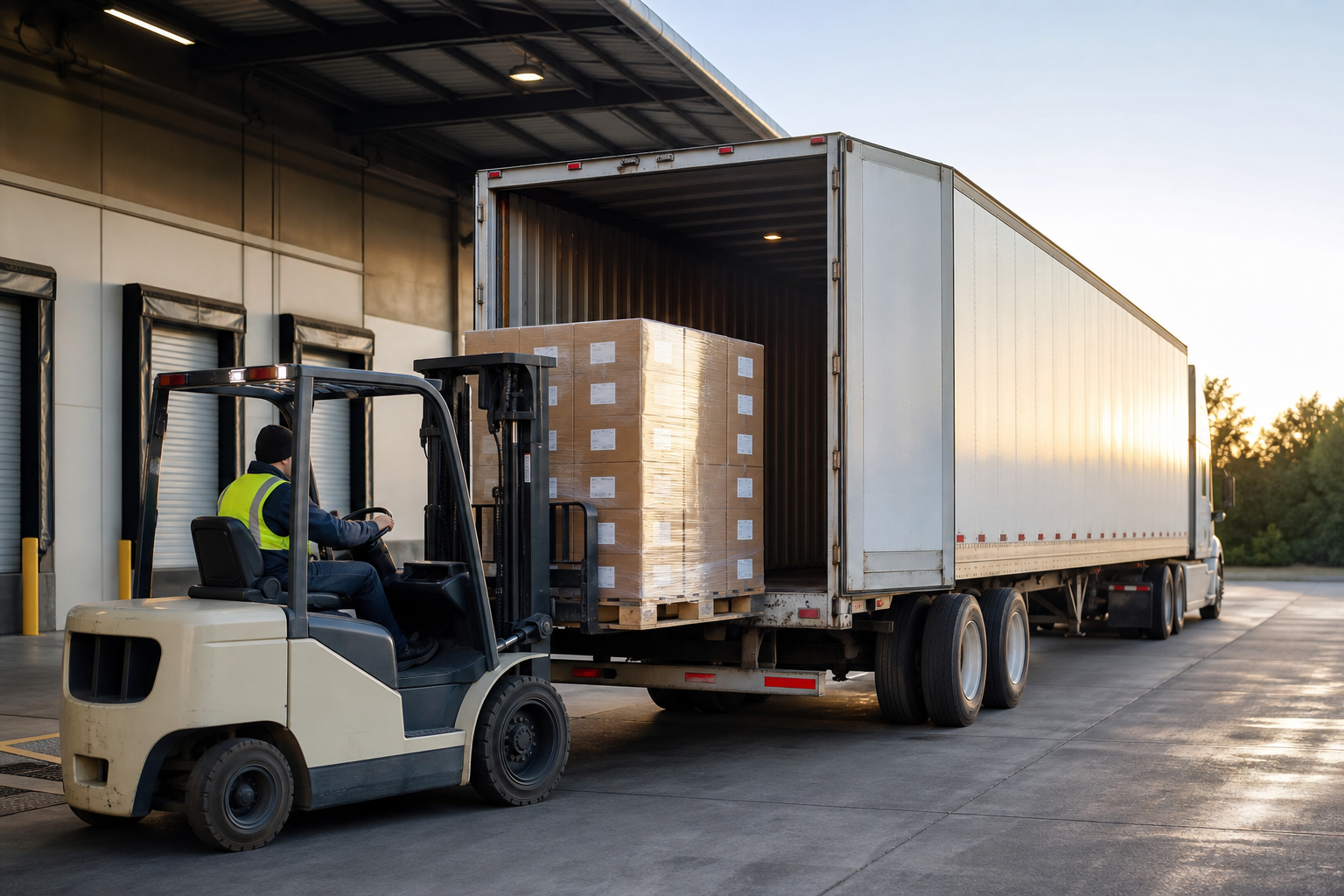
FOB shipping is a set of terms that tells buyers and sellers exactly when ownership and risk of loss move from one party to the other. Get it wrong, and you may pay for a load that was damaged before it ever reached you. Get it right, and every claim, invoice, and audit gets simpler.
Quick answer: FOB (Free on Board) shipping names the point where title and risk transfer. FOB origin means the buyer owns the goods once they leave the seller. FOB destination means the seller owns them until delivery.
What Is FOB Shipping?
FOB shipping is a contract term that sets the exact point where a shipment changes hands. At that point, the buyer takes title, and the buyer or seller takes on the risk of loss. In the U.S., domestic use falls under the Uniform Commercial Code.
The term is short, but it carries real money. It affects insurance, claims, and when a sale shows up on your books.
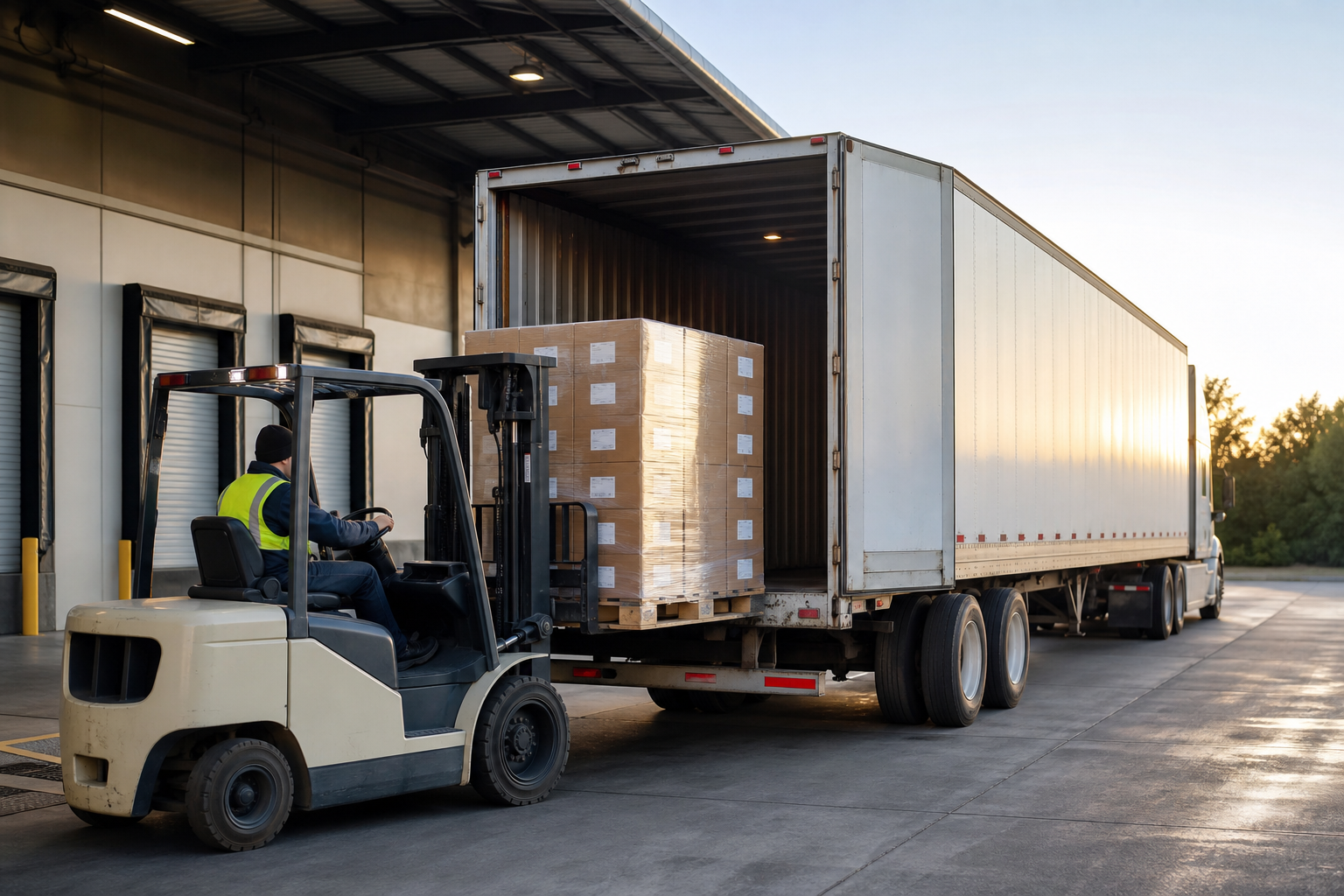
The loading dock is where FOB shipping terms often decide who owns the freight.
FOB Origin vs. FOB Destination
These two terms cover most domestic freight. Therefore, they are worth knowing cold.
| Item | FOB Origin | FOB Destination |
|---|---|---|
| Title transfers | At the seller’s dock | At the buyer’s location |
| Risk in transit | Buyer | Seller |
| Claims filed by | Buyer | Seller |
| Inventory in transit | Buyer’s books | Seller’s books |
When FOB origin makes sense
Buyers with strong carrier rates often prefer it. They control the carrier and the route. In addition, they can insure the load on their own terms.
When FOB destination makes sense
Sellers who want to manage the whole delivery often choose it. It also reassures buyers who would rather not carry transit risk. However, the seller must insure the freight and handle claims.
Who Pays the Freight Under These Shipping Terms?
The FOB point does not decide who pays the carrier. That is a separate agreement. Many shippers mix the two up, and disputes follow.
- Prepaid: the seller pays the freight bill.
- Collect: the buyer pays the freight bill.
- Prepaid and add: the seller pays, then bills the buyer on the invoice.
For example, you can have FOB origin with freight prepaid and add. The buyer owns the goods at pickup, yet the seller books the truck.
Risk of Loss, Insurance, and Claims
Whoever holds the risk should hold the insurance. Carrier liability is often limited, so it may not cover the full value of your load. As a result, cargo coverage matters on high-value freight.
Claims also follow the risk. Under FOB origin, the buyer files with the carrier. Under FOB destination, the seller does. Clear paperwork speeds both. For related guidance on high-stakes loads, see this look at sensitive shipments and broker trust.
FOB Shipping vs. Incoterms
FOB also appears in Incoterms, the international trade terms published by the International Chamber of Commerce. In that setting, FOB applies only to sea and inland waterway freight. Risk passes when goods are loaded on the vessel.
In contrast, U.S. domestic FOB is a trucking and commercial term. It is not limited to ships. If you ship across borders, name the rule set in your contract. Otherwise, courts may read the term differently than you meant.
How to Choose the Right FOB Term
- Confirm who will control the carrier, since control should follow responsibility.
- Pick FOB origin or FOB destination based on who should own the goods in transit.
- State who pays freight: prepaid, collect, or prepaid and add.
- Check that the party holding risk has cargo insurance for the full load value.
- Write the term, named location, and freight terms on the purchase order, contract, and bill of lading.

Putting FOB shipping terms in writing prevents most freight disputes.
Common FOB Mistakes to Avoid
- Assuming FOB covers who pays freight.
- Leaving the named location vague, such as “FOB Chicago” with no address.
- Skipping insurance because the carrier “has coverage.”
- Using different terms on the quote, invoice, and bill of lading.
Experienced brokers and agents see these errors every week. Related topics, like packing and shipping services and Amazon FBA freight, also depend on clear terms.
Where a Freight Broker Fits In
A good freight broker turns FOB terms into a smooth move. That means vetted carriers, correct paperwork, and fast help if something goes wrong. Freight Tec is a Utah-based freight broker with over 30 years in business. It handles truckload, LTL, refrigerated, intermodal, and international freight, and it serves shippers through its network of Freight Agents. For other time-sensitive needs, see this overnight shipping guide or this Department of Defense shipping guide.
FOB Shipping FAQ
What does FOB stand for in shipping?
FOB stands for Free on Board. It marks the point where ownership and risk of loss pass from seller to buyer.
What is the difference between FOB origin and FOB destination?
With FOB origin, the buyer owns the goods once they leave the seller’s dock. With FOB destination, the seller owns them until they arrive at the buyer’s location.
Who pays for freight under FOB shipping?
The FOB term alone does not decide who pays the carrier. Freight terms such as prepaid, collect, or prepaid and add must be stated separately.
Who is responsible for damaged goods in FOB origin?
The buyer carries the risk once the carrier takes the goods. The buyer files any claim with the carrier.
Who is responsible for damaged goods in FOB destination?
The seller carries the risk until delivery. The seller files the claim and absorbs the loss if freight is damaged in transit.
Is FOB shipping the same as an Incoterm?
No. FOB is also an Incoterm for sea and inland waterway freight, but domestic US FOB follows the Uniform Commercial Code. The two have different meanings.
When does the buyer take ownership of goods?
Under FOB origin, ownership passes at pickup. Under FOB destination, it passes at delivery.
How does FOB shipping affect accounting?
It decides when a sale is recorded and when inventory is counted. Goods in transit belong to the buyer under FOB origin and to the seller under FOB destination.
Can FOB terms be negotiated?
Yes. Buyers and sellers agree on FOB terms in the contract or purchase order. Volume, leverage, and who has better carrier rates often drive the choice.
What is the most common mistake with FOB shipping?
The most common mistake is assuming the FOB term covers freight payment and insurance. It covers only title and risk, so those items need their own written terms.
Should I buy cargo insurance with FOB shipping?
Yes, whoever holds the risk should insure the load. Carrier liability is often limited and may not cover full value.
How can a freight broker help with FOB shipping?
A freight broker can manage carrier selection, documentation, and claims support so the FOB terms are executed cleanly. That keeps both parties clear on who is responsible at each point.
Conclusion
FOB shipping comes down to one question: who owns the freight, and who bears the risk, at each point in the trip. Choose origin or destination on purpose, state who pays freight, insure the load, and write everything down. With those steps in place, your shipments move with fewer surprises and far fewer disputes.
