

If you’re searching for a Detroit shipping company, you’re probably dealing with tight automotive production schedules, cross-border freight into Canada, or a carrier network that isn’t keeping up anymore. This guide breaks down exactly what separates a dependable Detroit freight partner from one that will leave your freight — and your reputation — exposed.
Detroit’s freight market is unlike most other U.S. cities. Because of its automotive manufacturing base and its position on the U.S.-Canada border, shippers here need more than a generic trucking contact. They need a partner who understands just-in-time production, drayage, and multimodal freight all at once.
Direct answer: A Detroit shipping company is a freight brokerage or logistics provider that arranges truckload, LTL, drayage, intermodal, and international freight for shippers in and around Detroit, matching loads with vetted carriers and managing documentation, tracking, and claims from pickup to delivery.
What Is a Detroit Shipping Company?
A Detroit shipping company is a freight brokerage, which is a licensed intermediary (a business that legally connects shippers with carriers without owning the trucks itself) that moves freight for businesses located in or shipping through the Detroit metro area. Rather than owning a fleet, a broker builds a network of qualified carriers and assigns the right truck, trailer type, and route to each load.
In practice, this means a shipper calls one point of contact instead of chasing down dozens of individual trucking companies. The broker handles rate negotiation, carrier vetting, tracking, and paperwork. For example, an automotive parts supplier in the Detroit area might need a flatbed one week and a temperature-controlled trailer the next, and a full-service broker covers both without the shipper managing separate vendors.

A reliable Detroit shipping company starts with disciplined dock operations and verified carriers.
Why Detroit’s Location Shapes Freight Shipping Needs
Detroit sits at one of the busiest international border crossings in North America, connecting directly to Windsor, Ontario. As a result, freight moving through this corridor often crosses into Canada within the same day it leaves a Michigan warehouse. In addition, the city’s century-long role as the center of the automotive industry means parts suppliers and assembly plants generate dense, recurring freight volume.
Because of this, a generic national freight shipping company without strong regional relationships can struggle to secure capacity fast enough during production surges. Specifically, shippers need a provider who already has carrier relationships built for this lane density, not one starting from zero.
According to the American Trucking Associations, trucks move more than 72% of the nation’s freight tonnage, which underscores why carrier relationships — not just technology — remain the backbone of reliable freight brokerage. A truly strong Detroit freight broker treats carrier vetting as seriously as customer service.
What to Look for in a Detroit Freight Broker
Not every provider calling itself a shipping company operates the same way. Therefore, shippers should evaluate a handful of specific criteria before signing a contract.
- Active FMCSA broker authority and a verifiable surety bond
- Professional errors and omissions insurance for claims protection
- A documented carrier vetting process, not just a load board search
- Coverage across multiple freight modes, including drayage and intermodal
- A dedicated point of contact who understands your lanes and schedule
For a deeper look at this evaluation process, this guide on what shippers should know before hiring a shipping company walks through additional red flags worth watching for.
Services a Full-Service Detroit Logistics Company Should Offer
Detroit shippers rarely need just one type of freight service. Consequently, the strongest partners offer a full menu of options under one roof.
| Freight Mode | Common Use Case |
|---|---|
| Truckload (van, flatbed, specialized) | Full loads, oversized automotive parts |
| LTL (less-than-truckload) | Smaller shipments shared with other freight |
| Drayage | Moving containers from rail yards or ports |
| Refrigerated | Temperature-sensitive goods |
| Intermodal | Rail plus truck for long-haul cost savings |
| Heavy haul / expedited / air / international | Oversized loads, urgent freight, cross-border and global shipments |
Shippers moving automotive components can review how these modes apply specifically to the sector in this breakdown of logistics services for automotive shippers.
How Freight Tec Supports Shippers in the Detroit Market
Freight Tec operates as a nationwide freight brokerage with agent offices across the country rather than a single company-owned branch. As a result, Detroit-area shippers get the benefit of a local point of contact who understands automotive freight, paired with a carrier network that spans the U.S., Canada, and Mexico.
Because Freight Tec maintains no internal brokerage department that competes with its own agents, shippers working with a Freight Tec agent get undivided attention rather than being routed to a cheaper in-house desk. Furthermore, the company’s recognition as a top 100 freight broker by TIA and Inc. Magazine, along with TIA Performance Certified status, reflects a long track record of reliable service rather than a new, unproven operation.
For shippers moving freight by air in addition to ground transport, this air freight tracking guide offers useful context on what to expect when combining modes.

Dedicated account support is what separates a dependable Detroit shipping company from a call-center broker.
Automotive Freight Expertise in the Motor City
Detroit’s identity is tied to automotive manufacturing, and that history still drives much of the region’s freight volume today. In particular, parts suppliers, tier manufacturers, and assembly plants need carriers who understand just-in-time delivery windows, where a late truck can shut down a production line.
Specialized equipment matters here too. Flatbeds, step-decks, and heavy haul trailers are often required for oversized components, while refrigerated trailers handle specific coated or temperature-sensitive materials. A provider without access to this equipment mix will struggle to keep an automotive shipper’s supply chain moving. Related considerations for this sector are covered further in this automotive industry logistics overview.
How to Choose the Right Detroit Shipping Company: 5 Steps
Choosing a freight partner shouldn’t be a guessing game. Below is a practical process shippers can follow before signing any contract.
- Verify licensing, bonding, and insurance. Confirm the broker holds active FMCSA broker authority, a surety bond of at least $75,000, and professional errors and omissions coverage.
- Review the carrier vetting process. Ask how carriers are qualified, including safety scores and on-time performance history.
- Compare freight mode coverage. Make sure the provider handles every mode you need, from truckload to drayage and international freight.
- Clarify communication and account ownership. Establish exactly who your dedicated contact is and how your account stays protected.
- Request references and claims history. Talk to existing clients about invoicing accuracy and how quickly claims get resolved.
According to the Bureau of Transportation Statistics, freight volume through the Great Lakes region remains among the highest in the country, which makes carrier capacity planning especially important for Detroit shippers during peak production months.
Are You a Freight Agent Serving the Detroit Market?
Shippers aren’t the only ones evaluating their options. Experienced freight agents in the Detroit area, especially those with 2 or more years in the industry and customers who already trust them, often reach a point where their current broker isn’t holding up their end of the partnership. Commission splits shrink, invoicing errors pile up, or support simply disappears when it’s needed most.
Freight Tec built its agent program around the opposite experience. The company offers high commissions, no internal brokerage competing against its agents, and a written guarantee against back-soliciting any agent who chooses to leave — a protection no other broker in the industry offers in writing. Agents considering a change can learn more directly at Freight Tec’s website or explore how LTL-specific lanes are evaluated in this LTL shipping guide for shippers and agents.
Frequently Asked Questions About Detroit Shipping Companies
What is a Detroit shipping company?
A Detroit shipping company is a freight brokerage or logistics provider that arranges truckload, LTL, drayage, and intermodal freight for shippers in and around Detroit. It matches freight with vetted carriers and manages tracking, documentation, and claims support.
How do I choose the best Detroit shipping company for automotive freight?
Look for proven automotive-sector experience, flatbed and specialized equipment access, and carriers vetted for on-time, just-in-time delivery. Confirm adequate insurance and the ability to scale during production surges.
Why does Detroit’s location matter for freight brokers?
Detroit sits at a major U.S.-Canada border crossing and is the historic hub of the automotive industry, so freight volume is dense and time-sensitive. A broker without strong carrier relationships in this corridor often struggles to secure capacity quickly.
What’s the difference between a Detroit shipping company and a national freight broker?
A Detroit-focused provider typically has deeper local carrier relationships and regional lane knowledge, while a national broker offers broader geographic reach. The strongest option combines local responsiveness with nationwide carrier access.
How much does it cost to work with a Detroit freight broker?
Costs vary by lane, equipment type, and freight class, and are usually built into the all-in rate rather than charged separately. Shippers should ask for transparent rate breakdowns before signing a contract.
How long does it take to get a truck dispatched in the Detroit market?
In a healthy carrier network, same-day or next-day dispatch is realistic for standard dry van freight out of Detroit. Specialized equipment, such as heavy haul or refrigerated trailers, may take longer depending on availability.
What common mistakes do shippers make when choosing a Detroit shipping company?
The most common mistake is choosing based on price alone without verifying carrier vetting standards, insurance coverage, or claims history. Shippers also often forget to ask who their dedicated contact will be once the contract starts.
What freight modes does a full-service Detroit shipping company offer?
A full-service provider typically offers truckload, LTL, drayage, refrigerated, intermodal, heavy haul, expedited, air, and international freight services. Warehousing and customs clearance support are common additions.
Does Freight Tec operate as a Detroit shipping company?
Freight Tec serves shippers in Detroit and across all 48 states through its nationwide network of independent Freight Agents rather than a company-owned office. This structure gives shippers a dedicated local point of contact backed by national carrier capacity.
What should carriers look for in a Detroit freight broker?
Carriers should confirm payment terms, such as standard 28-day pay or Quick Pay options, before hauling a load. They should also verify the broker’s bond amount and reputation for paying on time.
Is drayage service available through Detroit shipping companies?
Yes, many Detroit-area providers offer drayage to move containers between rail yards, terminals, and warehouses. This is common given Detroit’s intermodal rail connections and proximity to the Canadian border.
What certifications indicate a trustworthy freight broker in Detroit?
Look for TIA Performance Certified status, membership in recognized industry groups like NASTC, and a verifiable broker bond. Recognition as a top broker by independent organizations is also a strong trust signal.
Can a Detroit shipping company handle international freight to Canada?
Yes, Detroit’s location near the Windsor-Detroit border crossing makes cross-border freight to Canada a routine service for established providers. Many also support Mexico and broader international freight forwarding with customs documentation.
How do freight agents build a book of business in the Detroit market?
Experienced freight agents grow their Detroit-area book by leaning on long-standing shipper relationships and a broker partner that provides back-office support, carrier vetting, and accurate invoicing. This lets agents focus on customer service instead of administrative work.
What’s the best way to vet a Detroit shipping company before signing a contract?
Ask for references, review insurance and bonding documentation, and request a sample rate confirmation along with a claims process walkthrough. A transparent provider will answer these questions directly without hesitation.
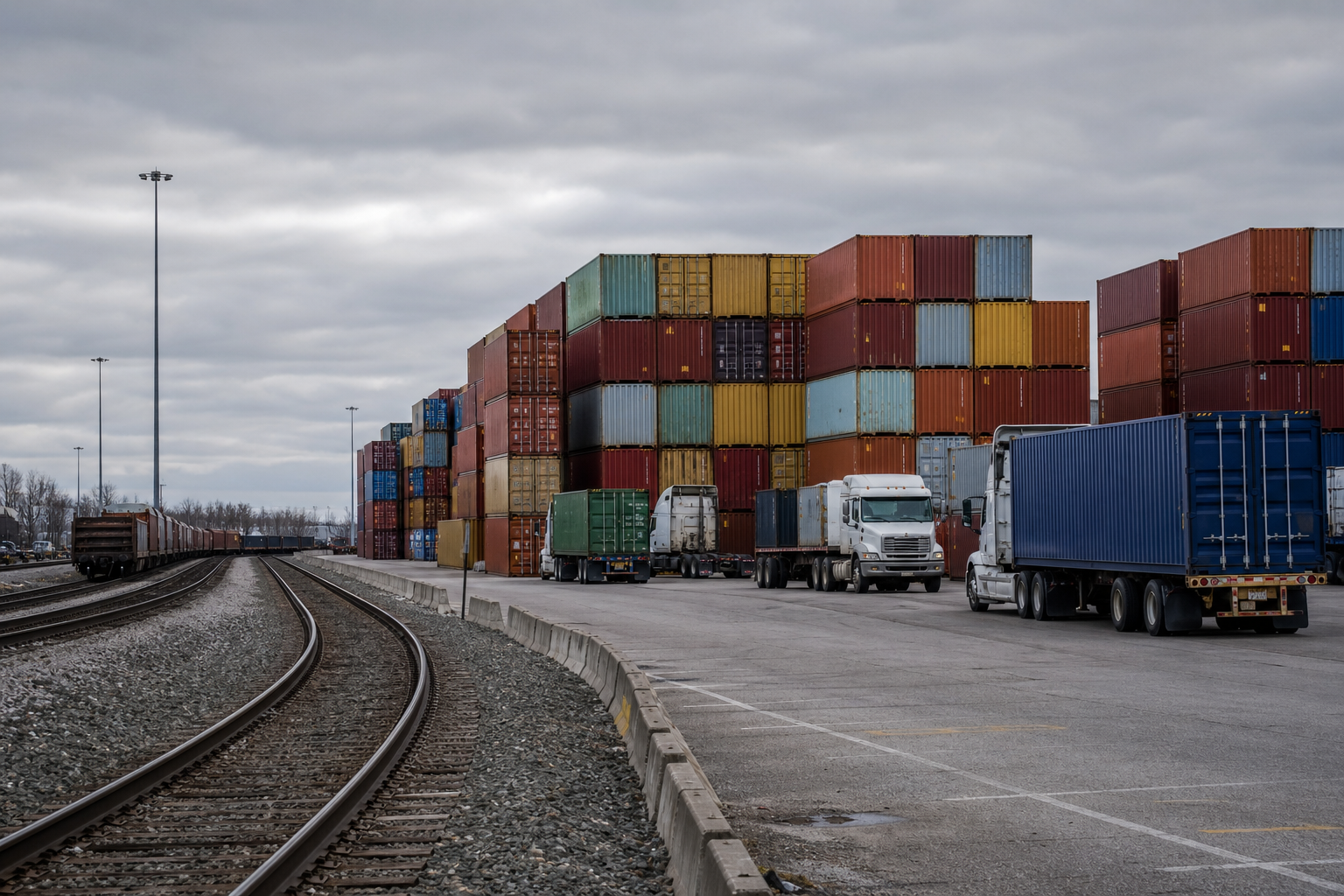
Drayage and intermodal connections keep Detroit freight moving efficiently between rail and road.
Final Thoughts on Choosing a Detroit Shipping Company
Choosing the right Detroit shipping company comes down to verifying credentials, confirming mode coverage, and insisting on a dedicated point of contact who understands the region’s automotive and cross-border freight demands. Shippers who skip this vetting process often end up with the same service failures and billing headaches they were trying to escape in the first place.
Ultimately, whether you’re a shipper comparing providers or a freight agent evaluating your next partnership, the goal is the same: find an organization that treats the relationship as a long-term partnership rather than a transaction. You can explore how Freight Tec approaches this at freight-tec.com.
