
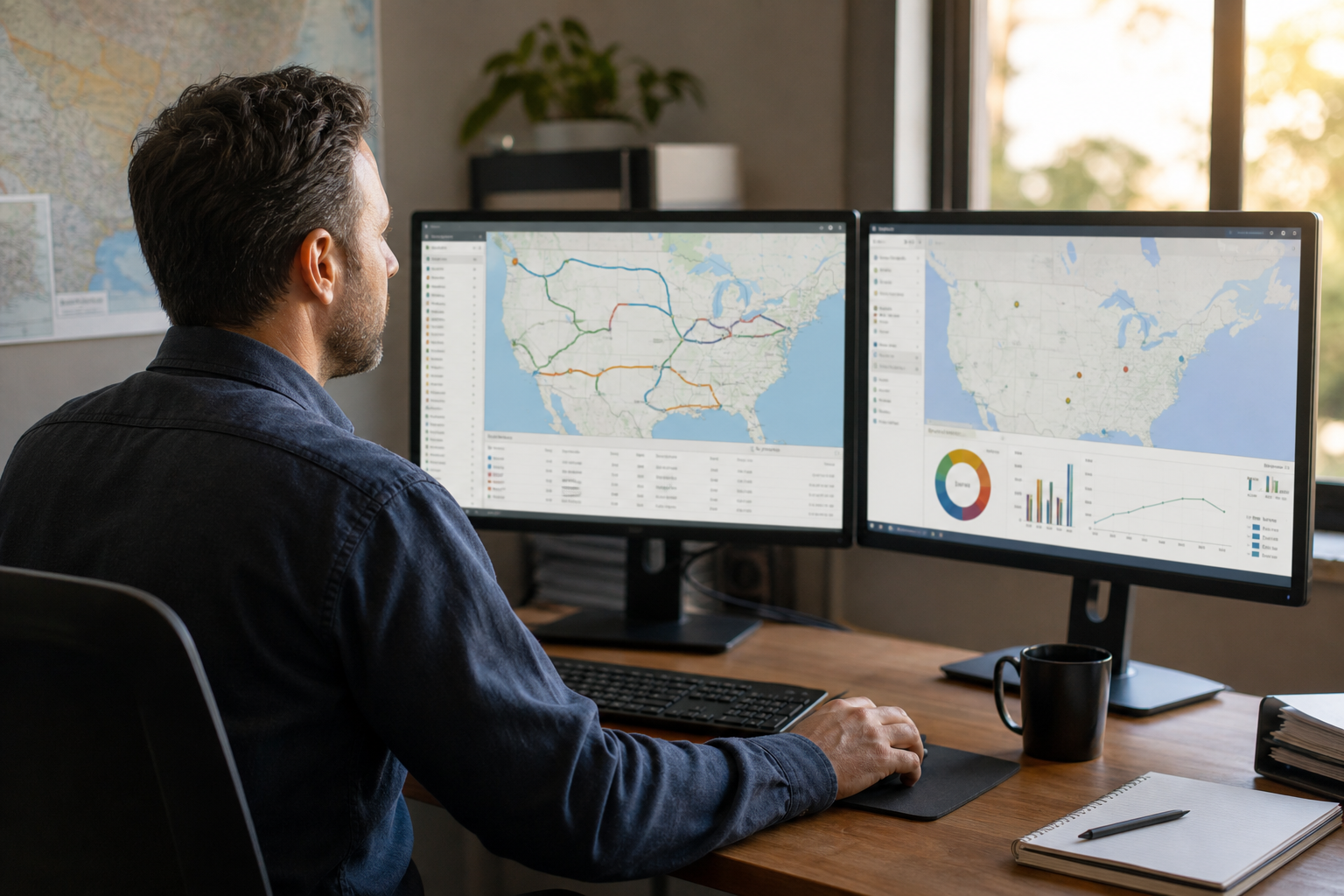
Cross country freight tracking is the practice of following a shipment’s location and status from pickup to delivery across long U.S. routes. It gives shippers, agents, and carriers the same real-time picture of the load. In this guide, you will see how it works, what good visibility looks like, and how experienced freight agents use it to protect their customer relationships.
Quick answer: Good tracking combines live GPS or ELD data with proactive human check-ins. Technology shows where the truck is. A responsive broker explains what it means and fixes problems early.
What Is Cross Country Freight Tracking?
Cross country freight tracking is monitoring a load’s position, milestones, and estimated arrival over long distances, often 1,000 miles or more. Data usually comes from GPS devices, the truck’s electronic logging device (ELD), and carrier check calls. For LTL freight, updates often come from terminal scans instead.
The goal is simple. Everyone should know where the freight is and when it will arrive.
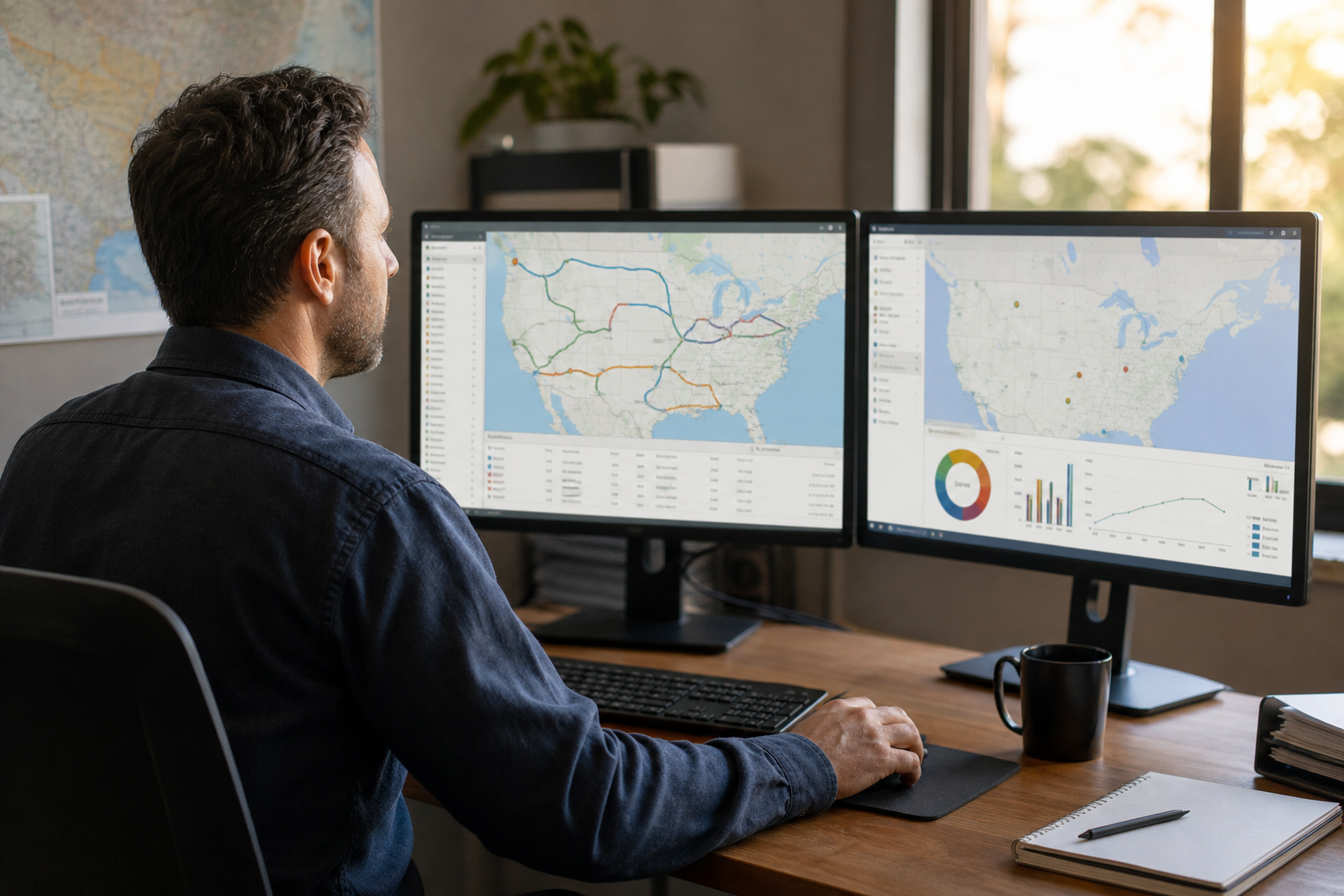
A tracking dashboard makes cross country freight tracking visible to the whole team.
How Long Haul Shipment Tracking Works
Most truckload tracking relies on three data sources. Each has strengths and limits.
| Method | Best for | Limitation |
|---|---|---|
| GPS / ELD pings | Live truckload location | Needs carrier data sharing |
| Check calls | Context and exceptions | Depends on people responding |
| Terminal scans | LTL shipments | Updates only at scan points |
ELDs are required for most commercial drivers under rules from the Federal Motor Carrier Safety Administration. Therefore, many carriers already have the hardware that makes location sharing possible.
Why Freight Visibility Matters on Long Routes
A cross-country run crosses weather zones, time zones, and hours-of-service limits. As a result, small delays compound quickly. A truck that is two hours behind in Nebraska can miss an appointment in Pennsylvania.
Early visibility gives you options. You can rebook a dock slot, warn the receiver, or arrange a recovery plan. Without it, you learn about the problem when the customer calls you.
How to Track a Cross-Country Load Step by Step
- Confirm tracking requirements with the shipper, including update frequency and recipients.
- Vet the carrier’s visibility, including live location sharing and a reachable dispatcher.
- Share the tracking link or reference number with pickup and delivery details.
- Monitor pickup, in-transit, and arrival milestones against the planned schedule.
- Escalate exceptions early and send a revised delivery estimate.
- Collect the signed proof of delivery and match it to the load before invoicing.
Tracking Needs Differ by Freight Type
Not every mode works the same way. Truckload gives you the most live data. Intermodal adds rail handoffs, so you track the container through ramps and drayage moves. For details, see how intermodal transportation is managed effectively.
Container moves have their own milestones. Our guide to container tracking covers them. For general visibility, read about real-time cargo tracking. If you ship LTL, the pages on Pilot freight tracking and Oak Harbor freight tracking show how carrier-specific lookups work.

Long routes make early visibility essential for every load.
What Freight Agents Should Expect From Their Broker
Experienced Freight Agents know that tracking is really about trust. When a shipper asks “where is my load?”, the answer reflects on the agent, not the back office. Consequently, agents need a Freight Broker that supports them with reliable systems, accurate invoicing, and people who pick up the phone.
Freight Tec runs a Freight Agent Program built for experienced professionals with strong customer relationships. It is headquartered in Bountiful, Utah, with more than 30 years in business and a nationwide agent network. The company has no internal brokerage and no company-owned agencies, so it does not compete with its agents. Agents work as 1099 independent contractors with a flexible schedule and the autonomy to run their own book.
If you are a Freight Agent with two or more years of experience and you are tired of poor support, a conversation with Freight Tec is a reasonable next step.
Common Tracking Mistakes to Avoid
- Waiting for the customer to ask for an update.
- Booking a carrier without confirming how location data is shared.
- Treating estimated arrival times as promises.
- Ignoring small delays early in the trip.
Year-end is a good time to review your own process. Ask what could have gone better this year, and fix it before the new year starts.
Frequently Asked Questions
What is cross country freight tracking?
Cross country freight tracking is the process of monitoring a shipment’s location and status as it moves long distances across the U.S. It combines GPS or ELD data, carrier check calls, and milestone updates.
How does GPS freight tracking work?
A GPS device or the truck’s electronic logging device sends location pings to a tracking platform. The platform shows the truck’s position on a map and estimates arrival time.
How often should a long haul load be updated?
Most shippers expect updates at pickup, at key points along the route, and at delivery. High-value or time-critical loads often need more frequent updates, so agree on the schedule before booking.
What is the difference between tracking and tracing?
Tracking follows a shipment forward in real time. Tracing looks backward to find where a shipment has been or where it went wrong.
Can I track LTL freight across the country?
Yes. LTL carriers typically provide a PRO number you can use on their site. Updates are usually terminal scans rather than live GPS.
Why do tracking updates sometimes stop?
Common causes include dead zones, device power loss, driver rest periods, or a carrier system outage. A quick call to the dispatcher usually resolves it.
What information do I need to track a shipment?
You usually need a bill of lading number, PRO number, or load reference, plus the carrier name. A tracking link from the broker is the simplest option.
How accurate are estimated arrival times?
They are estimates built from distance, speed, and hours-of-service limits. Weather, traffic, and appointment delays can shift them, so treat them as a guide.
Does tracking reduce late deliveries?
Tracking does not move the truck faster. It does surface problems earlier, which gives you time to adjust appointments or find a solution.
What should I look for in a broker’s tracking process?
Look for proactive updates, live visibility, vetted carriers, and a real person who answers day or night. Responsiveness matters more than any single tool.
How can freight agents use tracking to keep customers happy?
Agents who share updates before the customer asks build trust and protect the relationship. Reliable back-office support and accurate invoicing reinforce that trust.
What are common mistakes in cross country freight tracking?
Common mistakes include waiting for the customer to ask, skipping carrier visibility checks, and ignoring small delays early in the trip.
Conclusion
Cross country freight tracking works best when live data and responsive people work together. Set expectations up front, vet carrier visibility, watch milestones, and speak up early when something slips. For Freight Agents, the right Freight Broker makes that easy. To see how Freight Tec supports experienced agents, visit freight-tec.com and start a conversation.
