
Air freight is the fastest way to move cargo over long distances, and it is a growing opportunity for experienced Freight Agents who want to serve more of their customers’ needs. When a shipper has a deadline that trucks and ships cannot meet, air is the answer. Knowing how it works keeps you in control of that conversation.
Quick answer
Air freight moves cargo by aircraft, on dedicated freighters or in passenger plane bellies. It costs more per pound than truck or ocean, but it delivers speed, security, and reliable schedules for urgent or high-value shipments.
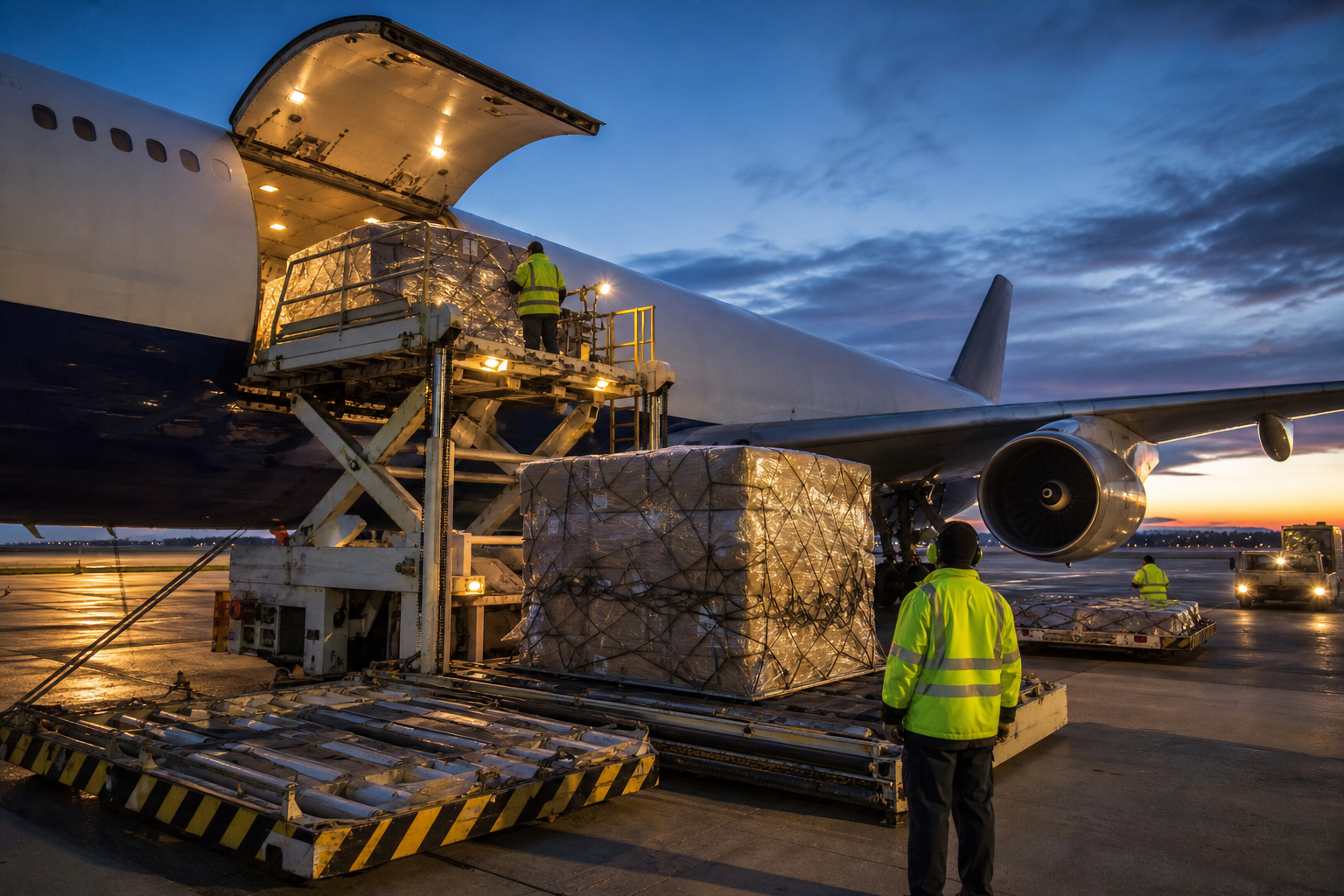
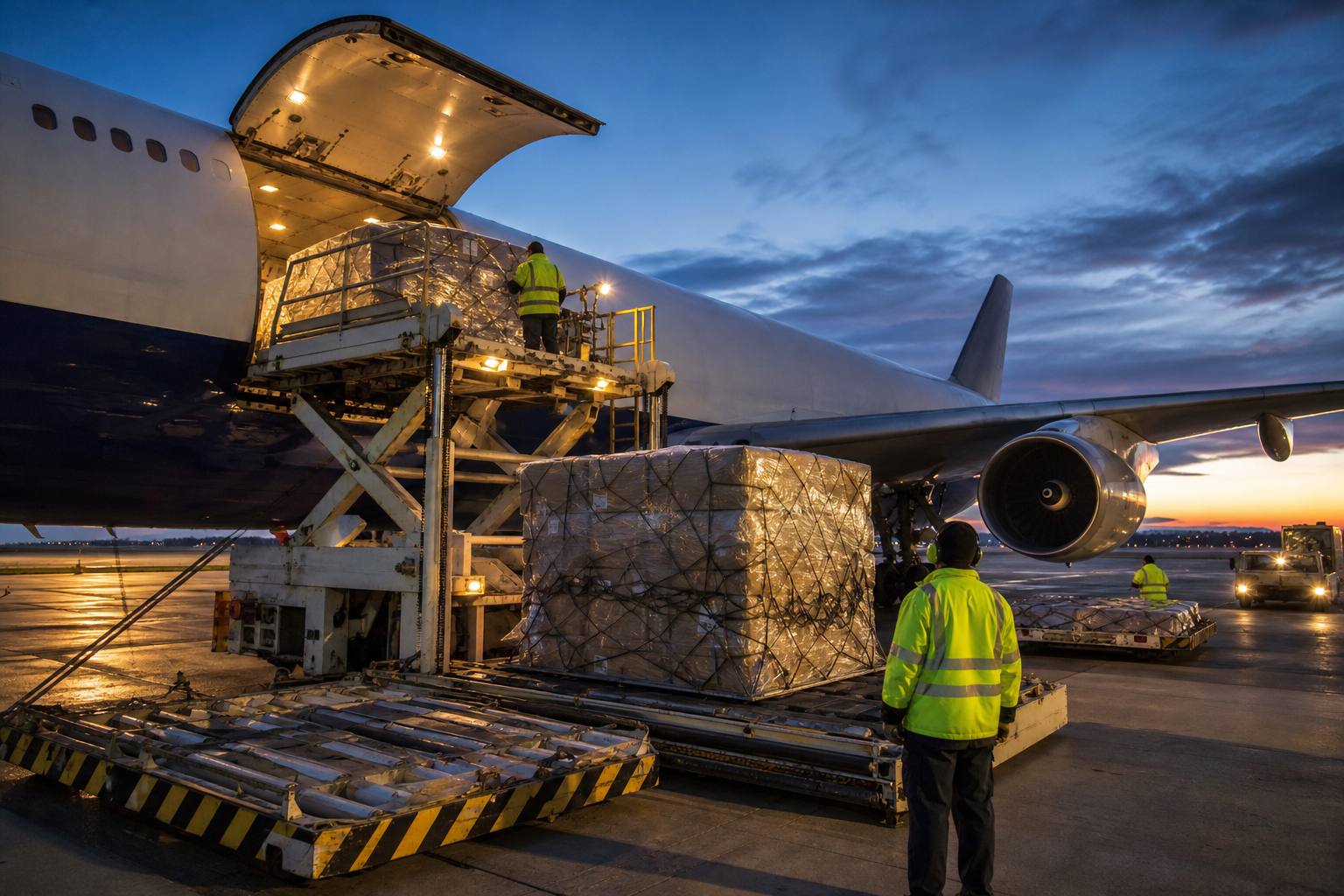
Cargo being loaded for a flight: air freight rewards careful planning.
What Is Air Freight?
Air freight is the transport of goods by aircraft. Cargo travels on dedicated freighters or in the belly of passenger flights. It is also called air cargo, and the global industry is guided by bodies such as IATA, the International Air Transport Association.
Most shipments are not simply airport to airport. They include pickup, handling, export and import clearance, and final delivery. As a result, the trucking leg matters as much as the flight.
When Air Shipping Makes Sense
Air is not for every load. However, it is the right call in several situations:
- Time-critical parts that could shut down a production line.
- High-value or theft-prone goods that benefit from tighter security.
- Perishables and medical products with short shelf lives.
- Seasonal inventory that missed its ocean window.
For domestic urgency, expedited freight services can sometimes beat air on cost. Compare both before you quote.
How Air Freight Pricing Works
Airlines price on chargeable weight. That is the greater of actual weight and dimensional weight, which converts the package volume into a weight figure. A light but bulky shipment can therefore cost more than you expect.
In addition, rates reflect route, service level, fuel and security surcharges, and available capacity. Because the market shifts often, a quote is only good for a short window. Always confirm current figures before promising a price.
| Mode | Speed | Relative cost | Best for |
|---|---|---|---|
| Air | Fastest | Highest | Urgent, high-value cargo |
| Truck | Fast, regional | Moderate | Domestic freight |
| Ocean | Slowest | Lowest per unit | Heavy, non-urgent cargo |
How to Book an Air Freight Shipment
A clean process prevents most problems. Follow these steps:
- Confirm the details. Get exact weight, dimensions, piece count, commodity, and addresses.
- Calculate chargeable weight. Compare actual and dimensional weight, then use the higher.
- Choose a service level. Match transit time and budget to the deadline.
- Prepare documents and packaging. Complete the air waybill, commercial invoice, and any dangerous goods paperwork.
- Track and confirm delivery. Update the customer proactively and collect proof of delivery.
Air Cargo and International Moves
Cross-border air shipments add customs clearance and import/export paperwork. Mistakes here cause holds, storage fees, and unhappy customers. For that reason, a broker with strong forwarding capability matters. You can read about the benefits of international freight forwarding to see how that support looks in practice.
Air also pairs with other modes. A shipment might fly into a hub, then move by truck, or involve intermodal transportation on one leg. Oversized pieces may need heavy haul coordination before they ever reach the airport.

A work-from-home Freight Agent tracks an air shipment from tender to delivery.
Why Freight Agents Add Air Cargo Services
Your best customers will eventually need an urgent move. If you cannot handle it, they will find someone who can. That puts your account at risk.
Adding air lets you serve the full relationship. It also earns you commission on higher-value shipments. Still, the broker behind you matters. Many agents reflect at year end on what should have been better: unpaid commissions, invoicing errors, or a broker that competes with them.
Freight Tec is built for experienced Freight Agents with strong customer relationships. It offers air freight alongside truckload, LTL, expedited, and international services. It has no internal brokerage and no company-owned offices, so it never competes with its agents. In addition, it is the only Freight Broker that guarantees in writing that it will not back solicit an Agent who chooses to leave. Agents who want to talk through commission splits, customer ownership, or contract signing can start a conversation with the team.
Common Mistakes to Avoid
- Guessing dimensions instead of measuring them.
- Using weak packaging that cannot survive handling.
- Skipping documents until the last minute.
- Ignoring first and last mile transit time.
Each mistake is easy to prevent. Therefore, build a short checklist and use it every time.
Frequently Asked Questions About Air Freight
What is air freight?
Air freight is the transport of cargo by aircraft, either on dedicated freighters or in the belly of passenger planes. It is the fastest long-distance shipping mode.
How much does air freight cost?
Cost depends on chargeable weight, route, service level, surcharges, and market capacity. Rates change often, so always get a current quote.
How long does air freight take?
Flight time is often hours, and door-to-door service typically takes one to five days. Handling, customs, and first and last mile legs add time.
What is chargeable weight?
Chargeable weight is the greater of actual weight and dimensional weight. Airlines bill on it because space on the aircraft is limited by volume as well as weight.
Is air freight better than ocean freight?
Air is faster and more predictable, while ocean is far cheaper per kilogram for heavy, non-urgent cargo. The right choice depends on deadline, value, and budget.
What can’t be shipped by air?
Certain hazardous materials, some batteries, and restricted items are limited or prohibited. Dangerous goods require proper classification, packaging, and documentation.
What is an air waybill?
An air waybill is the contract of carriage and receipt issued for an air shipment. It is not a document of title.
Can a Freight Agent sell air freight?
Yes, an experienced Freight Agent can add air freight to a book of business when the broker has the carriers and forwarding capability. Freight Tec offers air freight services alongside truckload, LTL, and international.
When should a shipper choose air freight?
Choose air when speed, high value, or fragile cargo outweighs cost. Production line shutdowns and urgent replacement parts are common examples.
What are common air freight mistakes?
Common mistakes include misstating dimensions, weak packaging, missing documents, and ignoring first and last mile transit. Each can cause delays or surprise charges.
Does Freight Tec handle air freight?
Yes. Freight Tec provides air freight services as part of a broader offering that includes international forwarding, customs clearance, and expedited freight.
How do I protect my customers when adding air freight?
Work with a broker that does not compete with its agents and backs account ownership in writing. Freight Tec guarantees in writing that it will not back solicit an Agent who leaves.
Conclusion
Air freight gives shippers speed and security when time matters most, and it gives Freight Agents a way to serve every need their customers have. Know chargeable weight, plan documents early, and match the mode to the deadline. If you are an experienced agent ready for a broker that protects your accounts and never competes with you, have a conversation with Freight Tec.
