

4PL, short for fourth-party logistics, is a supply chain model in which a single provider manages your entire logistics network — including the 3PLs, carriers, warehouses, and technology involved — on your behalf. Rather than juggling multiple vendors, a shipper hands the whole strategy over to one partner who orchestrates everything from procurement to final delivery. For companies drowning in spreadsheets and carrier phone calls, this model can feel like a genuine relief.
Quick answer: A 4PL is a logistics partner that oversees your full supply chain — not just transportation, but also warehousing, carrier selection, and technology integration — acting as a single accountable point of contact for shippers.

A 4PL functions like a control tower, coordinating carriers, warehouses, and data across the entire supply chain.
What Is a 4PL?
A 4PL is a logistics provider that takes on strategic responsibility for a company’s entire supply chain, rather than handling one piece of it. This includes managing relationships with multiple third-party logistics companies, carriers, and technology vendors on the shipper’s behalf.
In practice, that means a 4PL might select and monitor the trucking carriers, coordinate warehousing, oversee customs clearance for international freight, and report performance data back to the shipper. Consequently, shippers gain a single point of accountability instead of managing dozens of vendor relationships themselves. According to Wikipedia’s overview of fourth-party logistics, the model emerged specifically to address the coordination gaps left by traditional third-party providers.
How Does a Fourth-Party Logistics Provider Work?
A fourth-party logistics provider typically starts by auditing a shipper’s current supply chain, identifying inefficiencies, and mapping every touchpoint from raw materials to final delivery. From there, the provider designs a coordinated strategy that may involve several 3PLs working together under one management layer.
Technology plays a central role here. Most 4PLs rely on transportation management systems and real-time tracking tools to monitor shipments across carriers, flagging delays before they become costly problems. As a result, shippers get consolidated reporting instead of chasing updates from five different vendors. In fact, brokers that invest heavily in cutting-edge freight technology are often better positioned to expand into this kind of full-scope management role.
Furthermore, because a 4PL is not tied to owning its own trucks or warehouses, it can remain objective when selecting the best-fit carriers for each lane. This neutrality is one reason many mid-size and large shippers find the model appealing.
4PL vs 3PL: Key Differences Shippers Should Know
Understanding the difference between a 4PL and a 3PL matters when deciding which model fits your business. A 3PL generally executes specific logistics tasks, such as warehousing, freight brokerage, or transportation. A 4PL, in contrast, manages the overall strategy and may direct several 3PLs at once.
| Feature | 3PL | 4PL |
|---|---|---|
| Scope | Executes specific tasks (trucking, warehousing) | Manages the full supply chain strategy |
| Vendor relationships | Is one of the vendors | Manages multiple vendors, including 3PLs |
| Technology role | Task-specific systems | Unified, cross-network technology platform |
Notably, some freight brokerages blur this line by offering both traditional brokerage and broader supply chain oversight. Shippers evaluating a partner should ask directly whether a provider truly manages the full network or simply executes transportation tasks. For a closer look at what a strong brokerage should offer, see this breakdown of core freight brokerage capabilities.
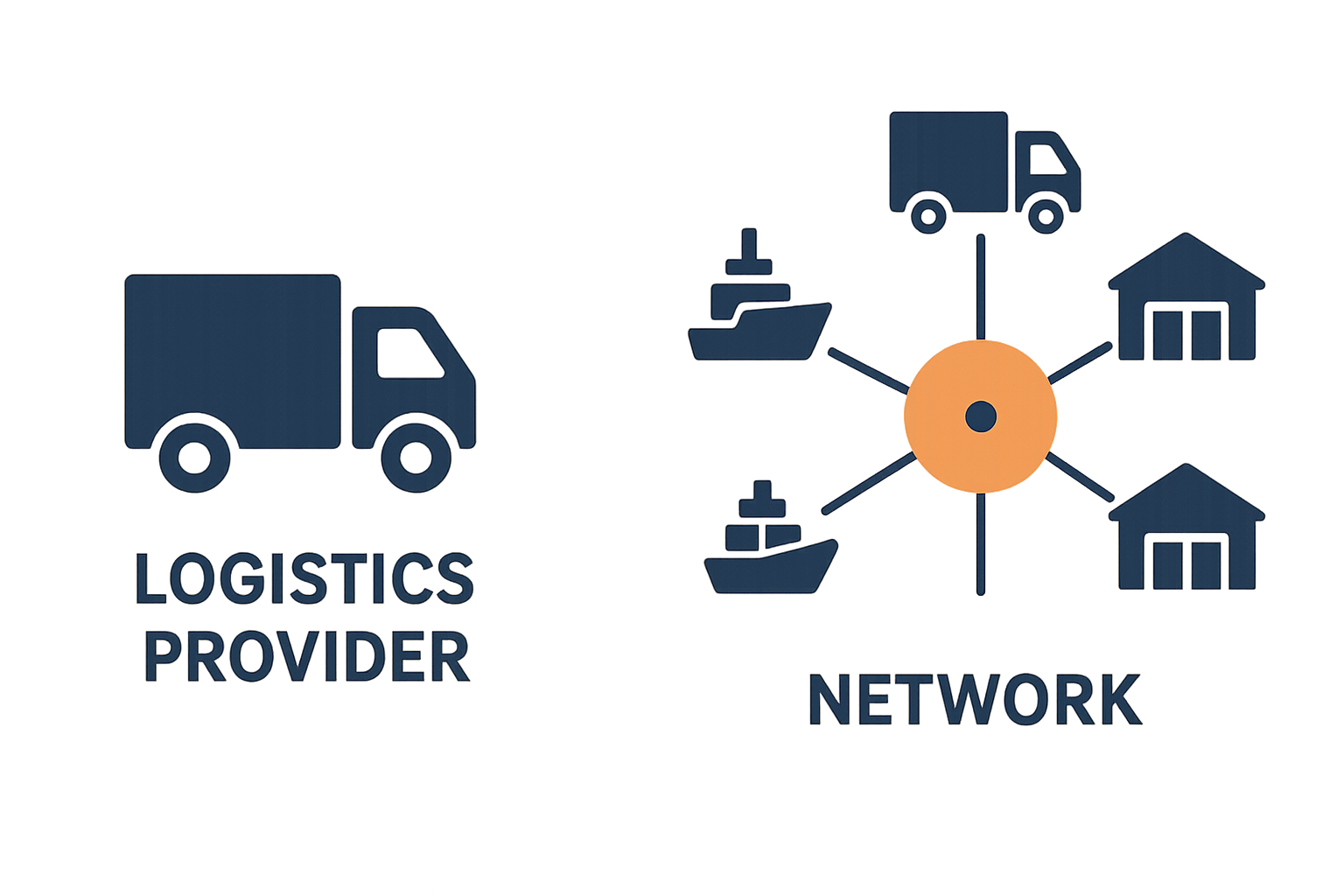
A 4PL coordinates an entire network of carriers and warehouses, unlike a single-service 3PL. For a deeper walkthrough, see our 3PL Explained: What It Is and Why Shippers Use It Today.
Key Benefits of Partnering With a 4PL
Shippers turn to fourth-party logistics management for several practical reasons. Above all, it frees internal teams from day-to-day carrier coordination so they can focus on core business functions.
- Single point of accountability: One provider owns performance across the entire supply chain instead of finger-pointing between vendors.
- Improved visibility: Consolidated technology platforms give shippers real-time data on shipments, inventory, and costs.
- Scalability: As shipping volume grows or shifts across modes like drayage, refrigerated, or intermodal freight, a 4PL can adjust the network without the shipper renegotiating every contract.
- Cost optimization: Because the provider is not tied to a single asset base, it can select the most efficient carrier for each lane.
Industry estimates from research firms such as Grand View Research suggest the global logistics outsourcing market, which includes fourth-party arrangements, continues to grow steadily as shippers seek integrated solutions rather than piecemeal vendor management.
How to Choose the Right 4PL Partner
Selecting a 4PL is not a decision to rush. Because this provider will oversee critical parts of your business, it helps to follow a structured evaluation process.
- Assess your current supply chain complexity, shipment volume, and specific pain points to confirm whether full-scope 4PL management genuinely fits your operation.
- Verify the provider’s carrier network and technology platform to make sure it can integrate with your existing systems and support the freight types you move.
- Request references or case studies from shippers in a similar industry, paying attention to measurable outcomes like on-time delivery rates or cost reductions.
- Compare pricing structures, service level agreements, and claims protection policies carefully before signing a long-term management contract.
- Start with a pilot program on a limited lane or product line, then expand the relationship once performance and communication consistently meet expectations.
Throughout this process, it also helps to evaluate a provider’s values and track record. For example, reviewing a company’s stated core values and operating principles can reveal whether its priorities align with your own.
When Does Your Business Need a 4PL Model?
Not every shipper needs full fourth-party logistics management. Smaller companies with straightforward, single-mode shipping needs may be well served by a traditional freight broker or 3PL instead.
However, businesses managing multiple freight modes, such as truckload, LTL, drayage, and international shipments, often benefit from a 4PL’s coordinated approach. Similarly, companies expanding into new regions, including cross-border shipping across the U.S., Canada, and Mexico, may find the added oversight valuable. Shippers curious about what a full-service logistics partner can offer can review available shipper solutions to compare scope and services before deciding. For additional context on logistics regulations affecting carriers and brokers, the Federal Motor Carrier Safety Administration maintains public guidance on compliance requirements.

Ongoing performance reviews help shippers get the most value from a 4PL partnership.
Frequently Asked Questions About 4PL
What does 4PL mean in logistics?
4PL stands for fourth-party logistics, a model where one provider manages your entire supply chain, including the 3PLs, carriers, and technology involved. The 4PL acts as a single accountable point of contact overseeing every logistics function.
How does a 4PL differ from a 3PL?
A 3PL typically handles specific tasks like warehousing or transportation, while a 4PL manages the broader supply chain strategy, often coordinating multiple 3PLs on a shipper’s behalf. In short, a 4PL sits above the 3PL layer as a strategic orchestrator.
How does a 4PL provider work with existing carriers?
A 4PL integrates with a shipper’s existing carrier relationships and logistics vendors rather than replacing them outright. It layers technology and management on top to optimize routing, cost, and performance across the network.
Why would a company choose a 4PL model?
Companies choose a 4PL model to reduce internal logistics workload, gain end-to-end visibility, and improve efficiency without building a large in-house supply chain team. This works especially well for businesses managing complex, multi-modal shipping needs.
How much does a 4PL service typically cost?
4PL costs vary widely based on shipment volume, complexity, and service scope, often structured as a management fee plus pass-through logistics costs. Most providers customize pricing after assessing a shipper’s specific supply chain needs.
How long does it take to onboard a 4PL provider?
Onboarding a 4PL typically takes anywhere from four to twelve weeks, depending on supply chain complexity and data integration requirements. Simpler networks with fewer carriers can transition faster.
What industries benefit most from 4PL services?
Industries with complex, multi-modal shipping needs, such as automotive, manufacturing, and retail, benefit most from 4PL services. Businesses juggling international freight, warehousing, and multiple carriers tend to see the biggest efficiency gains.
What are common mistakes when selecting a 4PL partner?
Common mistakes include failing to verify a provider’s carrier network, overlooking technology compatibility, and not clarifying service level agreements upfront. Skipping a pilot program before full integration is another frequent misstep.
What technology does a 4PL use to manage supply chains?
A 4PL typically uses transportation management systems, real-time tracking platforms, and data analytics tools to coordinate shipments across carriers. This gives shippers unified visibility into inventory, routing, and performance metrics.
Can small businesses use a 4PL provider?
Yes, small businesses can use 4PL services, though the model tends to be most cost-effective for companies with moderate to high shipping volumes. Smaller shippers should weigh 4PL fees against the value of freed-up internal resources.
What is the difference between 4PL and a freight broker?
A freight broker arranges individual shipments between shippers and carriers, while a 4PL manages the broader supply chain strategy across multiple providers. Notably, some freight brokerages with advanced technology platforms offer 4PL-style services as part of their scope. For a deeper walkthrough, see our What Is the Best Freight Broker? A Complete Guide for Shippers and Carriers.
What are best practices for a successful 4PL partnership?
Best practices include setting clear KPIs, maintaining transparent communication, and starting with a pilot program before scaling up. Regularly reviewing performance data also helps both parties adjust strategy as needs evolve.
Final Thoughts on the 4PL Model
In summary, 4PL is a supply chain model built for shippers who want a single partner managing every moving piece, from carrier selection to technology and reporting. It differs from a 3PL by focusing on strategy and coordination rather than executing one specific task. Therefore, businesses with complex, multi-modal freight needs are often the best fit for this approach.
Before committing, take time to evaluate a provider’s network, technology, and track record, and consider starting with a pilot program to confirm the fit. Shippers exploring their options can learn more by visiting freight-tec.com to review available logistics and brokerage solutions.