

3PL logistics is the practice of outsourcing shipping, warehousing, and freight management to a third-party logistics provider instead of handling these functions in-house. For shippers across automotive, retail, manufacturing, and other industries, this approach has become essential to staying competitive in a complex supply chain environment. Freight Tec, a top 100 freight broker headquartered in Bountiful, Utah, has spent more than 30 years helping shippers and carriers navigate exactly this kind of logistics outsourcing.
Quick answer: 3PL logistics means hiring a third-party logistics provider to manage your transportation, warehousing, and freight documentation. Shippers get access to a broader carrier network, better rates, and claims protection without building an internal logistics department.
What Is 3PL Logistics?
3PL logistics refers to outsourcing transportation, warehousing, and related supply chain tasks to a specialized provider. Instead of hiring internal staff to negotiate freight rates, track shipments, and resolve delivery issues, a company hands these responsibilities to a third-party logistics provider that already has carrier relationships and operational systems in place.
In practice, this means the provider sources qualified carriers, handles documentation, monitors shipments in transit, and manages claims if freight is damaged or delayed. As a result, shippers can focus on production, sales, and customer service rather than the day-to-day mechanics of moving freight across the country.
How Does Third-Party Logistics Work?
Third-party logistics works by inserting an experienced intermediary between the shipper and the carrier market. Specifically, the provider evaluates each load, identifies the right equipment type, and negotiates a rate that reflects current market conditions. According to Armstrong & Associates, the U.S. third-party logistics market generates well over $300 billion in annual revenue, a figure that underscores how widely companies now rely on outsourced freight management.
Furthermore, a reputable provider does not simply hand off a load to the first available truck. Instead, carriers are vetted for safety scores, insurance coverage, and on-time performance before they are allowed to haul freight for the provider’s customers. This vetting step is one reason shippers trust 3PL logistics over managing an unvetted carrier list themselves. You can read a deeper breakdown of this model in our guide on what 3PL means and why shippers use it.
Core Services Included in 3PL Logistics
Most full-service providers bundle several capabilities under one roof. Below are the services shippers most commonly rely on:
- Truckload brokerage, including van, flatbed, and specialized equipment
- Less-than-truckload (LTL) freight consolidation
- Drayage for port container movement
- Refrigerated and temperature-controlled transport
- Intermodal rail and truck coordination
- Warehousing, customs clearance, and supply chain project management

A well-run 3PL logistics operation keeps freight moving smoothly from warehouse to final delivery.
Key Benefits of a 3PL Logistics Partner
Choosing the right partner delivers advantages that go well beyond simple cost savings. In particular, shippers gain flexibility they cannot easily replicate with an in-house team.
Access to a wider carrier network. A strong logistics provider works with thousands of vetted carriers, which means more options for difficult lanes and tight deadlines.
Reduced administrative burden. Rate negotiation, documentation, and tracking shift to the provider, freeing internal staff for other priorities.
Claims protection and insurance coverage. Reputable providers carry cargo insurance and bonding, which limits financial exposure if freight is lost or damaged.
Above all, a dependable 3PL logistics partner acts as an extension of the shipper’s own team rather than just a transaction processor. This is precisely why many companies treat outsourced logistics management as a long-term relationship rather than a one-off service purchase.
How to Choose the Right 3PL Logistics Provider
Not every provider operates the same way, so a structured evaluation process helps shippers avoid costly mistakes. Consider the following steps before signing an agreement.
- Verify insurance and bonding by confirming the provider carries cargo insurance, a broker bond, and errors and omissions coverage so your freight is protected if something goes wrong in transit.
- Review carrier vetting standards by asking how carriers are qualified, including safety ratings and authority checks, because thorough vetting directly reduces claims and delays.
- Clarify service scope and equipment types to make sure the provider supports your specific freight, whether that is flatbed, refrigerated, drayage, or international multimodal transportation.
- Ask about agent support and accountability, including whether you get a dedicated agent and what after-hours support looks like, since consistent communication prevents service failures.
- Confirm technology and visibility tools so you can track shipments and manage claims without relying on constant phone calls. Our article on the role of technology in freight management explains this in more detail.
For a broader framework on vetting any logistics partner, see our guide on factors to consider when choosing a logistics partner, and review the foundational terms in our complete guide to logistics terminology.
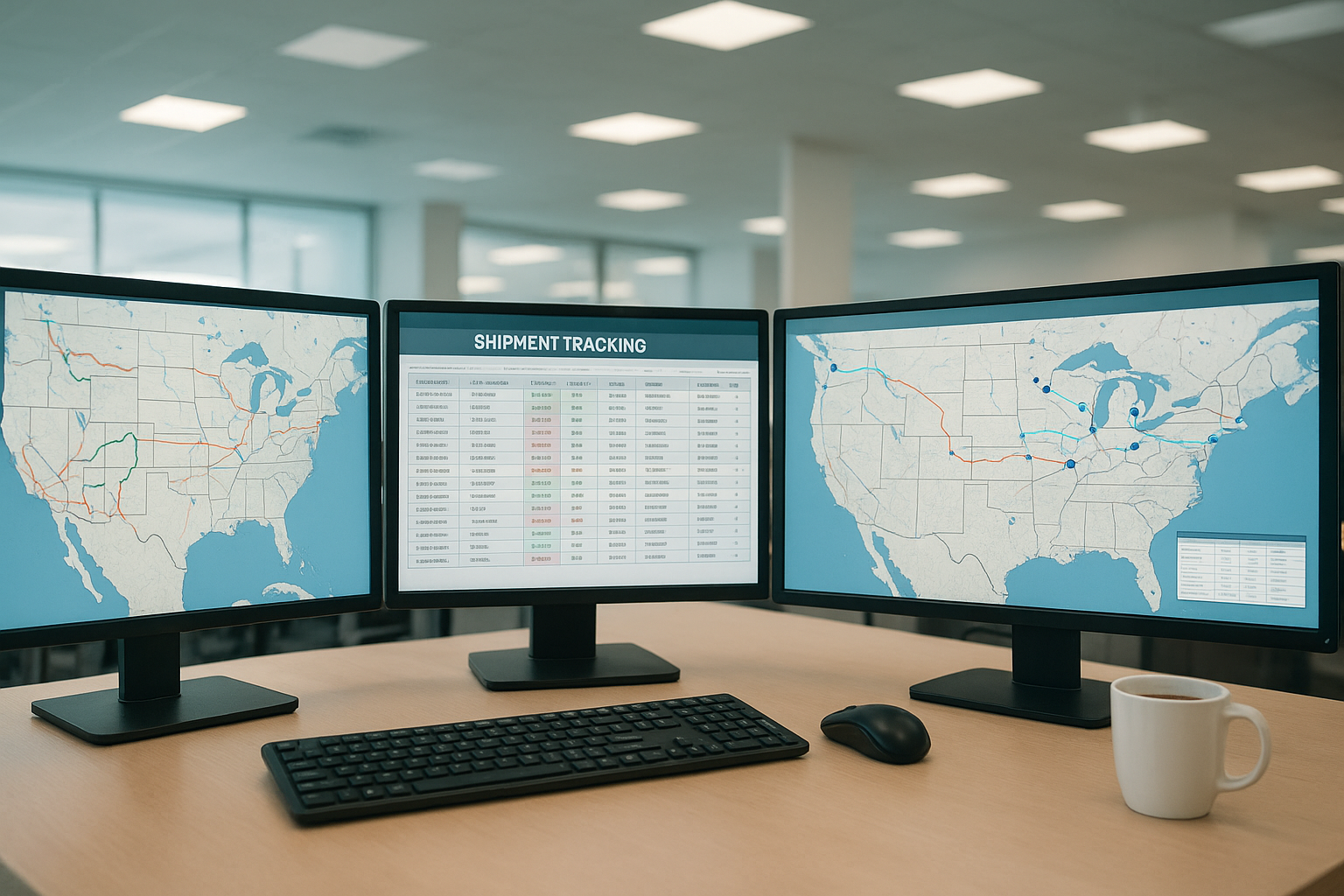
Real-time visibility tools are now a standard expectation within 3PL logistics partnerships.
3PL Logistics vs. 4PL Logistics: What’s the Difference?
3PL logistics focuses on executing transportation and warehousing tasks for a defined scope of freight. In contrast, 4PL logistics takes a broader view, often managing multiple 3PL providers and overseeing the entire supply chain strategy on the shipper’s behalf.
Most mid-sized shippers start with a 3PL relationship because it is more direct and easier to manage. However, as operations scale across multiple regions or countries, some companies eventually explore a 4PL model. You can compare both approaches in our detailed breakdown of 4PL logistics and what shippers should know before deciding which structure fits their needs.
Why Freight Agents Power 3PL Logistics
Behind every reliable 3PL logistics provider stands a network of freight agents who manage the day-to-day relationship with shippers. These agents negotiate rates, track shipments, and step in immediately when a carrier falls through, which is often the real differentiator between a good provider and a mediocre one.
At Freight Tec, experienced agents with two or more years in the industry run their own book of business while being backed by Professional Errors & Omissions Insurance, a $100,000 broker bond, and approval to haul sensitive U.S. Military freight after Homeland Security vetting. Notably, Freight Tec is the only company that guarantees in writing it will not back solicit an agent’s customers should that agent choose to leave. This level of account protection, combined with recognition as a Top 100 Freight Broker by TIA and Inc. Magazine, is why many agents who feel underpaid or unsupported elsewhere make the move. You can learn more directly at freight-tec.com.
For shippers, this agent-driven structure means a dedicated point of contact who genuinely understands their freight, rather than a rotating call center. If you want to see how this plays out across different freight types, our overview of how 3PL partnerships function day to day offers additional context, and the Transportation Intermediaries Association maintains industry standards for freight brokers worth reviewing.

Experienced freight agents remain the human backbone of dependable 3PL logistics service.
Frequently Asked Questions About 3PL Logistics
What is 3PL logistics?
3PL logistics is the outsourcing of shipping, warehousing, and freight coordination to a third-party logistics provider instead of managing these tasks internally. The provider handles carrier selection, documentation, tracking, and claims on the shipper’s behalf.
How does a 3PL logistics provider differ from a trucking company?
A trucking company owns trucks and physically moves freight, while a 3PL logistics provider arranges transportation through a network of vetted carriers. This gives shippers access to multiple equipment types and lanes without owning a fleet.
How much does 3PL logistics cost?
Costs vary by freight type, volume, and lane, but most providers charge a transparent markup over carrier rates rather than a flat fee. Shippers typically save money overall because they avoid hiring in-house logistics staff and negotiating rates themselves.
Why do shippers use 3PL logistics instead of managing freight in-house?
Shippers use 3PL logistics to reduce overhead, gain access to a larger carrier network, and free up internal staff for core business functions. A good provider also offers claims protection and real-time visibility that smaller shipping teams struggle to build on their own.
What is the difference between 3PL and 4PL logistics?
3PL logistics focuses on executing transportation and warehousing tasks, while 4PL logistics manages the entire supply chain strategy, often overseeing multiple 3PL providers. Most mid-sized shippers start with 3PL before considering a 4PL arrangement.
How long does it take to onboard with a 3PL logistics provider?
Onboarding typically takes a few days to two weeks, depending on how quickly contracts, insurance verification, and carrier setup are completed. Shippers with straightforward freight profiles often move faster through this process.
What industries benefit most from 3PL logistics?
Automotive, manufacturing, retail, and perishable goods industries benefit significantly because they rely on tight delivery windows and specialized equipment. A capable 3PL logistics partner coordinates refrigerated, flatbed, or expedited freight across these sectors.
What common mistakes do shippers make when choosing a 3PL logistics partner?
The biggest mistakes include choosing based on price alone, skipping a review of the provider’s insurance and bonding, and failing to ask how carriers are vetted. These shortcuts often lead to service failures and claims disputes later.
Does 3PL logistics include warehousing and customs clearance?
Many full-service providers include warehousing, supply chain management, and customs clearance alongside freight brokerage. Not every provider offers all of these, so shippers should confirm the scope of services upfront.
How do freight agents fit into 3PL logistics?
Freight agents act as the direct point of contact between shippers and the 3PL logistics provider, managing relationships, rates, and day-to-day problem solving. Experienced agents with strong customer relationships are often the backbone of a provider’s service quality.
What should a shipper ask about commission splits and support before signing with a 3PL?
Shippers working with an agent-based model should ask how commission structures affect service priorities and what support is available outside normal business hours. Clear answers on 24/7/365 support and account ownership indicate a stable, accountable partner.
Is 3PL logistics safe for high-value or sensitive freight?
Reputable providers carry cargo insurance, broker bonds, and errors and omissions coverage to protect high-value shipments. Some providers also undergo additional vetting, such as Homeland Security clearance, to handle sensitive freight like military cargo.
Final Thoughts on 3PL Logistics
In summary, 3PL logistics gives shippers a practical way to move freight reliably without building an entire transportation department from scratch. The right provider brings carrier vetting, insurance protection, technology, and a dedicated agent who understands the account’s specific needs.
Therefore, whether a company is evaluating its first outsourced logistics relationship or looking to replace a provider that has let them down, the fundamentals remain the same: verify coverage, confirm carrier standards, and insist on real accountability. For shippers and experienced freight agents alike, Freight Tec has built its 30-plus year reputation on exactly these principles, backed by Top 100 Freight Broker recognition and the kind of account protection that is rare in this industry. Readers who want a wider vocabulary of supply chain terms can also reference the Wikipedia overview of third-party logistics for additional background.