
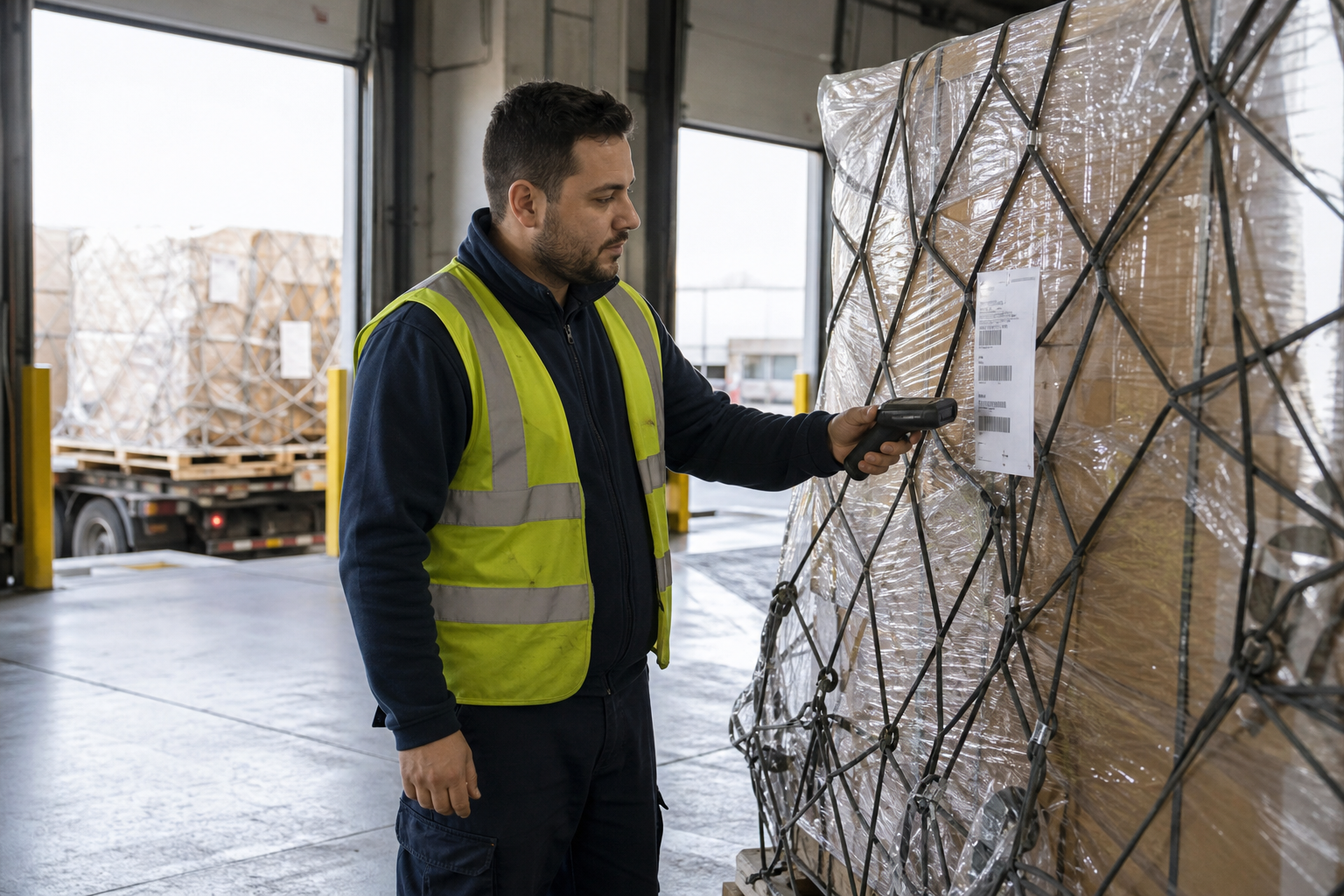
Track air freight cargo the right way, and a stressful waiting game turns into a predictable, manageable process. Whether you are a shipper moving time-sensitive goods or a freight agent handling accounts for demanding customers, knowing exactly where a shipment sits in transit removes guesswork and builds trust. This guide walks through what air cargo tracking really means, how it works in practice, and how the right freight broker fits into the picture.
Air freight moves fast, but that speed only helps you if you can see what is happening along the way. In particular, shippers who regularly handle perishables, automotive parts, or high-value goods rely on consistent visibility to protect delivery windows and customer relationships.
What Does It Mean to Track Air Freight Cargo?
Track air freight cargo is the process of monitoring a shipment’s location, custody, and status from pickup through final delivery using an air waybill number, an airline tracking portal, or a broker-managed system. Each scan or handling event along the route is logged against that reference number, giving shippers a timeline they can check at any point.
In practice, this means a shipper enters a tracking number into a carrier’s cargo portal and sees status updates such as “accepted,” “departed,” “arrived,” or “available for pickup.” However, international shipments often add customs clearance steps, which introduce additional checkpoints that are not always visible on the airline’s own system.
The underlying document that makes all of this possible is the air waybill, a contract of carriage and tracking reference issued when the cargo is accepted. For a deeper look at how this document functions, the Wikipedia entry on air waybills offers useful background.
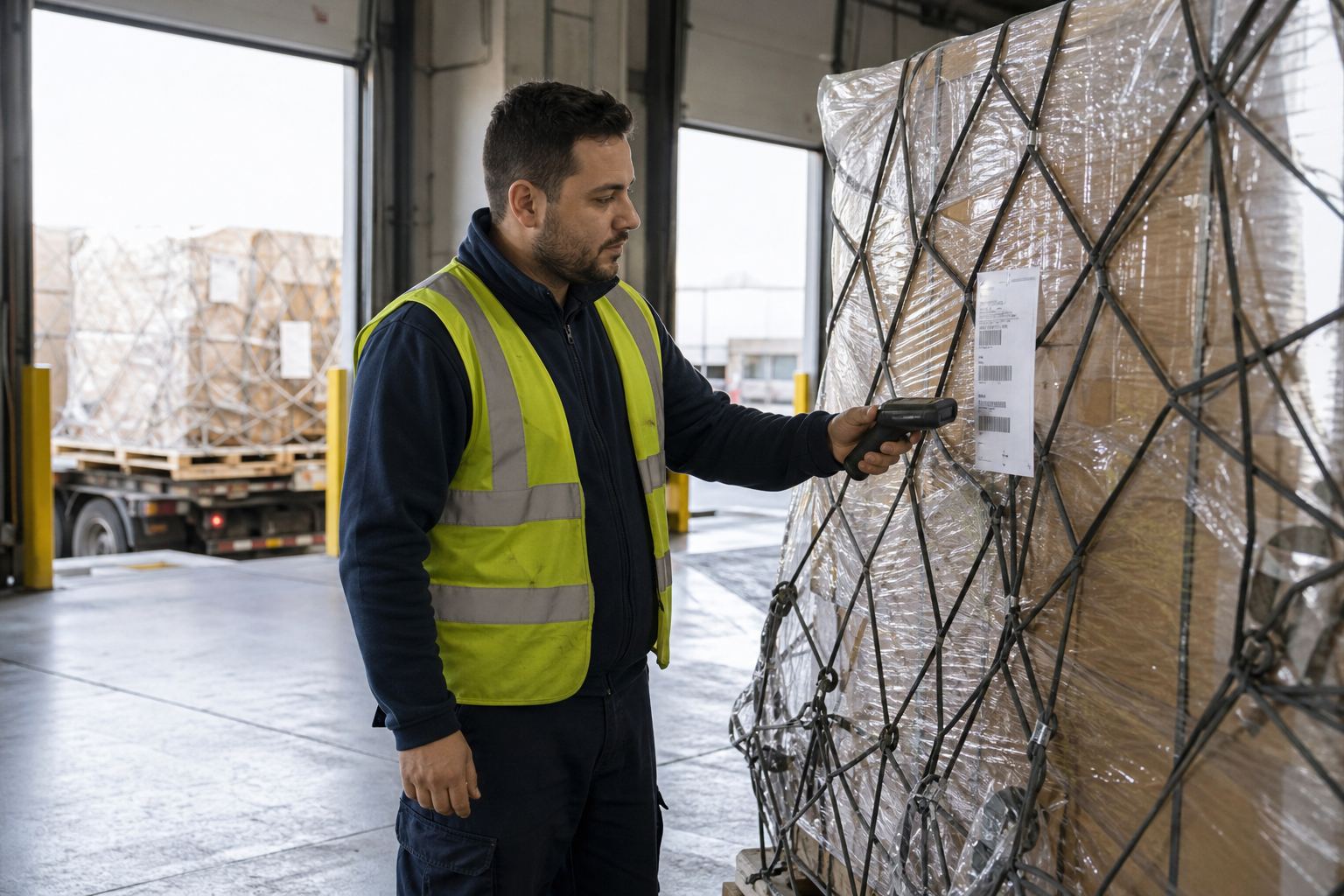
Scanning each pallet is one of the first steps used to track air freight cargo accurately from pickup onward.
Why Tracking Air Cargo Shipments Matters
Air freight is typically chosen because something cannot wait. Therefore, losing visibility on that shipment defeats the entire purpose of paying a premium for speed. According to the International Air Transport Association (IATA), air cargo carries a disproportionately large share of global trade by value compared to its share by weight, which underscores just how much is riding on each shipment.
Consequently, a missed update or delayed flight can ripple through a production line, a retail launch, or a time-critical repair. In addition, shippers in regulated industries, such as automotive manufacturing, often face contractual penalties for late parts, which makes proactive tracking a financial safeguard rather than a convenience.
Freight Tec supports automotive-sector shippers with exactly this kind of time-sensitive coordination; you can see how that works on the page covering logistics services for automotive shippers.
How to Track Air Freight Cargo in 5 Steps
Above all, a consistent process prevents missed updates. Here is the sequence most experienced shippers and agents follow.
- Locate your air waybill number. Find this unique reference code on the shipping documents or booking confirmation, since every tracking lookup depends on it.
- Choose the correct tracking platform. Identify which airline or ground handler is carrying the shipment, then go directly to that carrier’s cargo portal, such as United Cargo or Delta Cargo, instead of a generic search engine.
- Enter your tracking details accurately. Type the number exactly as printed, including any prefix digits, because a single wrong character returns no results or the wrong shipment entirely.
- Monitor milestone updates consistently. Check departure, arrival, and customs clearance points rather than checking once, so delays surface early enough to act on.
- Escalate through your freight broker when needed. Contact your broker or agent right away if tracking shows a gap, since they can call the airline directly and push for answers faster than a shipper working alone.
For carrier-specific walkthroughs, Freight Tec has published detailed guides on tracking shipments through United Cargo and tracking shipments through Delta Cargo, both of which expand on steps two and three above.
Common Tools Used to Monitor Air Freight Shipments
Several tools work together to monitor air freight shipments from pickup to delivery. For example, barcode and RFID scanning log each handling event, while carrier portals translate those scans into a readable timeline for the shipper.
| Tracking Method | Best For | Typical Update Frequency |
|---|---|---|
| Airline cargo portal | Single-carrier, point-to-point shipments | Per flight milestone |
| Broker tracking dashboard | Multiple shipments across carriers | Consolidated, real time |
| Sensor-based tracking | Temperature-sensitive or high-value cargo | Continuous |
Challenges That Make Air Cargo Tracking Difficult
Even with good tools, air cargo tracking still runs into friction points. In particular, interline handoffs between carriers can create gaps, since one airline’s portal may not reflect activity once the shipment transfers to a connecting flight or ground handler.
Similarly, customs holds add uncertainty because clearance timing depends on government agencies rather than the airline itself. The Federal Aviation Administration oversees air cargo security screening requirements, and shipments flagged for additional inspection will not move until that process clears, regardless of what the tracking portal shows.
In contrast, a shipper working with a dedicated broker avoids much of this confusion, because the broker already knows which checkpoints apply and can explain a status change before it becomes a surprise.

A consolidated dashboard helps logistics teams catch tracking gaps before they turn into missed deliveries.
How a Freight Broker Simplifies Air Freight Shipment Tracking
A freight broker acts as a single point of contact across multiple carriers, which removes the need to juggle separate logins and reference formats. As a result, shippers get one phone call or one message thread instead of five different portals to monitor.
Freight Tec provides this kind of coordinated support as part of its air freight services, connecting shippers with vetted carriers across truckload, LTL, drayage, intermodal, and air freight. You can review the scope of that offering on the air freight services page, and compare carrier-level detail through the Delta Cargo shipping and tracking guide.
Above all, the value of a broker shows up when something goes wrong. A good broker does not just relay tracking data; they call the airline, push for a revised arrival time, and keep the shipper informed before the customer has to ask. You can learn more about how this works directly at freight-tec.com.
Why Experienced Freight Agents Partner With Freight Tec
Shippers are not the only ones who need to track air freight cargo reliably. Freight agents handling accounts for customers who move air freight regularly need the same visibility, plus the backing of a broker that will not undercut them.
Freight Tec runs its Freight Agent Program for experienced agents, generally those with several years in the role, who already have close, long-standing customer relationships. Unlike many competitors, Freight Tec has no internal brokerage and no company-owned agent offices, so there is no conflict of interest working against the agents who built those accounts.
Furthermore, Freight Tec is the only company in the industry known to provide a written guarantee against back-soliciting an agent who chooses to leave. Combined with high commission splits, 24/7/365 support, and standard 28-day payment terms for carriers, agents gain the tools to build financial growth and long-term stability. Freight Tec also holds recognition as a top 100 freight broker from TIA and Inc. Magazine, along with TIA Performance Certified status. Agents interested in a conversation can learn more at freight-tec.com.
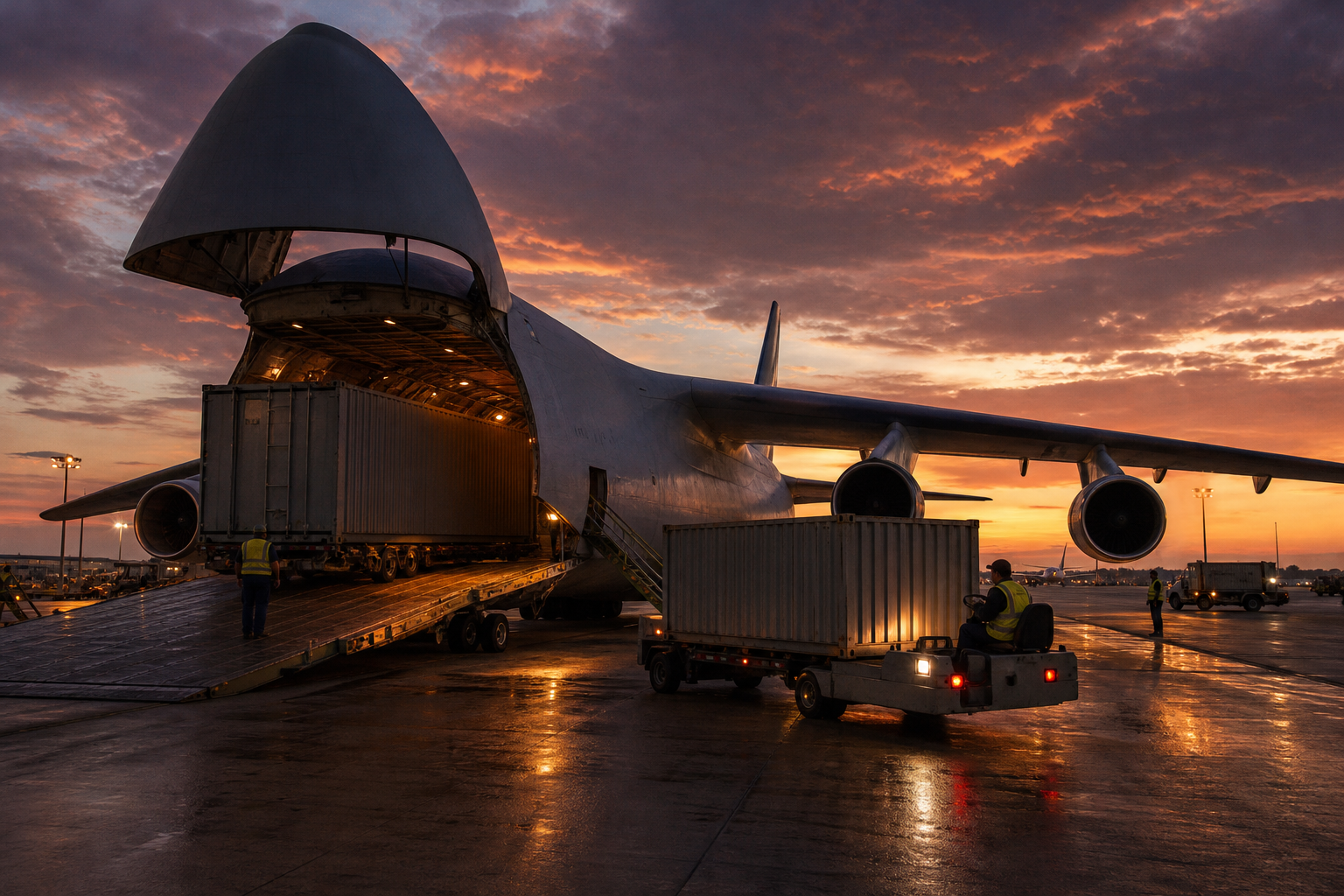
Loading operations like this one mark the first tracking milestone shippers see once cargo departs.
Frequently Asked Questions About Tracking Air Freight Cargo
What does it mean to track air freight cargo?
To track air freight cargo means monitoring a shipment’s location, custody, and delivery status from pickup to final destination using an air waybill number, airline portal, or broker system. It gives shippers visibility into where a shipment is at any point in transit.
How can I track air freight cargo in real time?
Most shippers enter the air waybill number into the carrier’s online tracking portal, such as United Cargo or Delta Cargo. Freight brokers also offer consolidated tracking dashboards that pull milestone updates automatically.
Why is tracking air freight cargo important for shippers?
Tracking matters because air freight typically carries time-sensitive or high-value goods, and even small delays can disrupt production schedules. Visibility allows shippers to react quickly instead of discovering a problem after it has already caused damage.
What is the difference between tracking air cargo and tracking ocean or truck freight?
Air cargo tracking updates move faster because flights are measured in hours, while ocean freight tracking spans days or weeks and truck tracking relies on GPS pings. As a result, air cargo systems are built around flight legs and airport handling events rather than road mileage.
How much does air cargo tracking typically cost?
Basic tracking through an airline’s own portal using an air waybill number is generally free. However, advanced features, such as temperature monitoring or consolidated dashboards, may be bundled into a freight broker’s service.
How long does it take to get tracking updates on an air freight shipment?
Airlines usually post updates at key milestones, including departure, arrival, and warehouse handoff, often within a few hours of each event. In contrast, some smaller carriers update less frequently, which is why a broker who calls ahead can close those gaps.
What common mistakes do shippers make when tracking air freight cargo?
A common mistake is relying only on the house air waybill number when the shipment actually moved under a master air waybill, which causes lookups to fail. Another frequent error is waiting until a deadline is missed to ask questions instead of monitoring proactively.
What tools do airlines use to track cargo shipments?
Airlines use barcode scanning, RFID tags, and centralized cargo management systems tied to the air waybill to log each handling event. Many carriers also provide public portals where shippers enter a tracking number to see current status.
What is an air waybill and how does it help with tracking?
An air waybill is the contract and tracking document issued when air cargo is accepted for transport, carrying a unique number used to look up shipment status. Every handling update along the route is logged against that number, making it the single most important reference for tracking.
How does a freight broker help with tracking air freight cargo?
A freight broker consolidates tracking across multiple carriers and shipments into one point of contact, so shippers are not stuck juggling several airline portals. In addition, brokers proactively flag delays and escalate issues directly with the airline or ground handler.
What should I do if my air freight shipment tracking shows a delay?
First, confirm the delay with the carrier or your broker rather than relying on the portal status alone, since system updates can lag behind reality. Then, ask for a revised estimated arrival time and request proactive updates until the shipment clears.
Does Freight Tec offer air freight tracking support for shippers and agents?
Yes, Freight Tec supports air freight shipments as part of its broader freight brokerage services, giving shippers and agents a dedicated point of contact instead of a faceless portal. Agents in Freight Tec’s Freight Agent Program also receive top-level support for managing time-sensitive accounts, including air freight.
Final Thoughts on Tracking Air Freight Cargo
Learning to track air freight cargo comes down to three things: the right reference number, the right platform, and a plan for what to do when something looks off. Shippers who build that habit catch delays early, protect their customer relationships, and avoid the panic of a shipment that “disappeared” mid-route.
For shippers, a dependable freight broker turns scattered carrier portals into one clear line of communication. For experienced freight agents, Freight Tec’s Freight Agent Program offers the support, protection, and written back-solicitation guarantee needed to grow a career rather than just a job. Visit freight-tec.com to start that conversation.
