

A logistics company moves freight, manages carrier relationships, and solves the shipping problems that keep supply chains running on time. Whether you are a shipper comparing providers or a freight agent evaluating where to build a career, understanding what a true logistics company delivers, and where it falls short, changes how you choose a partner. This guide breaks down what a logistics company does, how to evaluate one, and why the right fit matters as much as the services offered.

Coordinating carriers and tracking loads is a daily responsibility inside any logistics company.
What Is a Logistics Company?
A logistics company is a business that plans, coordinates, and executes freight movement on behalf of shippers, typically managing carriers, routing, documentation, and tracking so the shipper does not have to. Most logistics companies operate as freight brokers or third-party logistics (3PL) providers, connecting cargo with qualified truckload, LTL, intermodal, or international carriers. The strongest ones add value through vetted carrier networks, claims protection, and dedicated support rather than simply forwarding a load number.
According to Wikipedia’s overview of logistics, the discipline covers the detailed coordination of complex operations involving people, facilities, and supplies. In freight transportation specifically, that coordination determines whether a shipment arrives on time, intact, and within budget.
What Services Does a Full-Service Logistics Provider Offer?
A full-service logistics provider usually covers far more than a single truckload lane. Shippers with varied freight needs, including automotive manufacturers, retailers, and industrial producers, often rely on one partner to handle multiple modes at once. For example, Freight Tec supports automotive-sector shipping needs alongside dozens of other industries.
Common services offered by a mature logistics company include:
- Truckload brokerage: van, flatbed, and specialized equipment
- Less-than-truckload (LTL) freight
- Drayage for port container moves
- Refrigerated and temperature-controlled transport
- Intermodal (rail plus truck) movement
- Heavy haul and oversized load coordination
- Expedited and air freight services
- International freight forwarding and customs clearance
- Warehousing, supply chain management, and project logistics
How to Choose the Right Logistics Partner
Choosing a logistics partner is less about finding the cheapest quote and more about finding a provider that performs consistently under pressure. For a deeper breakdown of this decision, see our guide on factors to consider when choosing a logistics partner.
Key Factors to Evaluate Before You Sign
Before committing to any provider, run through this short checklist:
- Confirm carrier vetting standards, including safety ratings and active authority.
- Check insurance coverage limits and claims protection for cargo loss or damage.
- Ask about payment terms, since standard terms and Quick Pay options differ by company.
- Review industry recognition, such as Top 100 Freight Broker status or TIA Performance Certification.
- Test support availability before an emergency, not during one.
For additional guidance tailored to management-level decisions, our article on what to look for in a logistics management company expands on vetting criteria that matter most for larger shippers.
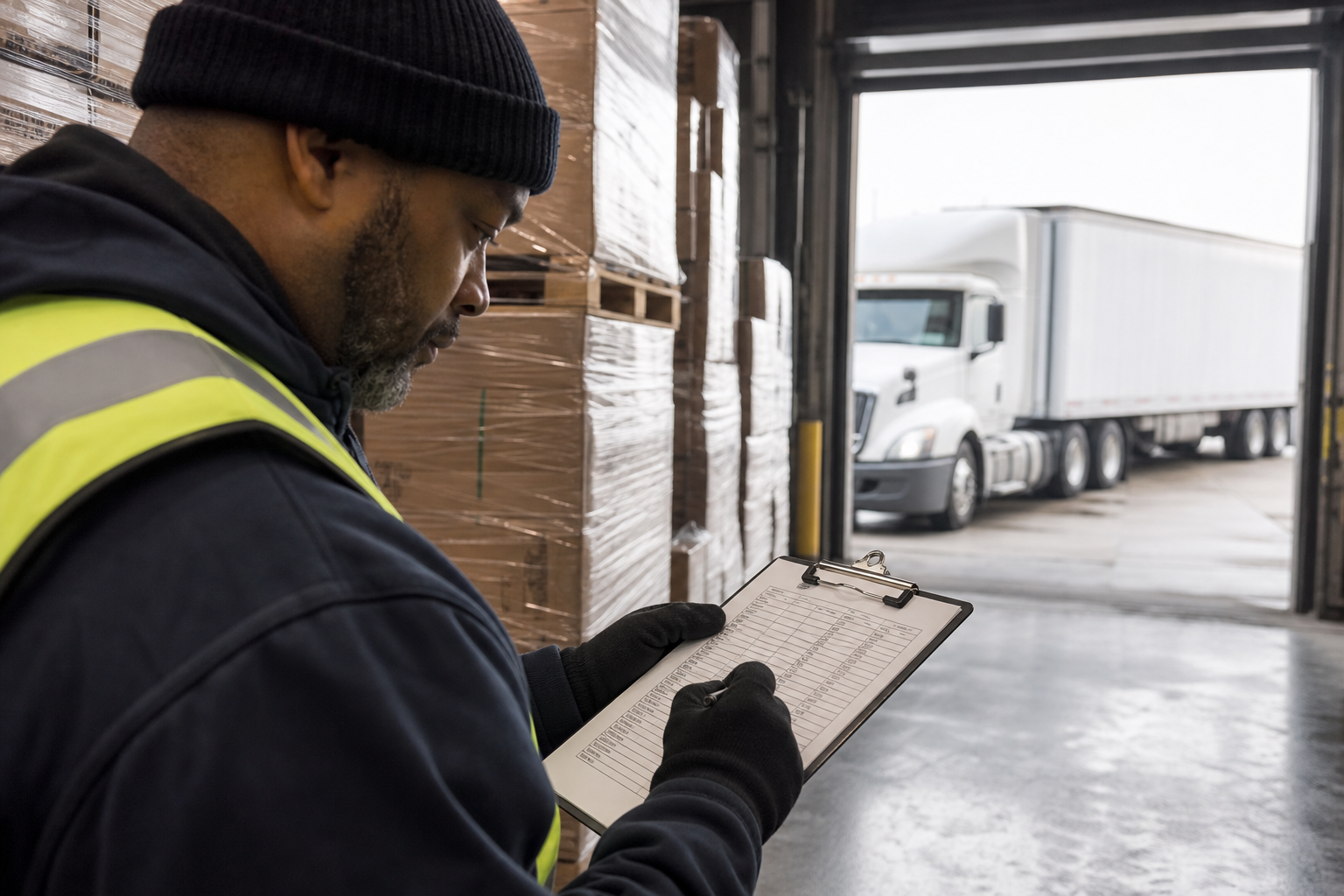
Carrier qualification checks are a core part of vetting any logistics company.
Logistics Company vs. Freight Broker: What’s the Difference?
In practice, these terms overlap heavily. However, there is a nuance worth understanding before you compare providers.
| Attribute | Freight Broker | Full-Service Logistics Company |
|---|---|---|
| Primary focus | Arranging transportation between shippers and carriers | Transportation plus warehousing, customs, and supply chain management |
| Regulation | Licensed under FMCSA broker authority | Same broker authority, plus added service licensing where needed |
| Typical client | Shippers needing lane-by-lane transportation | Shippers wanting one partner across multiple services |
Freight brokers are licensed and monitored under the Federal Motor Carrier Safety Administration, which sets the bonding and registration standards every legitimate logistics company must meet. For a closer comparison of broker models, read our logistics broker guide on choosing the right partner.
What Shippers Should Expect From a Reliable Provider
Freight moves the vast majority of American commerce by road. In fact, the American Trucking Associations reports that trucks haul more than 70 percent of the nation’s domestic freight tonnage, which is exactly why carrier relationships matter so much when selecting a logistics company. A reliable provider should offer transparent tracking, quick claims resolution, and consistent capacity even during tight markets.
Shippers new to outsourcing their transportation function often benefit from a broader primer first. Our logistics program basics guide for shippers walks through the fundamentals before you negotiate a contract.
Why Experienced Freight Agents Choose Freight Tec Over a Traditional Logistics Company
Freight agents with two or more years of experience, and customers who genuinely trust them, often reach a breaking point with their current broker. Invoicing errors, inconsistent support, and vague commission structures push good agents to look elsewhere. Freight Tec, based in Bountiful, Utah, built its agent program specifically to solve those problems.
Unlike many logistics companies, Freight Tec operates with no internal brokerage department and no company-owned offices of any kind, so it never competes against its own agents for business. Freight Tec is also the only freight broker in the U.S. that provides a written guarantee against back-soliciting an agent’s customers if that agent ever chooses to leave. Recognition as a Top 100 Freight Broker by TIA and Inc. Magazine, a NASTC “Best Broker” designation reserved for the top 5 percent nationally, and TIA Performance Certified status reinforce that commitment with third-party credibility rather than self-promotion.
How Freight Tec Supports Agents and Shippers
The process below outlines how a dependable logistics company should operate at every stage of the agent and shipper relationship:
- Vet every carrier thoroughly. Carriers are screened through a stringent qualification process that checks safety ratings, active operating authority, and insurance coverage before any freight is booked.
- Assign dedicated agent and account support. Each agent works with dedicated support staff who handle invoicing accurately, so billing mistakes never damage the agent’s reputation with their customer.
- Put account protection in writing. Customer ownership and non-solicitation terms are documented in a signed agreement, protecting the agent’s book of business even after they leave.
- Offer competitive commission splits and fast payment. Agents receive transparent splits, while carriers get Quick Pay options alongside standard 28-day payment terms that keep cash flow predictable.
Agents, carriers, and shippers all benefit from additional protection layers, including Professional Errors and Omissions Insurance, a $100,000 broker bond, and a $100,000 Military Bond through SDDC. Freight Tec also holds Homeland Security vetting approval to haul sensitive U.S. Military freight, a distinction few logistics companies ever earn. You can learn more directly at freight-tec.com.

Experienced freight agents often work independently while a strong logistics company handles back-office support.
Frequently Asked Questions
What is a logistics company?
A logistics company is a business that plans, coordinates, and executes freight movement for shippers, typically by managing carriers, documentation, and tracking. Most operate as freight brokers or third-party logistics providers rather than owning trucks themselves.
How does a logistics company differ from a trucking company?
A trucking company owns and operates its own fleet to physically move freight, while a logistics company coordinates shipments across a network of vetted carriers. This gives a logistics company more flexibility to match the right equipment to each load.
How much does it cost to use a logistics company?
Costs vary by freight mode, distance, and market capacity, and most providers build their fee into the quoted rate instead of charging a separate line item. Shippers generally pay less overall because the company negotiates volume rates with carriers.
How long does it take a logistics company to find a carrier?
An experienced provider can often secure a qualified carrier within a few hours for standard truckload freight, though tight lanes or specialized equipment can take longer. Speed depends heavily on the size and quality of the broker’s carrier network.
What should I look for when choosing a logistics company?
Look for carrier vetting standards, insurance coverage, payment terms, industry recognition, and how responsive the support team is when something goes wrong. A strong logistics company reduces risk through transparency, not just low rates.
What is the difference between a logistics company and a freight broker?
The terms overlap significantly, but a freight broker typically focuses on arranging transportation, while a full-service logistics company may also handle warehousing, customs clearance, and supply chain management. Many providers, including Freight Tec, perform both roles.
What mistakes do shippers make when choosing a logistics company?
The most common mistake is choosing solely on price without checking insurance limits, carrier vetting practices, or claims history. Another frequent error is failing to confirm how the provider handles service failures before a problem ever occurs.
Can a logistics company handle international freight?
Many established providers manage international freight through multimodal services, including ocean, air, and cross-border trucking into Canada and Mexico. Customs clearance and import and export documentation are typically part of that service.
What commission splits do freight agents get at a logistics company?
Commission splits vary widely between companies, and this is one of the most important questions an experienced agent should ask before signing on. Agents should also confirm whether the split stays consistent as their book of business grows.
Does Freight Tec compete with its own freight agents?
No. Freight Tec has no internal brokerage department and no company-owned offices, so it never competes against its own agents for customers. That structure removes a conflict of interest common at other logistics companies.
What support do freight agents get compared to other logistics companies?
Freight Tec agents receive dedicated support, accurate invoicing, and account protection backed by a written guarantee against back-solicitation if an agent ever leaves. Many agents report switching to Freight Tec after repeated service failures elsewhere.
Is Freight Tec a good fit for new freight agents?
No. Freight Tec is built for experienced freight agents, generally those with two or more years in the industry and established customer relationships, rather than agents who are new to freight brokerage and need training.
How is a freight agent’s customer ownership protected?
Customer ownership protection should be addressed directly in a written agreement before an agent joins any logistics company. Freight Tec stands out with a written guarantee not to back-solicit an agent’s customers if that agent ever chooses to leave.
Final Takeaways
Choosing the right logistics company comes down to trust, transparency, and track record. Shippers need a partner that vets carriers rigorously, protects cargo with real insurance, and communicates clearly when issues arise. Freight agents need the opposite risk covered: a company that protects their customer relationships instead of threatening them.
Freight Tec has spent more than 30 years building a logistics company model where agents stay for their entire career, backed by a written non-solicitation guarantee, TIA Performance Certified status, and support that treats agents as partners rather than liabilities. Whether you are a shipper comparing providers or an experienced agent ready for a better fit, the right logistics company should feel like a long-term partnership, not a transaction.
