

American freight is the engine behind nearly everything that lands on store shelves, factory floors, and automotive assembly lines across the United States. Every single day, trucks, trains, and planes carry goods between all 48 states, and the companies coordinating those shipments — freight brokers, carriers, and freight agents — quietly keep the country’s supply chains moving. Understanding how this system works helps shippers make smarter decisions and helps logistics professionals see where the real opportunity sits.
Quick answer: American freight is the network of truckload, LTL, intermodal, drayage, and air cargo shipments moved within the U.S. and across its borders, coordinated by shippers, carriers, and freight brokers to keep goods flowing reliably and on time.

American freight moves across interstate highways around the clock to keep supply chains on schedule.
What Is American Freight?
American freight is the collective term for goods transported by truck, rail, air, or ocean container within the United States and to neighboring countries like Canada and Mexico. In short, it covers every load that moves through the domestic supply chain, from a pallet of auto parts to a refrigerated trailer of produce.
Specifically, this freight moves through several channels: truckload carriers handling van, flatbed, and specialized equipment; LTL (less-than-truckload) carriers consolidating smaller shipments; drayage companies moving port containers; and intermodal operators combining rail with truck. As a result, no single mode carries the full weight of American commerce — it’s a layered system built on coordination.
How the Nation’s Freight Network Actually Moves Goods
According to the U.S. Bureau of Transportation Statistics, the country’s freight system moves tens of millions of tons of goods worth billions of dollars every day across highways, rail lines, waterways, and airports. That volume doesn’t move itself; it depends on a coordinated chain of shippers, carriers, and intermediaries who match available capacity with demand in real time.
In particular, freight brokers play a central role in this process. They don’t own trucks. Instead, they connect a shipper who needs freight moved with a vetted carrier who has the right equipment and availability. Because of this arrangement, shippers gain access to a much larger carrier network than they could manage alone, while carriers gain a steady stream of freight opportunities.
The Modes That Power U.S. Freight Shipping
Beyond standard dry van truckload, the American freight system includes flatbed and specialized equipment for oversized or heavy haul loads, refrigerated trailers for temperature-sensitive goods, and intermodal containers that switch between rail and truck to cut costs on longer hauls. Meanwhile, drayage carriers handle the short, critical moves between ports and warehouses, and expedited freight services step in when speed outweighs cost. For global shippers, air freight and international freight forwarding extend this same network well beyond U.S. borders, as outlined by the general overview of freight transport on Wikipedia.
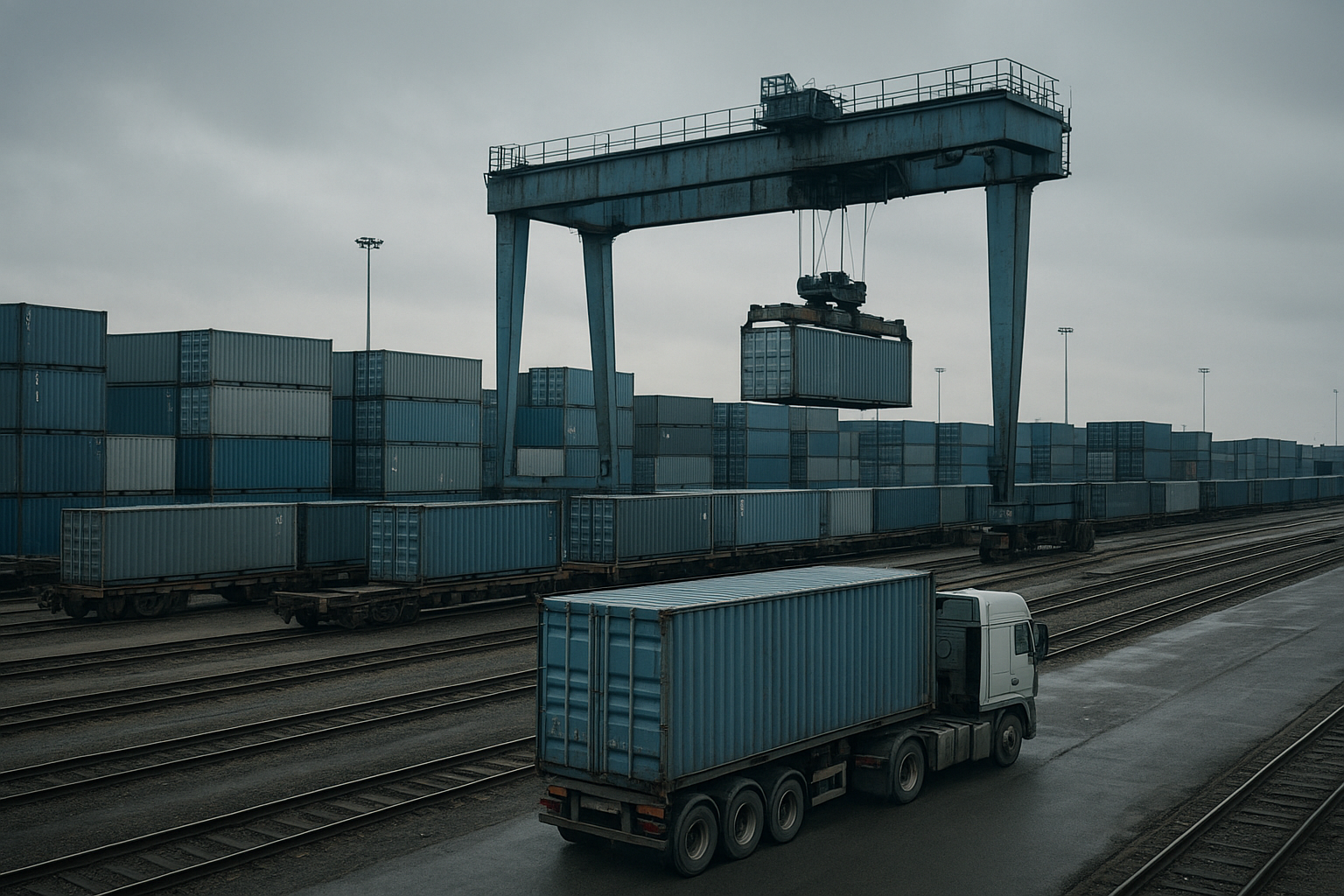
Intermodal rail transfers are one of several modes that keep American freight moving efficiently.
Who Keeps American Freight Moving: Brokers, Carriers, and Agents
Three groups keep this system running. Carriers physically haul the freight. Freight brokers arrange the transportation and manage the relationship between shipper and carrier. And freight agents — often independent professionals working under a brokerage’s authority — build and manage their own book of shipper customers while leaning on the brokerage for back-office support, carrier vetting, and billing.
This structure matters because it determines who actually gets credit, and payment, for the relationships built over years of service. A freight agent who has spent a decade earning a shipper’s trust wants assurance that their customer relationships are protected, not quietly absorbed by the brokerage itself.
How American Freight Moves From Pickup to Delivery
Although every load is different, the core process behind moving American freight follows a consistent sequence. Here’s how it typically works, step by step:
- Shipper requests a quote. The shipper shares load details — origin, destination, weight, and equipment needs — with a freight broker or agent.
- The agent sources a qualified carrier. Using a vetted network, the agent identifies a carrier with the right equipment and availability.
- The carrier is vetted and dispatched. Insurance, authority, and safety records are confirmed before the load is booked.
- Freight is tracked in transit. The agent monitors progress and handles any delays or route changes as they arise.
- Delivery, documentation, and payment. A signed proof of delivery triggers invoicing, and payment terms are honored for everyone involved.
Common Challenges in the U.S. Freight Industry
Of course, this system isn’t without friction. Capacity tightens during peak seasons, fuel costs swing rates unpredictably, and not every carrier meets the safety standards enforced by the Federal Motor Carrier Safety Administration. In addition, shippers sometimes struggle with inconsistent communication or invoicing errors from brokers who treat every load as a one-time transaction rather than a long-term relationship.
For freight agents specifically, the bigger challenge is often internal: brokerages that quietly compete against their own agents through company-owned offices, or that fail to protect agent customer relationships when an agent decides to move on. These issues directly affect commission splits, support quality, and long-term financial stability.
Why Experienced Freight Agents Choose a Premier Freight Agent Program
For freight agents with 2+ years of experience and a loyal customer base, the brokerage behind them matters just as much as the freight itself. Freight Tec operates one of the top Freight Agent Programs in the country, backed by recognition as a Top 100 Freight Broker by TIA and Inc. Magazine, membership among NASTC’s “Best Brokers” reserved for the top 5% nationally, and TIA Performance Certified status.
Above all, Freight Tec operates with no internal brokerage and no company-owned agencies competing against its agents — meaning there’s no conflict of interest working against the people building the business. Agents work as 1099 independent contractors with high commissions, full autonomy, and the freedom to run their operation from home. Freight Tec also stands out as the only company that guarantees in writing it will not back-solicit an agent’s customers should that agent ever choose to leave. To see how this plays out day to day, explore how Freight Tec supports its agents and what genuinely keeps freight agents happy long-term.

Experienced freight agents coordinate American freight shipments with full autonomy and flexible schedules.
Specialized Freight Needs, Including Automotive Shipping
Certain industries, like automotive manufacturing, depend on tightly timed freight to keep production lines running without interruption. Shippers in this space often need a mix of truckload, expedited, and specialized equipment working in sync. For a closer look at how this works in practice, see the breakdown of logistics services built for automotive industry shippers.
Similarly, agents interested in learning more about day-to-day life inside a top-tier program can review the Freight Tec team structure directly, or compare it against standards set by the Transportation Intermediaries Association, the industry’s leading trade group for freight brokers.
Frequently Asked Questions About American Freight
What is American freight?
American freight refers to the goods and cargo moved by truck, rail, air, and sea within the United States and across its borders with Canada and Mexico. It includes truckload, LTL, drayage, intermodal, refrigerated, and specialized shipments coordinated by shippers, carriers, and freight brokers.
How does the American freight industry move goods across the country?
Goods move through a network of carriers, freight brokers, and freight agents who match available trucks, rail cars, and containers with shipper demand. Technology and vetted carrier relationships keep freight flowing efficiently from origin to destination.
What types of freight are shipped within the American freight network?
The network handles van truckload, flatbed, refrigerated, drayage, intermodal, heavy haul, expedited, LTL, air, and international freight. Automotive parts, perishable goods, and industrial equipment all travel through these same channels.
What’s the difference between a freight broker and a freight carrier?
A carrier physically transports freight using its own trucks and drivers, while a freight broker arranges transportation by connecting shippers with qualified carriers. Brokers manage pricing, paperwork, and problem-solving on the shipper’s behalf.
How much does it cost to ship American freight?
Cost depends on freight mode, distance, weight, equipment type, and current market capacity. Because rates fluctuate with fuel prices and seasonal demand, working with an experienced freight broker helps shippers secure fair, competitive pricing.
How long does American freight typically take to deliver?
Standard truckload shipments often move within one to five days depending on distance, while LTL and intermodal freight can take longer due to consolidation points. Expedited freight services shorten this window when speed is the priority.
What are common mistakes shippers make with American freight?
Common mistakes include choosing carriers on price alone, skipping insurance and safety verification, and not building a relationship with a dedicated freight agent. These missteps often lead to delays, damaged freight, or unexpected costs.
What should shippers look for in an American freight broker?
Shippers should look for strong carrier vetting, proper bonding and insurance, transparent communication, and recognition such as TIA Performance Certification. A dedicated agent relationship matters more than most shippers realize.
How do freight agents get paid for moving American freight?
Freight agents typically work as 1099 independent contractors and earn commission splits based on the gross margin of each load. Commission structures vary by brokerage, which is why experienced agents compare splits and support carefully.
Do freight brokerage companies offer 24/7/365 support for American freight?
The best freight brokerages provide round-the-clock support because freight moves every hour of every day. Agents and shippers need a brokerage that answers calls reliably, whether it’s 2 a.m. or 2 p.m.
Who owns the customer relationship in a freight agent program?
In a strong freight agent program, the agent owns their customer relationships, not the brokerage. Freight Tec guarantees in writing that it will not back-solicit an agent’s customers if that agent ever chooses to leave.
Can American freight brokers handle shipments to Canada and Mexico?
Yes, many established freight brokerages manage cross-border freight into Canada and Mexico alongside domestic American freight. This requires familiarity with customs documentation and carrier networks on both sides of the border.
What qualifications should carriers have to move American freight safely?
Carriers should maintain active authority, proper insurance coverage, and a clean safety record verified through the Federal Motor Carrier Safety Administration. Reputable brokers vet carriers against these standards before assigning any load.
How can experienced freight agents join a top American freight brokerage?
Experienced freight agents with two or more years in the industry and loyal customers can apply directly with brokerages known for high commissions and top support. Freight Tec’s agent program is built specifically for agents at this level.
Final Thoughts on American Freight
American freight is far more than trucks on a highway; it’s a coordinated system of brokers, carriers, and agents working together to keep the country’s supply chains reliable. Whether you’re a shipper comparing providers or an experienced freight agent evaluating your next move, understanding how this network functions — and who stands behind it — makes all the difference. In the end, the strongest results come from working with partners who treat freight relationships as long-term commitments rather than one-off transactions.