
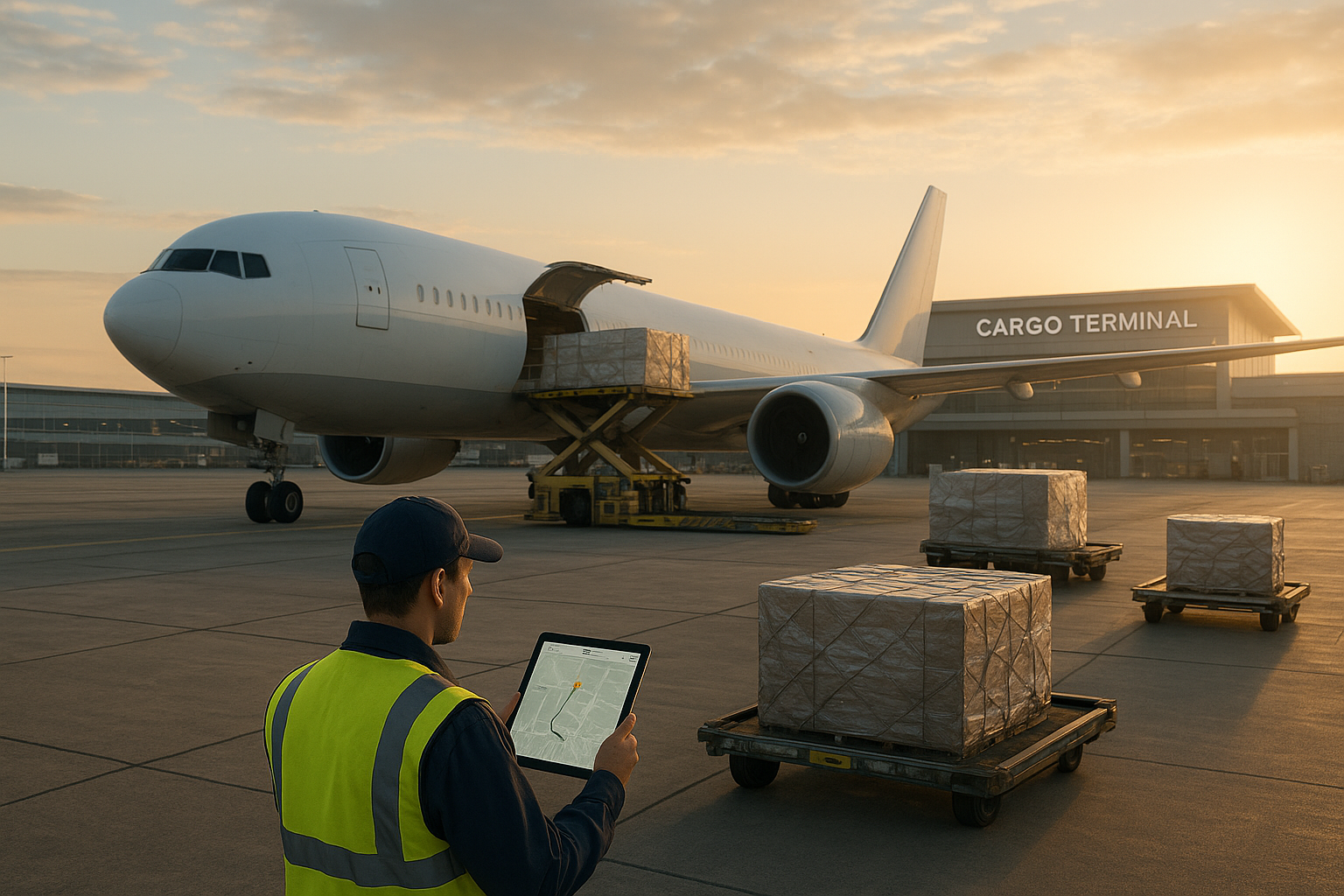
Air cargo tracking is the system shippers and carriers use to monitor an air freight shipment’s exact location and status from pickup to final delivery. In today’s fast-paced supply chains, knowing where a shipment sits mid-flight or mid-transfer is no longer a luxury; it is a baseline expectation. This guide explains how tracking technology works, why it matters, and how to use it effectively whether you are moving automotive parts, medical supplies, or time-sensitive freight across borders.
Direct answer: Air cargo tracking uses an air waybill number, scanned at each handling checkpoint, to update a shared database that shows a shipment’s departure, transit, and arrival status in near real time. Shippers, brokers, and carriers all draw from this same data trail.
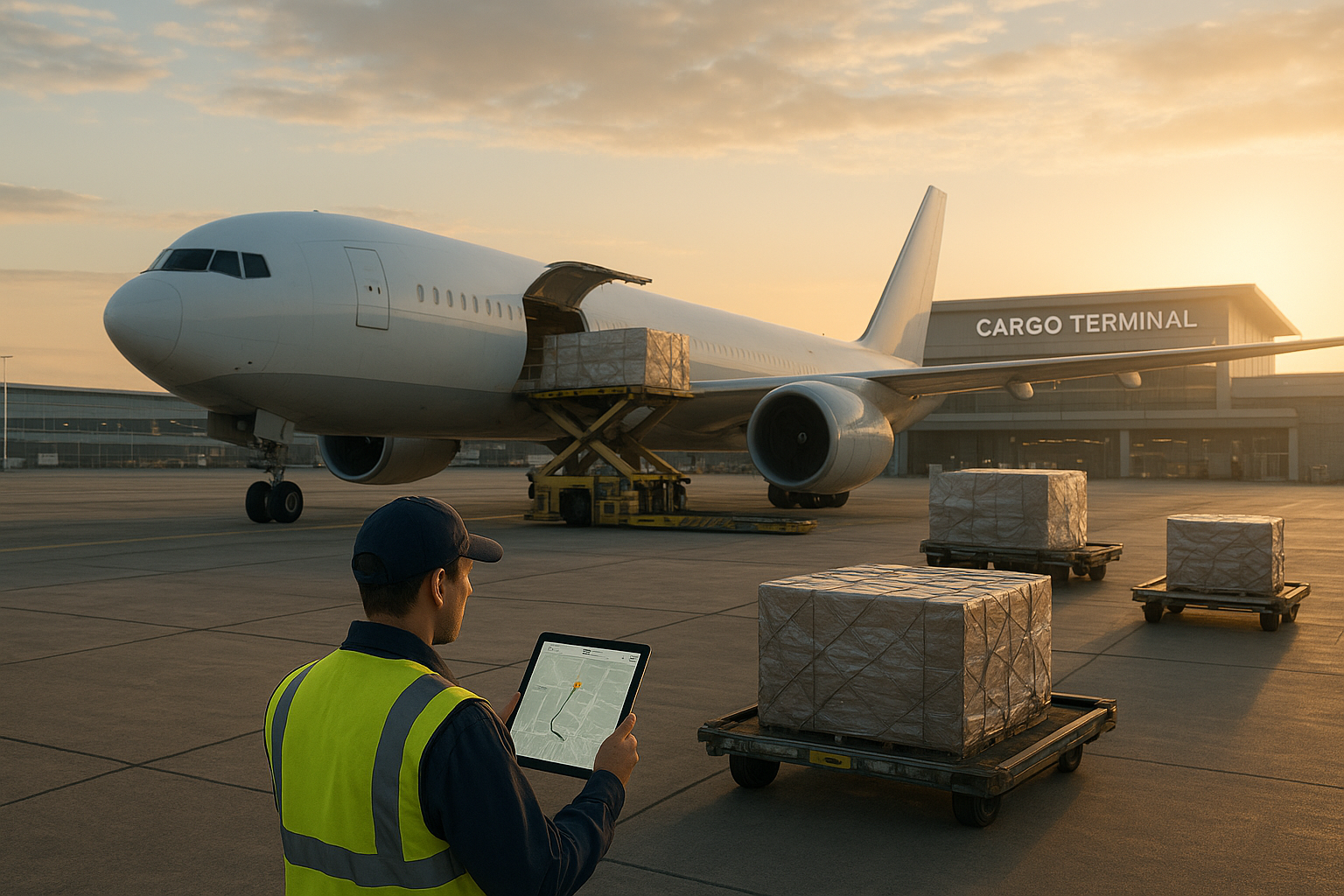
Air cargo tracking begins the moment a shipment is scanned at the origin terminal.
What Is Air Cargo Tracking?
Air cargo tracking refers to the technology and processes that let shippers follow a shipment’s journey through the air freight network. Specifically, it relies on a unique air waybill (AWB) number assigned at booking, which acts like a shipment’s fingerprint throughout its trip.
As a result, every time cargo is scanned at a warehouse, loaded onto a plane, or transferred at a connecting hub, that event is logged against the AWB number. Consequently, anyone with the tracking number, whether a shipper, a receiver, or a freight broker like Freight-Tec, can pull up the same status timeline online.
How Air Freight Tracking Works Behind the Scenes
Air freight tracking depends on a chain of electronic data exchanges between ground handlers, airlines, and customs authorities. When a shipment is dropped off, a barcode or RFID tag tied to the AWB number is scanned into a cargo management system.
From there, the data flows through the airline’s operational systems and, in many cases, into a broker’s consolidated dashboard. In particular, brokers who manage international freight often layer in customs clearance status alongside flight data so shippers see one complete picture instead of piecing information together from multiple sources.
Key Technologies Behind Air Freight Visibility
Several technologies work together to make air freight visibility possible. Barcode and RFID (radio-frequency identification, a wireless tagging method) scanning capture checkpoint data automatically, while EDI (electronic data interchange) feeds transmit that data between airline and broker systems without manual entry.
Additionally, GPS-enabled sensors are increasingly used for high-value, temperature-sensitive, or military-grade cargo, providing location data even during ground transport legs between airports. Together, these tools reduce blind spots that once made air cargo tracking unreliable.
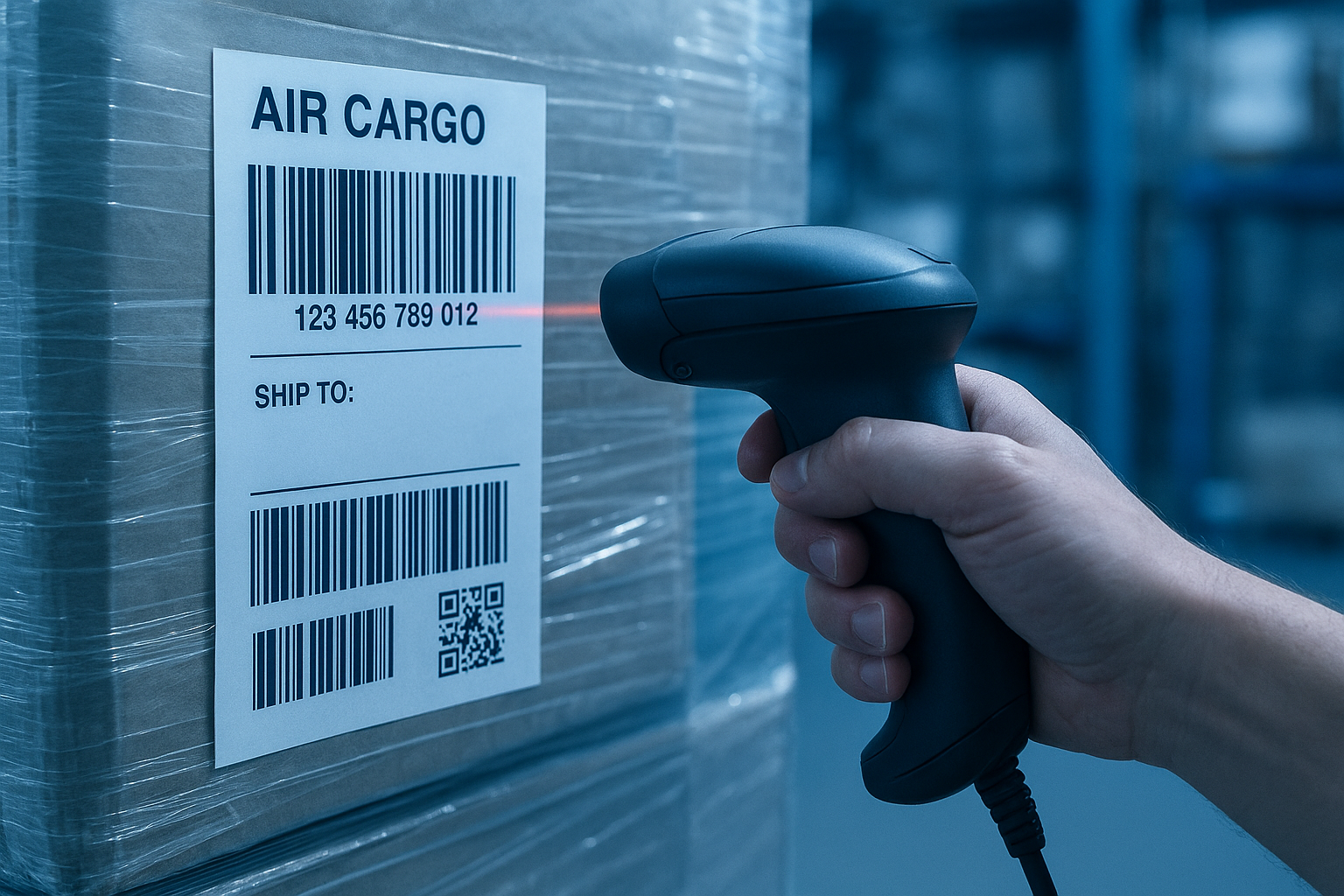
Checkpoint scans feed real-time data into air cargo tracking systems.
Why Real-Time Tracking Matters for Shippers
Real-time visibility matters because delays in air freight can cascade quickly into missed production windows or unhappy customers. For example, an automotive parts shipment stuck at a connecting hub can halt an assembly line within hours if nobody catches the delay early.
Furthermore, according to industry estimates, air cargo moves roughly 35% of global trade by value despite representing under 1% of trade by volume, underscoring how much financial exposure rides on each shipment. Therefore, accurate tracking is not just convenient; it protects revenue and customer relationships.
In addition, tracking data supports claims processing when freight arrives damaged or late. Shippers working with a broker that carries proper insurance and bonding, such as Professional Errors & Omissions coverage, benefit from tracking records that document exactly where and when an issue occurred.
Step-by-Step: How to Track an Air Cargo Shipment
Tracking a shipment does not need to be complicated once you know the sequence. Follow these steps for consistent results:
- Collect the air waybill number from your booking confirmation or freight broker.
- Identify the correct tracking portal, whether it belongs to the airline, the broker, or a third-party platform.
- Enter the tracking number and review each checkpoint, from departure through arrival.
- Set up automated alerts for major milestones like customs clearance or final delivery.
- Escalate through a dedicated agent if tracking shows an unexplained delay.
Similarly, shippers moving containerized freight by sea can apply a comparable checklist; the guide to container tracking covers the ocean-freight equivalent of this process in more depth.
Common Challenges in Tracking Air Freight Shipments
Despite advances in technology, tracking air freight shipments still runs into friction points. Data lag at smaller regional airports is one common issue, since not every facility has the same scanning infrastructure as major international hubs.
Another challenge involves multi-leg shipments that connect through several carriers, where handoff points sometimes create gaps in the tracking timeline. Likewise, customs holds can pause visible movement even though the shipment technically remains in transit, which can alarm shippers unfamiliar with clearance procedures.
Consequently, working with an experienced broker who monitors these gaps manually, rather than relying solely on automated feeds, helps close the visibility loop when systems fall short.
Best Practices for Reliable Air Cargo Monitoring
Reliable air cargo monitoring starts with clean data entry at booking. Double-checking the air waybill number, shipper and consignee details, and flight routing before departure prevents many downstream tracking errors.
In particular, shippers should confirm which party, whether the airline or broker, is the authoritative tracking source for their shipment to avoid checking outdated portals. It also helps to build a relationship with a dedicated agent who can manually verify status during high-risk transit windows, such as connecting flights or customs processing.
For shippers managing frequent air freight alongside other modes, cross-referencing practices from the LTL rates and tracking tips guide can reinforce consistent tracking habits across an entire logistics operation.
Choosing the Right Logistics Partner for Air Cargo Tracking
Selecting a logistics partner with strong tracking infrastructure matters as much as the technology itself. Above all, look for a broker that combines automated data feeds with dedicated human oversight, since software alone cannot resolve every exception.
Freight-Tec, for instance, connects shippers with vetted carriers across truckload, LTL, drayage, air, and international freight, backed by TIA Performance Certified status and recognition as a top 100 freight broker by TIA and Inc. Magazine. That vetting process, combined with dedicated agent support, gives shippers a more consistent tracking experience than relying on a single airline portal alone.
Additionally, when comparing providers, shippers should evaluate broader partner qualifications, not just tracking tools. The guide to choosing the right freight partner outlines questions worth asking before committing to any carrier or broker relationship, and the related discussion on qualifying carriers carefully explains why vetting matters for both safety and visibility. For a broader look at Freight-Tec’s full service offering, visit freight-tec.com directly.

Modern dashboards visualize air cargo tracking data across multiple flight legs.
Frequently Asked Questions About Air Cargo Tracking
What is air cargo tracking?
Air cargo tracking is the process of monitoring an air freight shipment’s location and status from pickup through final delivery using barcodes, air waybill numbers, and electronic data systems. It gives shippers visibility into where their goods are at any point in the journey.
How does air cargo tracking work?
It works by scanning an air waybill number at each handling checkpoint, including origin warehouse, airport, connecting hubs, and destination facility. These scans update a shared database that shippers and brokers can access online.
Why is air cargo tracking important for shippers?
Air cargo tracking is important because it reduces uncertainty, helps shippers plan receiving schedules, and flags delays before they become costly problems. It also supports proof of delivery for claims and compliance purposes.
What is the difference between air cargo tracking and ocean container tracking?
Air cargo tracking updates faster because flights move in hours, not weeks, so checkpoints refresh more frequently than ocean container tracking. Ocean tracking often relies on vessel schedules and port milestones, while air tracking is tied to flight legs and airport handling events.
How much does air cargo tracking cost?
Basic air cargo tracking through an air waybill number is typically included at no extra charge by airlines and freight brokers. Advanced real-time visibility platforms with alerts and analytics may carry a subscription or per-shipment fee depending on the provider.
How long does it take to get tracking updates for air freight?
Most air freight tracking updates within a few hours of each checkpoint scan, and some carriers update within minutes of a flight departure or arrival. Delays in data entry at smaller regional airports can occasionally slow update speed.
What are common mistakes shippers make with air cargo tracking?
A common mistake is losing or mistyping the air waybill number, which makes it impossible to pull accurate status updates. Shippers also sometimes assume tracking is automatic without confirming which carrier or broker system to check.
What tools are used for air freight visibility?
Common tools include airline tracking portals, third-party logistics dashboards, EDI data feeds, and GPS-enabled sensors for high-value or sensitive cargo. Freight brokers often combine several of these sources into one consolidated view for shippers.
Can I track air cargo without an account number?
Generally, no, because tracking systems rely on a unique air waybill or reference number to pull shipment-specific data. Contacting the airline or your freight broker with shipper and consignee details can help recover a lost tracking number.
What is the best practice for monitoring international air shipments?
The best practice is to confirm tracking numbers immediately after booking and set up automated status alerts through your broker or carrier. Cross-checking customs clearance status alongside flight tracking also helps avoid surprises at the border.
Does air cargo tracking work for military or sensitive freight?
Yes, air cargo tracking for military or sensitive freight typically involves stricter chain-of-custody documentation and vetted carriers approved through security clearance programs. Brokers approved to haul sensitive government freight maintain enhanced tracking and reporting protocols.
How do freight brokers improve air cargo tracking accuracy?
Freight brokers improve accuracy by vetting carriers, consolidating data from multiple airline systems, and assigning dedicated agents to confirm status manually when automated feeds lag. This layered approach catches discrepancies that a single tracking portal might miss.
What information do I need to track an air cargo shipment?
You typically need the air waybill number, the carrier or broker name, and the origin and destination airports. Having the shipment date and piece count on hand also speeds up manual lookups when automated tracking is unavailable.
Final Takeaway
Ultimately, air cargo tracking gives shippers the visibility they need to catch delays early, protect high-value freight, and keep supply chains moving predictably. From understanding air waybill numbers to setting up automated alerts, the practices covered here apply whether you ship occasionally or manage air freight as a core part of your business.
In short, reliable air cargo tracking depends on clean data, the right technology, and a logistics partner willing to step in manually when systems fall short. According to the Freight-Tec team, pairing automated visibility tools with dedicated agent support remains the most consistent way to keep air freight shipments on schedule, and that same principle applies across nearly every mode of transportation shippers rely on today. For additional background on airline cargo operations, resources like the Wikipedia entry on air cargo, the Transportation Security Administration, and the International Air Transport Association offer useful industry context.