
DOD shipping is the process of transporting freight, equipment, or supplies on behalf of the U.S. Department of Defense, and it requires far stricter carrier vetting, bonding, and security protocols than standard commercial freight. Because military cargo can include sensitive components, vehicles, or mission-critical supplies, the Department of Defense only works with brokers and carriers that meet rigorous federal standards. As a result, shippers who need dependable dod shipping support often struggle to find partners with the right clearances. This guide explains what dod shipping involves, who qualifies to handle it, and how to choose a certified freight partner for your next military shipment.
Quick Answer: DOD shipping refers to freight movement contracted by the U.S. Department of Defense, which can only be performed by brokers and carriers holding federal bonding, insurance, and Homeland Security vetting approval. Choosing a certified broker is essential to remain compliant and avoid delays.
What Is DOD Shipping?
DOD shipping refers to any freight movement contracted by the U.S. Department of Defense, ranging from routine base resupply to transporting military vehicles and specialized equipment. Unlike typical commercial loads, these shipments often involve heightened security requirements, strict chain-of-custody tracking, and coordination with government agencies. For example, a shipment carrying sensitive defense equipment may require a background-checked driver, sealed trailers, and documented handoffs at every stage.
In particular, brokers handling DOD shipping must maintain approval through the Military Surface Deployment and Distribution Command (SDDC). Without this approval, a broker simply cannot legally arrange most defense freight contracts, regardless of experience in commercial trucking.
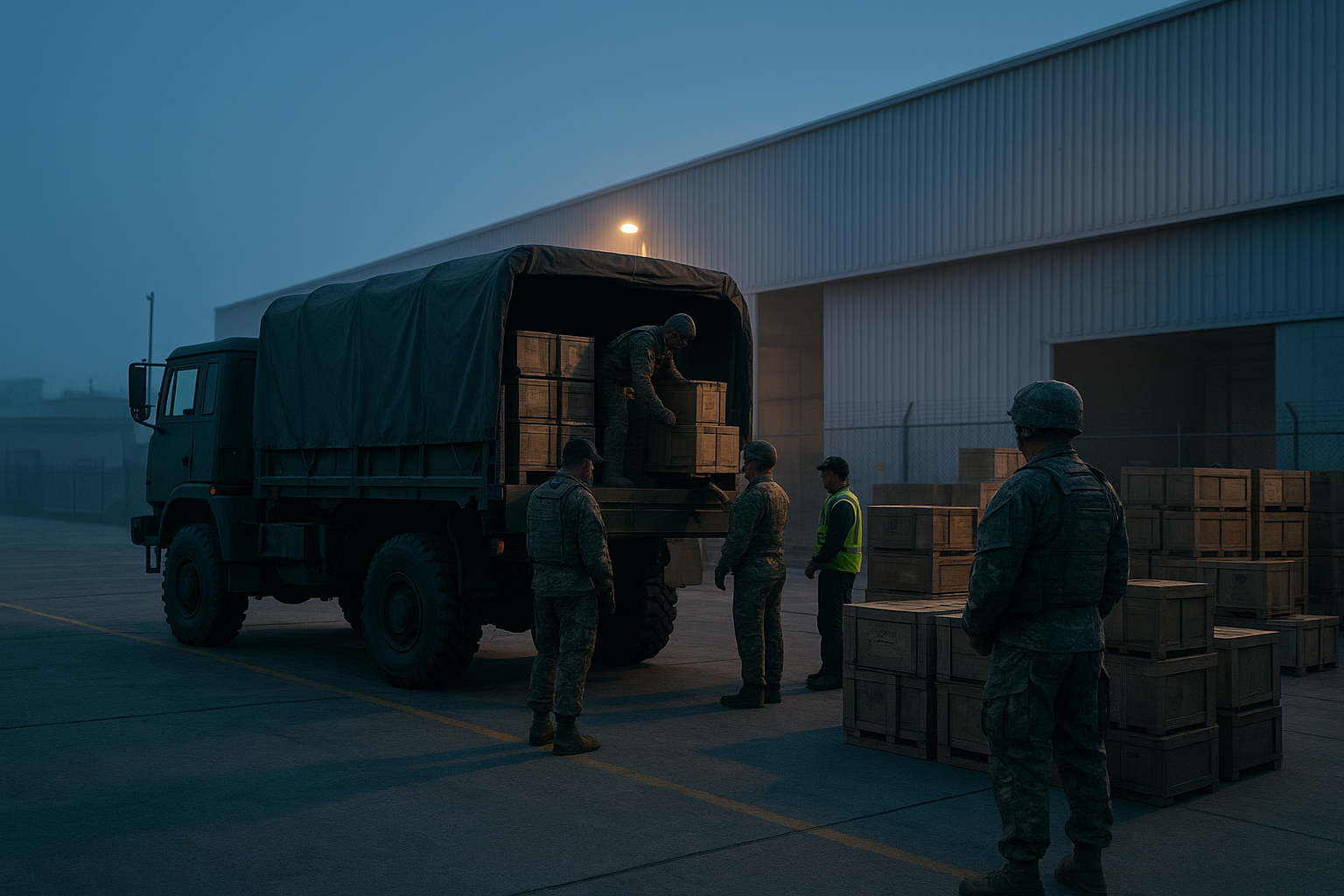
Secure loading procedures are a defining feature of dod shipping compared to standard commercial freight.
Why DOD Shipping Requires Specialized Certification
DOD shipping demands specialized certification because military cargo carries risks that ordinary freight does not. Consequently, the government screens every broker and carrier involved to reduce the chance of theft, tampering, or unauthorized access. Homeland Security vetting, for instance, checks the backgrounds of company owners and key personnel before any approval is granted.
Furthermore, brokers must carry substantial bonding beyond the standard federal freight broker bond. A military bond, often set at a significant dollar amount, provides an extra layer of financial protection if something goes wrong during transit. Similarly, professional errors and omissions insurance protects shippers if a compliance mistake causes losses or delays.
Above all, this layered vetting process exists to protect both national security interests and the shippers who rely on timely, secure delivery. Therefore, working with an unverified broker for defense freight is rarely worth the risk.
Key DOD Freight Requirements Every Shipper Should Know
Shippers new to military logistics should understand a few baseline requirements before requesting a quote. First, the broker must hold current SDDC approval, which confirms eligibility to arrange defense freight. Second, carriers assigned to the load need to pass their own vetting, which can include driver background checks and equipment inspections.
In addition, documentation standards are typically higher for DOD freight. Bills of lading, security seals, and delivery confirmations must be completed with more precision than standard commercial paperwork. Shippers can review general dispatch expectations in this guide on reasonable dispatch practices to understand how professional brokers coordinate pickup timing and carrier communication.
How to Choose a Reliable Military Freight Shipping Partner
Choosing the right partner for military freight shipping starts with verifying credentials. Specifically, ask any prospective broker for proof of SDDC approval, bonding amounts, and insurance coverage. A broker unwilling to share this documentation should raise immediate concerns.
Moreover, industry recognition can serve as a helpful signal of reliability. Membership in organizations such as the Transportation Intermediaries Association (TIA) or designation as a top-ranked broker often reflects a stronger compliance track record. In contrast, brokers with no verifiable history in defense freight may lack the systems needed to manage sensitive shipments properly.
For shippers comparing options, it can also help to see how different brokers stack up side by side. This comparison of Freight-Tec versus another well-known broker illustrates how service models and credentials can differ significantly between providers.

Careful documentation review helps ensure every dod shipping load meets federal compliance standards.
Step-by-Step: How DOD Shipping Works From Quote to Delivery
Understanding the workflow behind a defense freight shipment can help set realistic expectations. The process generally follows these steps:
- Request a Quote: Submit shipment details including cargo type, security classification, origin, and destination so the broker can prepare an accurate quote. You can start this step through a free shipper rate quote request.
- Broker Verifies Compliance: The broker confirms bonding, insurance, and SDDC approval documentation is current before assigning the load.
- Carrier Vetting and Assignment: Only carriers who have passed Homeland Security vetting and hold the necessary bonds are assigned to haul the load.
- Secure Transport and Tracking: The carrier transports the freight under agreed security protocols while the broker monitors progress and shares updates.
- Delivery and Documentation Closeout: Upon delivery, all chain-of-custody paperwork and compliance records are completed to formally close the contract.
Common Mistakes in Department of Defense Freight Shipping
Even experienced shippers can run into trouble when they underestimate what military freight requires. One frequent mistake is assuming any commercial broker can handle a DOD load, when in reality only SDDC-approved brokers are authorized. Another is skipping background checks on a new broker relationship, which can expose a company to fraud or delivery failure.
Unfortunately, freight fraud is a real and growing risk across the industry, not just in military logistics. Shippers and carriers alike should learn to recognize warning signs, as outlined in this resource on avoiding common freight scams. Consequently, taking time to verify a broker’s credentials before committing to a shipment is always worth the extra effort.
According to industry estimates, the Department of Defense manages one of the largest logistics networks in the world, moving billions of dollars in freight annually across domestic and international routes. Given that scale, even small compliance errors can cause significant delays or financial penalties.
Why Freight-Tec Is a Trusted DOD Shipping Broker
Freight-Tec, headquartered in Bountiful, Utah, has been approved to haul sensitive U.S. Military freight following a full Homeland Security vetting process. In addition, the company holds Professional Errors and Omissions Insurance, a $100,000 broker bond, and a separate $100,000 Military Bond issued through SDDC, giving shippers confidence in the security behind every load.
Freight-Tec has also been recognized as a top 100 freight broker by both TIA and Inc. Magazine, and it holds “Best Broker” status with NASTC, a distinction reserved for the top 5% of brokers nationally. Beyond DOD freight, the network also supports LTL, drayage, refrigerated, intermodal, heavy haul, and international freight across the U.S., Canada, and Mexico. Shippers exploring other freight modes may also find this LTL shipping and broker options guide useful for comparing service types. Learn more directly at Freight-Tec’s website before requesting a quote.

Dedicated agents help coordinate compliance details unique to dod shipping contracts.
Frequently Asked Questions About DOD Shipping
What is DOD shipping?
DOD shipping is the transport of freight, equipment, or supplies on behalf of the U.S. Department of Defense, handled only by brokers and carriers that meet strict federal security and bonding requirements. It covers everything from routine base supplies to sensitive military equipment.
How does DOD shipping differ from standard commercial freight?
DOD shipping requires additional security clearances, background vetting, and specific bonding that standard commercial freight does not need. Carriers and brokers must also follow chain-of-custody documentation that exceeds typical commercial standards.
Why do carriers need special approval to haul DOD freight?
Carriers need special approval because military cargo can include sensitive, classified, or high-value materials that require strict accountability. Homeland Security vetting helps ensure only trustworthy carriers are granted access to these loads.
What certifications does a broker need to handle DOD shipping?
A qualified DOD shipping broker typically needs a surety bond, professional errors and omissions insurance, and approval through agencies like SDDC. Membership in recognized industry groups such as TIA also signals credibility.
How long does it take to get approved for military freight shipments?
Approval timelines vary, but the vetting process for military freight can take several weeks to a few months depending on the depth of the background review. Brokers with existing SDDC approval can often move shipments much faster.
What types of freight fall under DOD shipping requirements?
DOD shipping requirements can apply to truckload, flatbed, heavy haul, intermodal, and even air freight moving military equipment, vehicles, or supplies. Some loads also require refrigerated or expedited handling depending on the cargo.
How much does DOD shipping typically cost compared to standard freight?
DOD shipping often costs more than standard commercial freight because of added security, insurance, and compliance requirements. However, rates vary widely based on distance, equipment type, and load sensitivity.
What is the SDDC and why does it matter for DOD shipping?
The Surface Deployment and Distribution Command, or SDDC, is the Army command responsible for approving carriers and brokers to move military freight. Without SDDC approval, a broker cannot legally handle most DOD shipping contracts.
What common mistakes do shippers make with DOD freight?
One common mistake is working with an unvetted broker who lacks proper bonding, which can delay shipments or create compliance issues. Another is underestimating the paperwork and lead time military freight requires.
Can small carriers participate in DOD shipping opportunities?
Yes, small carriers can participate in DOD shipping opportunities as long as they pass the required vetting and maintain proper insurance and bonding. Working through an established broker often makes this process easier.
What insurance is required for DOD shipping brokers?
DOD shipping brokers generally need professional errors and omissions insurance along with a substantial surety bond, often in addition to a separate military bond. These protections cover both the shipper and the government against loss or liability.
How do I find a reliable DOD shipping broker?
Look for a broker with documented SDDC approval, industry recognition, and a track record of handling sensitive freight. Checking bonding, insurance, and references helps confirm the broker can reliably manage DOD shipping.
What is Quick Pay and does it apply to DOD freight loads?
Quick Pay is a payment option that lets carriers receive funds faster than standard payment terms, and many brokers extend it to carriers hauling DOD freight loads. This can make military freight opportunities more attractive to smaller fleets.
Is DOD shipping available for international routes?
Yes, DOD shipping can extend to international routes, including moves across the U.S., Canada, and Mexico, along with broader international freight capabilities. These shipments typically require additional customs and compliance coordination.
Final Thoughts on DOD Shipping
DOD shipping is not something to approach casually, given the security, bonding, and compliance demands involved. Therefore, shippers should always confirm that a broker holds current SDDC approval, adequate insurance, and a proven record with sensitive freight before committing to a contract. Similarly, carriers looking to enter this space should expect a thorough vetting process, but the payoff often includes steady work and competitive pay options like Quick Pay.
In summary, working with an experienced, properly bonded partner for dod shipping protects both the cargo and the reputation of everyone involved. For shippers ready to move forward, requesting a quote from a vetted, top-ranked broker is a practical first step toward a secure and compliant military freight shipment.