
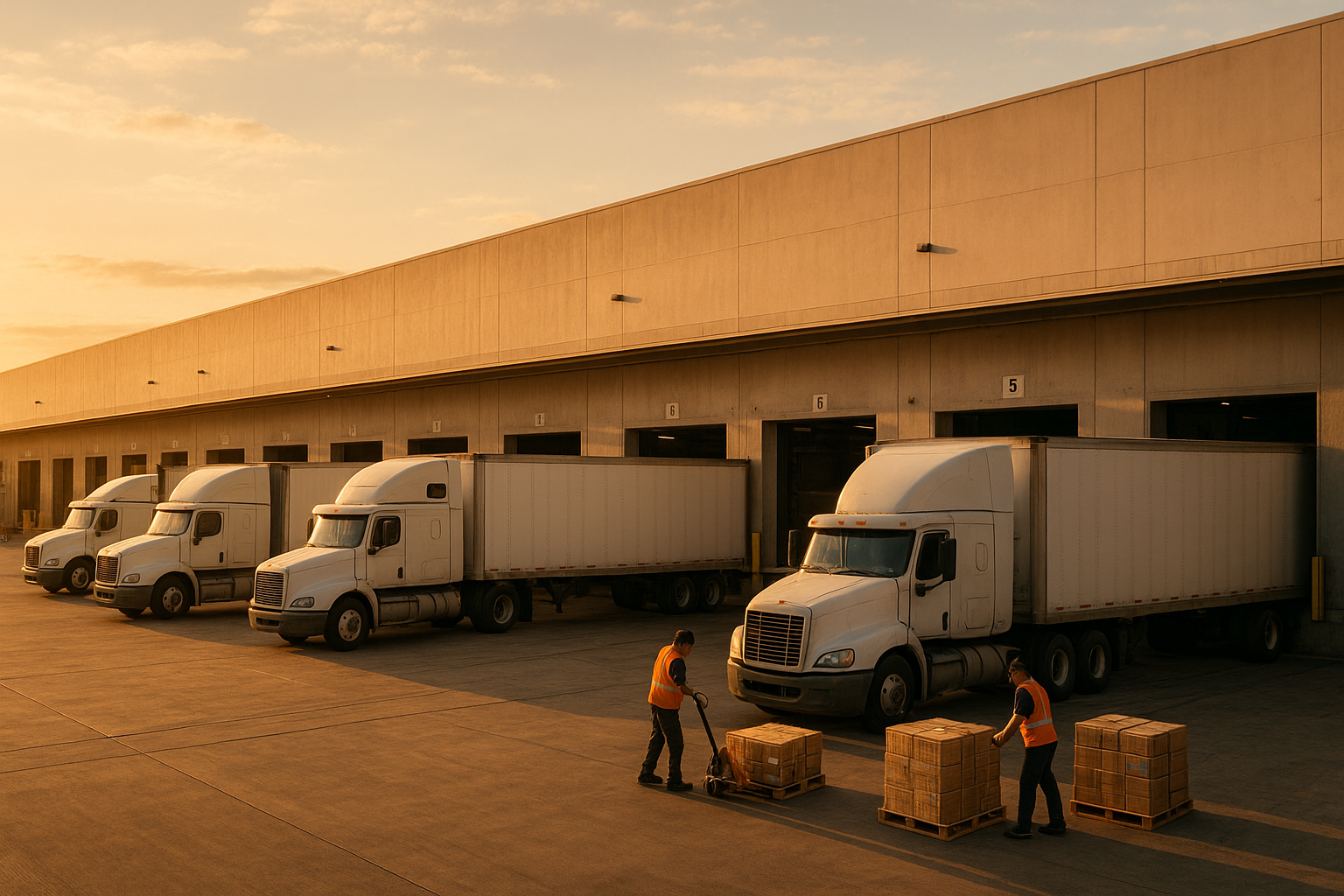
Freight is the term the transportation industry uses for goods, cargo, or commodities that move in bulk by truck, rail, ship, or air rather than through standard parcel carriers. If you run a business that ships pallets, containers, or full truckloads, understanding how freight moves — and who moves it — directly affects your bottom line. This guide breaks down what freight shipping involves, how brokers keep it running smoothly, and what to look for when choosing a partner to handle your cargo.
Quick answer: Freight shipping is the transportation of large, bulk, or palletized cargo — such as full truckloads, LTL pallets, or containers — from a shipper to a receiver, typically arranged and tracked by a freight broker who connects shippers with qualified carriers.
What Is Freight?
Freight refers to goods transported in bulk quantities that exceed what a typical parcel carrier, such as a standard package courier, can handle. In particular, freight usually moves on pallets, in containers, or as full truckloads rather than as individual boxes.
Because freight covers such a wide range of cargo, the industry breaks it into categories based on volume and equipment. For example, a full truckload (FTL) fills an entire trailer, while less-than-truckload (LTL) freight shares space with other shippers’ goods. According to Wikipedia’s overview of cargo transport, freight has moved by rail, road, sea, and air for over a century, and the fundamentals of matching capacity to demand remain largely unchanged today.
Types of Freight Transportation Shippers Rely On
Freight transportation is not one-size-fits-all. Instead, it splits into several modes and equipment types, each suited to different cargo needs. As a result, choosing the right type often determines whether a shipment arrives on time and undamaged.
Common freight categories include:
- Truckload (van, flatbed, specialized): Dedicated trailers for full loads, including oversized or heavy machinery.
- LTL (less-than-truckload): Shared trailer space for smaller pallet shipments.
- Refrigerated freight: Temperature-controlled trailers for perishable goods.
- Drayage and intermodal: Short-haul container moves between ports, rail yards, and warehouses.
- Expedited and air freight: Time-critical shipments requiring faster transit.
- International freight: Cross-border moves involving customs clearance and documentation.
Freight brokers such as freight-tec.com coordinate all of these categories, connecting shippers across the U.S., Canada, and Mexico with vetted carriers suited to each load type, including specialized needs like automotive-sector shipping and heavy haul equipment.
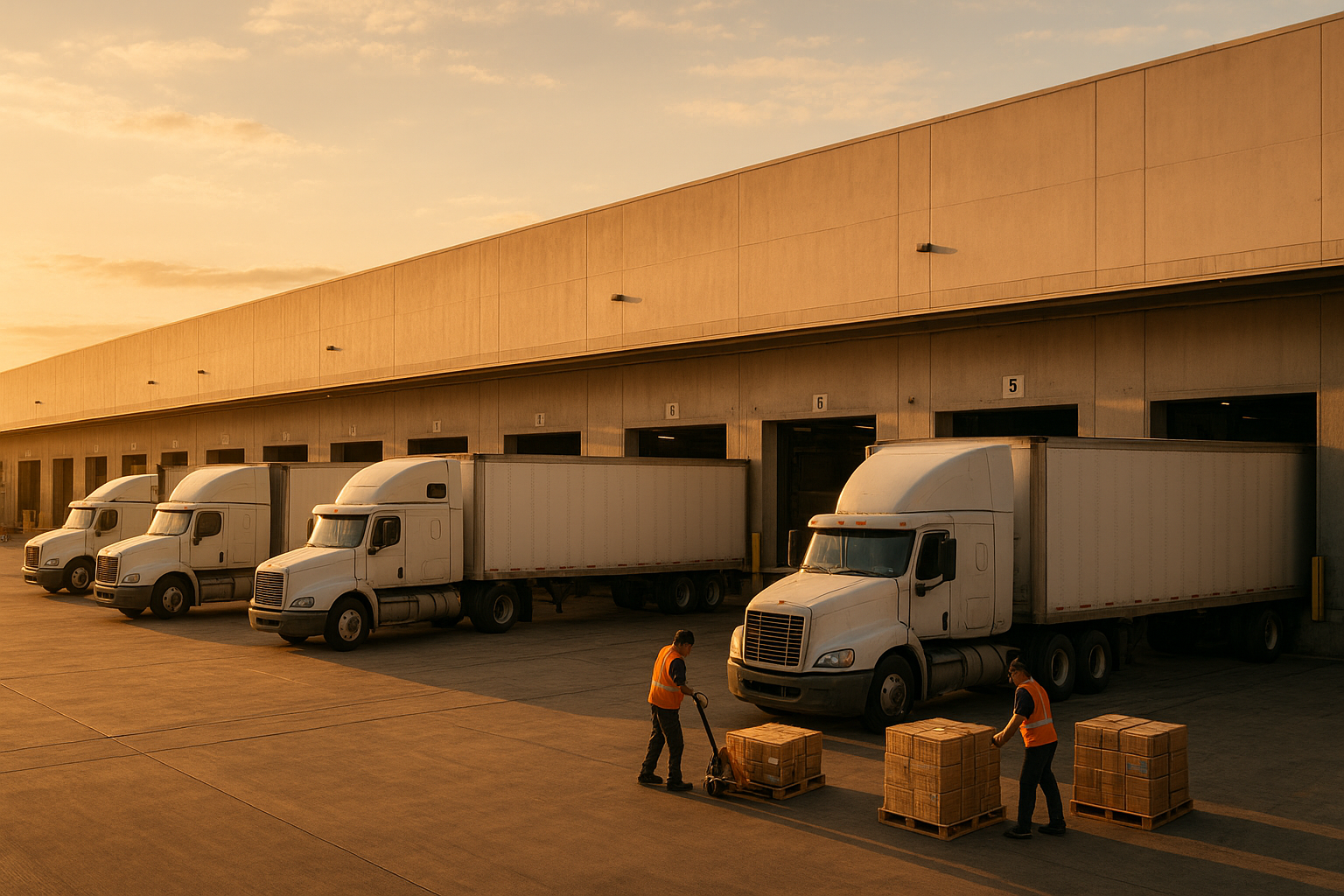
Freight moves through distribution docks like this one before reaching its final destination.
How Freight Brokers Move Your Cargo Step by Step
A freight broker acts as the connective tissue between a shipper’s cargo and a carrier’s available truck. Specifically, the process follows a predictable sequence, regardless of freight type.
- Request a freight quote: Shippers submit shipment details such as origin, destination, weight, and freight type to receive an accurate rate quote from a broker.
- Carrier matching and vetting: The broker searches its network of qualified carriers, verifying insurance, safety ratings, and equipment availability before matching cargo to a truck.
- Booking and documentation: Once matched, the broker issues a rate confirmation and coordinates the bill of lading, pickup, and delivery scheduling with both parties.
- Real-time tracking and communication: Dispatchers monitor the freight in transit, providing status updates and resolving delays through direct carrier communication.
- Delivery, proof, and payment: After delivery, the carrier submits proof of delivery, and the broker processes invoicing and payment according to agreed terms.
Technology plays an increasingly important role in this workflow. In fact, brokers who invest in tracking software and automated documentation, as described on the importance of technology in freight brokerage, tend to reduce delays and give shippers clearer visibility into their loads.
Choosing a Freight Broker: What Shippers Should Look For
Not every freight broker offers the same level of protection or service. Therefore, shippers should evaluate a few key factors before committing to a partner.
First, check whether the broker carries adequate bonding and insurance. Under federal regulations enforced by the Federal Motor Carrier Safety Administration (FMCSA), licensed freight brokers must maintain a surety bond, which protects shippers and carriers if a broker fails to pay. Beyond the minimum requirement, some brokers carry additional coverage, such as Errors & Omissions insurance and extra bonding, for greater protection.
Second, consider industry recognition. Brokers ranked among the top 100 by the Transportation Intermediaries Association (TIA) or recognized as a “Best Broker” by the National Association of Small Trucking Companies (NASTC) have typically been vetted against strict performance standards. Similarly, brokers approved to haul sensitive military freight have passed additional Department of Homeland Security screening, which signals a higher standard of compliance and reliability.
Finally, review the broker’s payment terms if you are a carrier. Standard 28-day payment terms are common industry-wide, though Quick Pay options give carriers faster access to funds. Before signing on, it is worth reviewing a broker’s terms and conditions to understand exactly how rates, claims, and payment schedules work.
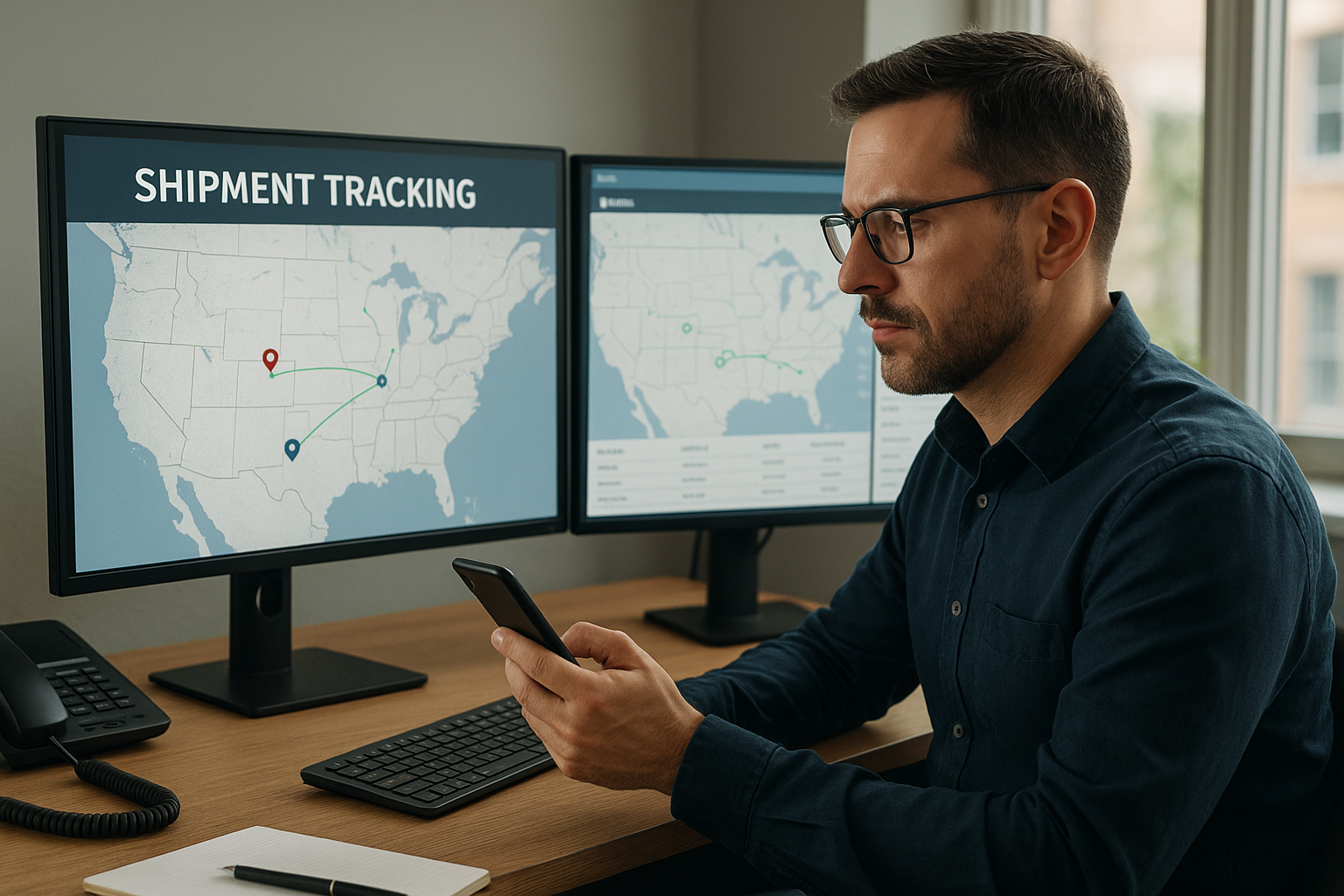
Behind every freight shipment is a broker coordinating carriers, paperwork, and tracking in real time.
Freight Rates: What Drives the Cost?
Freight rates fluctuate based on distance, weight, equipment type, fuel prices, and available truck capacity in a given region. During peak shipping seasons, for instance, rates for refrigerated or flatbed freight often rise because fewer trucks are available relative to demand.
Trucking remains the dominant mode for domestic freight movement. According to the U.S. Bureau of Transportation Statistics, trucks carried roughly 72 percent of the nation’s domestic freight tonnage in recent reporting years, underscoring why truckload and LTL capacity directly influence market rates. Consequently, shippers who lock in relationships with well-connected brokers tend to weather rate volatility better than those booking loads one at a time on the open market.
If you want a real-time sense of current pricing for your lane, you can request a free shipper rate quote to compare options before booking a load.
Common Freight Shipping Mistakes to Avoid
Even experienced shippers occasionally run into avoidable freight problems. However, most of these issues trace back to a handful of recurring mistakes.
Underestimating shipment weight or dimensions is one of the most frequent errors, and it often triggers reclassification fees after pickup. In addition, selecting a carrier based solely on the lowest price, without checking safety scores or insurance status, raises the risk of damaged or delayed freight. Failing to confirm cargo insurance coverage is another common gap, particularly for high-value or specialized loads like automotive parts or heavy equipment.
On the carrier side, drivers sometimes underestimate how route planning affects both delivery times and quality of life on the road. Long-haul trucking, after all, is demanding work, and stories like this account of a driver getting back home to family highlight why reliable dispatch support and fair scheduling matter just as much as the paycheck.
Freight Logistics Beyond Transportation
Moving freight rarely stops at pickup and delivery. Many shippers also need warehousing, supply chain coordination, customs clearance for international freight, and project management for complex or time-sensitive shipments.
For companies shipping across borders, in particular, customs paperwork and compliance can be just as complicated as the physical transportation itself. A broker with international freight capabilities across the U.S., Canada, and Mexico can simplify that process by managing documentation alongside the shipment itself, rather than leaving shippers to coordinate multiple vendors separately.
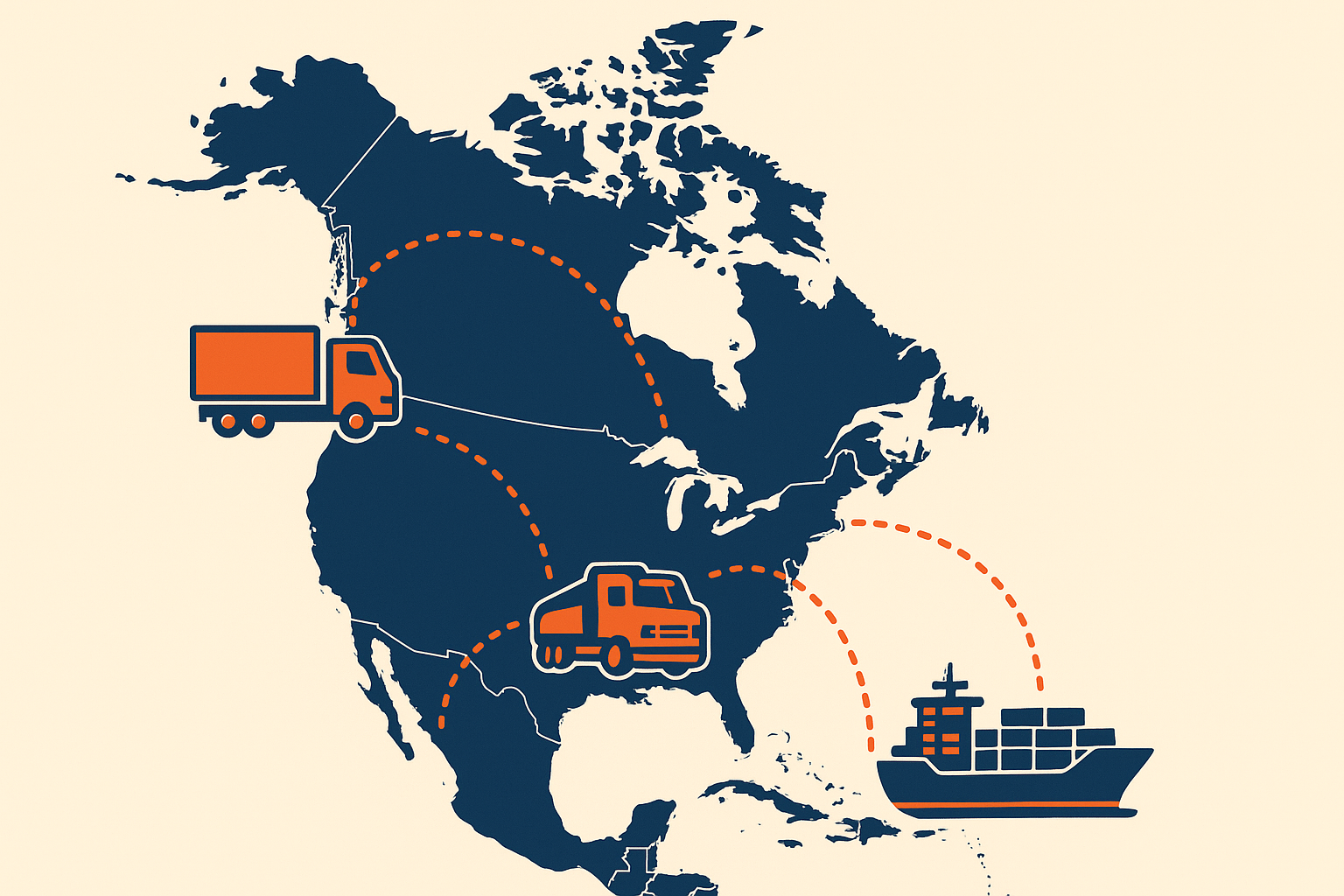
Intermodal freight networks link trucking, rail, and ocean transport across North America.
Frequently Asked Questions About Freight
What is freight?
Freight is any cargo, goods, or commodities transported in bulk by truck, rail, ship, or air between two locations. It typically refers to shipments too large or heavy for standard parcel carriers.
How does freight shipping work?
Freight shipping works by matching a shipper’s cargo with an available carrier through a broker or direct booking, then moving the load via truck, rail, air, or ocean to its destination. Brokers typically handle rate negotiation, carrier vetting, and tracking along the way.
What is the difference between freight and LTL shipping?
Freight is the general category of transported cargo, while LTL (less-than-truckload) is a specific method for shipments that do not fill an entire trailer. LTL freight shares truck space with other shippers’ loads to reduce cost.
Why do businesses use freight brokers instead of shipping directly?
Businesses use freight brokers because brokers have access to vetted carrier networks, negotiate better rates, and manage documentation and tracking. This approach saves shippers time and reduces the risk of working with unqualified carriers.
How much does freight shipping cost?
Freight shipping costs vary based on distance, weight, freight class, equipment type, and current market capacity. A flatbed or refrigerated load typically costs more than standard dry van freight of the same weight.
How long does freight delivery take?
Most domestic truckload freight delivers within one to five business days depending on distance, while LTL freight can take three to seven days due to multiple stops. International or intermodal freight often takes longer because of customs and transfer points.
What is drayage freight?
Drayage freight refers to the short-distance movement of containers, usually between a port or rail yard and a nearby warehouse or distribution center. It is a critical link in intermodal supply chains.
What common mistakes do shippers make when booking freight?
Common mistakes include underestimating weight or dimensions, choosing the cheapest carrier without checking safety ratings, and failing to confirm insurance coverage. These errors often lead to delays, damage claims, or unexpected fees.
What is the difference between a freight broker and a freight forwarder?
A freight broker arranges domestic transportation between shippers and carriers without taking possession of the cargo, while a freight forwarder often handles international shipments, customs paperwork, and consolidation. Some companies offer both brokerage and forwarding-style services under one roof.
Is freight shipping insured?
Yes, reputable freight brokers carry cargo insurance and require carriers to maintain their own liability coverage. Shippers can also request additional coverage for high-value or sensitive freight.
What is intermodal freight?
Intermodal freight moves in a shipping container across multiple transportation modes, such as rail and truck, without unloading the goods between transfers. This method reduces handling and can lower shipping costs over long distances.
How do I get a freight quote?
You can get a freight quote by providing shipment details such as origin, destination, weight, and equipment type to a broker. Many freight companies offer free online rate quote tools for fast estimates, including a free shipper rate quote option.
What is expedited freight?
Expedited freight is a shipping service designed for urgent loads that need faster-than-standard transit times, often using dedicated trucks or team drivers. It typically costs more due to the priority handling involved.
Final Thoughts on Managing Freight Successfully
Freight touches nearly every industry, from automotive manufacturing to retail distribution, which is why choosing the right transportation partner matters. In summary, understanding the different freight types, knowing how brokers move cargo step by step, and vetting a broker’s bonding, insurance, and industry recognition all help protect your shipments and your bottom line.
Ultimately, whether you are a shipper looking for reliable capacity or a carrier searching for consistent freight opportunities, working with an experienced, well-vetted broker reduces risk and simplifies logistics. For more information on how a dedicated freight team can support your shipping needs, visit freight-tec.com to explore services and request a quote.